The 1975 Asilomar Conference established risk-appropriate, evidence-based regulations for biotechnology.
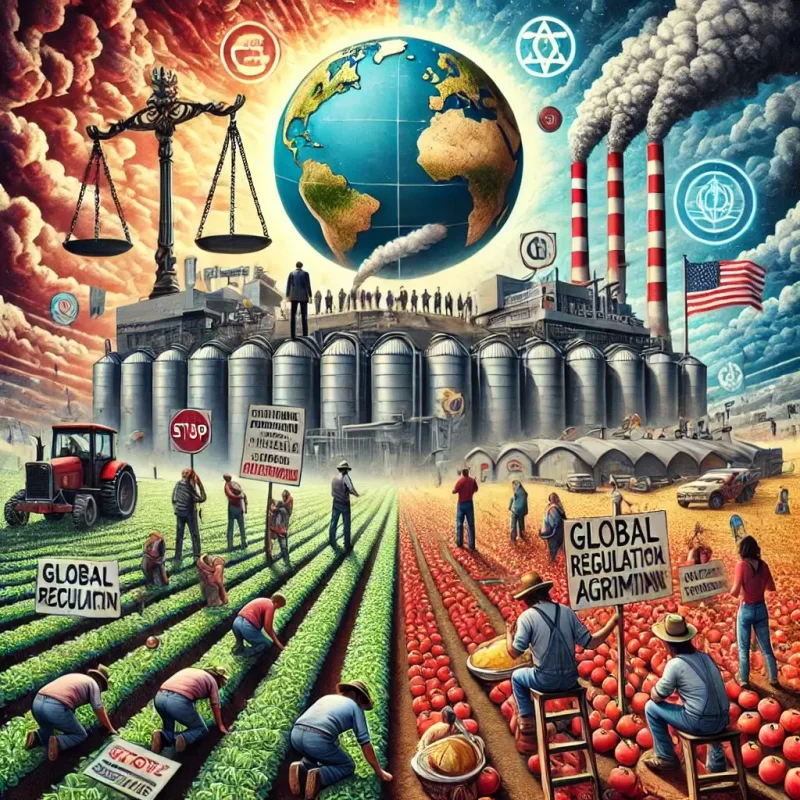
The Cartagena Protocol on Biosafety is a risk-inappropriate, precaution-based regulatory framework that is a significant barrier to biotechnological innovation.
There is now a global scientific consensus on the safety of agricultural biotechnology products. Major agricultural biotechnology–producing countries have not adopted the Cartagena Protocol on Biosafety.
The lack of agricultural biotechnology innovation adoption in some countries
raises the risks of food insecurity.
For the full potential of scientific innovations to be realized by society, efficient regulation is crucial. This is especially the case if science is to make meaningful contributions to achieving the United Nations’ Sustainable Development Goals or the Paris Accord greenhouse gas emission reductions. It defies common sense to invest public research money in the development of new products and technologies to then only achieve one-third of their potential, as has been the case with GM crops [37]. This marginal level of benefit clearly illustrates an important repercussion of the global regulatory failure of agbiotech regulation (see Outstanding questions).
Efficient regulations rely on empirically based risk assessment methodologies and robust data to undertake risk-appropriate assessment of innovative products and technologies. Parallel to this is a variety approval decision-making process that makes decisions on the basis of scientific risk assessment and that has not become a politicized process that often functions as a mechanism to ban and/or delay all innovative and seemingly deemed safe GM products, regardless of their value to society. Some countries have implemented evidence-based risk assessment regulatory frameworks but have politicized variety approval processes that have banned the commercial production of GM crops for over 20 years.

More important, in the context of food insecurity, countries that grapple with food insecurity are increasingly turning to agbiotech as a contributor to resolving their food insecurity and climate change challenges. Such countries have taken a pragmatic approach where, even though they are CPB parties and thus mandated to comply with its requirements, they have developed and deployed pragmatic approaches including feasible and functional biosafety systems.
GM cowpea was commercialized in Nigeria in 2019 and has recently been approved in Ghana. In 2022, Kenya lifted its 10-year ban on the production of GM crops, facilitating the commercialization of GM corn. Numerous other countries that had previously expressed opposition to GM crop technology are making public announcements reversing previous policies and removing barriers regarding GM crop adoption. Honduras, a country with limited R&D capacities and a CPB party, developed and implemented a functional biosafety regulatory system that allowed crop and trait technologies valuable to the country to proceed after the proper biosafety evaluations. However, as discussed in the preceding text, inappropriate regulation will slow the achievement of benefits from GM crop adoption. Such countries will need to find a regulatory approach that enables the knowledge and experience gained since Asilomar to better facilitate innovation adoption.
With many international climate and environment agreements having 2030 as a target achievement date, there is a significant potential that many targets will not be reached, in large part because of inappropriate regulations. A fundamental underlying premise of science is that it builds on previous knowledge and experience. However, as many precautionary-based regulatory systems demonstrate, in many jurisdictions, virtually no lessons have been taken from the knowledge or experience gained since the development of the first rDNA guidelines 50 years ago. For innovation to reach its full potential, the knowledge of 50 years of safe agbiotech research and commercialization needs to be recognized and respected. Failure to do so risks unnecessary food insecurity and poverty.