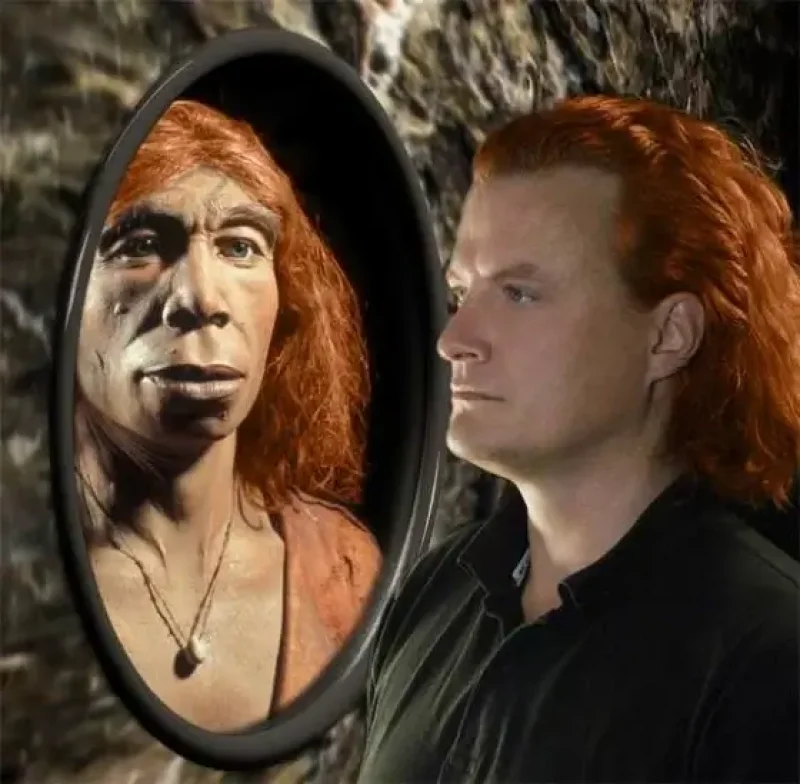

In a new study, researchers have uncovered a fundamental difference in how human faces grow compared to those of our extinct cousins, the Neanderthals, and our primate relatives, chimpanzees. Using a combination of 3D scans, geometric modeling, and microscopic surface analyses, the team has mapped the development of the midface — the part of the skull that includes the nose and upper jaw — from infancy to adulthood.
The scientists at the Max Planck Institute for Evolutionary Anthropology in Germany found that the human face, unlike that of Neanderthals or chimpanzees, stops growing during adolescence.
“Our findings reveal that a change in development — particularly during late growth stages — led to smaller faces”, says first author Alexandra Schuh from the Max Planck Institute for Evolutionary Anthropology. “Compared to Neanderthals and chimpanzees who continue growing longer, human facial growth stops earlier, around adolescence, resulting in a smaller adult face.”
…





“Species-specific differences in growth and bone remodeling shape adult morphology in significant ways,” the study concludes.