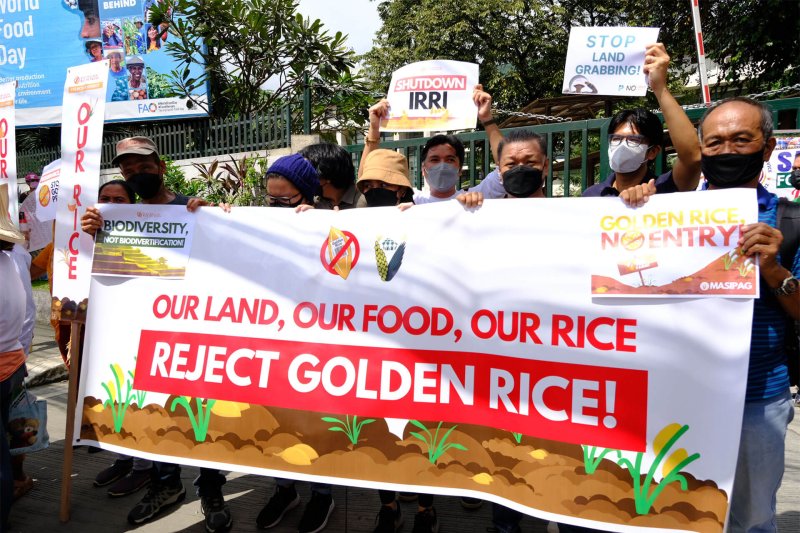

White rice is the staple crop in many low- and middle-income countries (LMICs). It must be polished for storage and has very small amounts of vitamins and no pro–vitamin A (beta-carotene). People in LMICs often consume huge amounts of rice, and many people little else. Vitamin A deficiency and other micronutrient deficiencies, including iron, zinc, and folate, are common as a result… The earliest example [of biofortification], Golden Rice, has great potential, by itself and as a carrier for other biofortified micronutrients. However, unwarranted suspicions of the technology, and the motivations for using it, have significantly delayed progress. Nutritionists and development professionals need to appreciate that the suspicions around biofortification of crops hinder the ability to deliver public health for the poorest of human society.
The Good
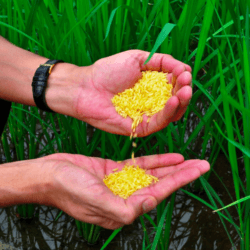
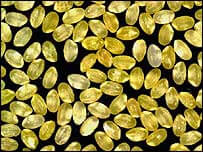
[G]olden Rice was specifically developed to combat vitamin A deficiency (VAD) in communities where rice is a staple. Its only difference from white rice is the addition of beta-carotene…. Only animal dietary sources contain vitamin A itself and are often too expensive for poor people in LMICs. Using bioengineering was the only way to develop Golden Rice, because white rice lacks beta-carotene entirely, ruling out traditional breeding….
The problem of the low bioavailability of vitamin A in plant foods has brought the sobering reality of “the virtual impossibility for most poor, young children to meet their vitamin A requirements through vegetable and fruit intake alone.”… Golden Rice has been declared safe for consumption by regulatory authorities in the United States, Canada, Australia, and New Zealand.
The Bad
Bangladesh has a significant micronutrient malnutrition problem, and chemical fortificants are sold there…. As of March 2025, no regulatory decision has been taken concerning Bangladesh Rice Research Institute (BRRI) November 2017 application.
[On] August 15, 2024, the Philippine Courts found in favor of Greenpeace’s assertion that Golden Rice posed a risk to the ecology of the Philippines. [Pending appeal] some of the Golden Rice adoption work in the Philippines is paused.



The Ugly
One might ask why it is that Golden Rice has not been more widely adopted for micronutrient deficiency alleviation. That is a peculiar story and involves more about politics than about nutrition or health.
…
Conclusion
Rice is a staple crop in many LMICs, but white rice lacks betacarotene and contains only minimal amounts of other essential vitamins and minerals. Although micronutrient supplements, chemical fortification, and nutrition education help address deficiencies, these measures alone have proven insufficient. Golden Rice, a bioengineered variety enriched with betacarotene, offers a practical and cost-effective solution to VAD.