Vaccinations not only safeguard individual health but also preserve the collective health of our communities, ensuring that preventable infectious diseases are largely relegated to the past. The FDA performs a rigorous review of laboratory, preclinical, and clinical data to ensure the safety, efficacy, purity, and potency of vaccines.
Although many once-prevalent illnesses like measles, polio, and diphtheria have been largely eradicated in the United States, vaccines remain essential to maintain this protection.
Texas’ anti-vaccine hysteria measurably damages children’s health
Almost all the fatal cases that have occurred in deep-red western Texas are in unvaccinated individuals or individuals whose vaccination status is unknown. Normally, when vaccination rates are high, herd immunity protects those reckless enough to ignore common-sense health precautions. Also known a population immunity, herd immunity occurs when a community is protected from an infectious disease because enough people in the community are immune. It can result from a vaccination or from having had the infection previously. The probability of encountering measles, rubella, or polio in the U.S. is low because widespread vaccination has built protective barriers. But if vaccinations decline—and that’s what’s happened in parts of Texas and New Mexico—these diseases can rapidly resurface and spread.
Vaccines protect not only those who receive them but also the most vulnerable — infants and people who are immunocompromised. By getting vaccinated, children and adults contribute to a community-wide barrier that prevents the spread of pathogens.
The safety and effectiveness of vaccines are best understood by comparing the risks of the diseases they prevent versus the risks associated with the vaccines themselves. If 10,000 children were to contract measles, the expected complications would include:
- 2,000 hospitalizations
- 10 cases of brain swelling
- 10–30 deaths of children
- 1,000 ear infections with potential permanent hearing loss
- 500 cases of pneumonia
In contrast, if 10,000 children receive the MMR (measles, mumps, rubella) vaccine, statistically, the expected side effects are:
- 3 cases of fever-related seizures
- 0–1 cases of abnormal blood clotting
- 0.035 cases of severe allergic reactions
That’s a dramatic, life-altering difference. The complications of preventable infectious diseases can be severe or even fatal, while serious side effects from the vaccines are extremely rare.
Vaccine safety: Can we trust government assessments?
The FDA performs a rigorous review of laboratory, preclinical (animal testing), and clinical data to ensure the safety, efficacy, purity, and potency of vaccines. After they are approved for marketing, vaccines may be required to undergo additional studies to address specific questions. Because vaccines are administered to large numbers of healthy people to prevent infections, they are subjected to especially rigorous oversight.
Vaccine safety is also monitored through several systems that allow patients to report side effects or enable researchers to study medical records for safety concerns:
- Vaccine Adverse Event Reporting System (VAERS): Anyone can report a possible vaccine reaction, but these reports require thorough follow-up to determine causation.
- Vaccine Safety Datalink (VSD): A network of medical records that allows researchers to study possible vaccine-related safety concerns in large populations.
- V-safe: A recently introduced program that enables vaccine recipients to provide real-time feedback via text messaging to the Centers for Disease Control and Prevention (CDC) about any side effects they experience.
Do U.S. children get too many vaccines?
It is true that children today receive more vaccines than those in previous generations, but that is often misinterpreted. It does not imply that they are at greater risk.
Claims that children in the U.S. are endangered by receiving too many vaccines at once or in close succession—and that this is harmful—are misleading and false. The immune system of a child is equipped to handle thousands of antigens daily—far more than the tiny fraction introduced by vaccines, even when given in combination.



Moreover, scientific advances have led to vaccines that are more targeted, efficient, and safe. In the 1980s, vaccines exposed children to over 3,000 antigens (the part of the vaccine that elicits an immune response); today, despite protecting against more infectious agents, childhood vaccines contain only about 180 antigens. In any case, this level of exposure is far less than to the microorganisms that children encounter in everyday life.
What about the claim that U.S. children receive significantly more vaccines than children in other developed countries? While the U.S. immunization schedule may appear more robust due to differences in how doses and combinations are counted, the overall number and types of vaccines administered are comparable to those in countries like Canada, the UK, Australia, and most of Europe. Many nations follow similar schedules based on recommendations from the World Health Organization and their own health agencies, all aimed at protecting children during their most vulnerable years.
Furthermore, no credible scientific data supports the idea that the U.S. schedule causes harm due to the number or timing of vaccines. Comprehensive studies comparing vaccinated and unvaccinated populations, both in the U.S. and internationally, have found no evidence of increased health problems from following recommended schedules. On the contrary, high vaccination rates are directly linked to lower rates of preventable diseases, hospitalizations, and deaths in children.
Vaccines save lives
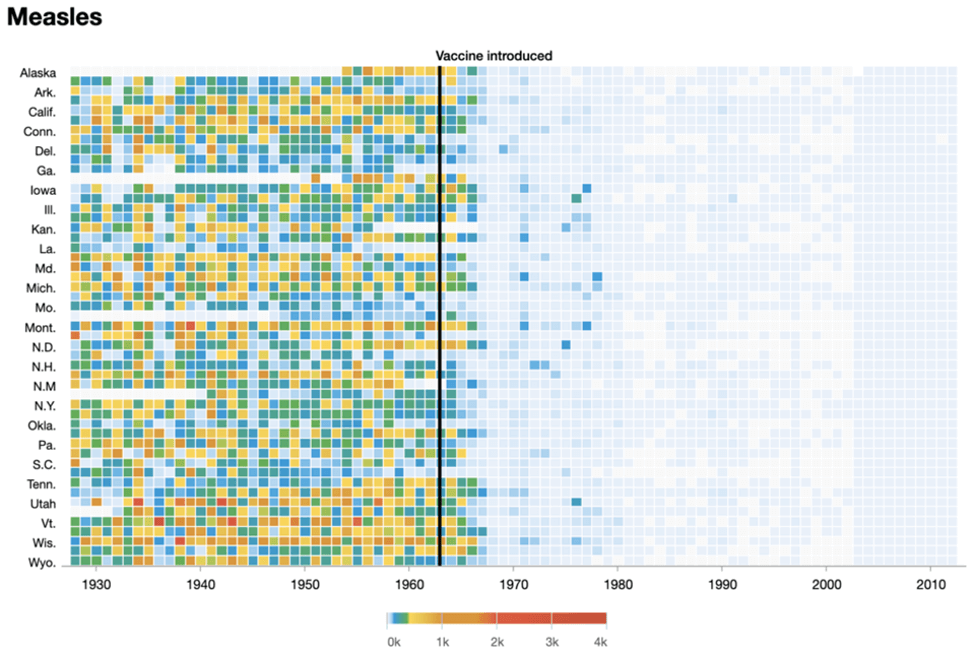
Vaccines have dramatically reduced rates of severe childhood illnesses. For example, the introduction of the Hemophilus influenzae type b (Hib) vaccine in the late 1980s significantly decreased cases of childhood meningitis, pneumonia, and epiglottitis. And this chart shows the number of cases per 100,000 people before and after the introduction of the measles vaccine.
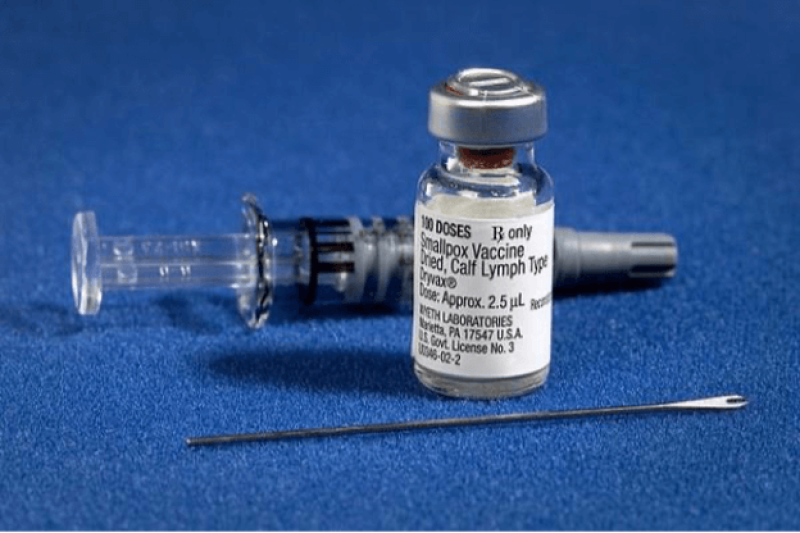
Vaccines have also been critical in battling against many other viruses, including the complete elimination from the U.S. of endemic cases of diphtheria, polio, and smallpox.
For certain diseases like pertussis (whooping cough) and tetanus, booster shots are necessary to maintain immunity. They serve two main purposes: to reinforce immunity that wanes over time and to counteract genetic changes in pathogens that could make them resistant to vaccines.
Focus on the children
A deluge of misinformation has led to unwarranted fears about vaccines, but the data overwhelmingly support their safety and effectiveness. The risks of vaccine-preventable diseases far outweigh the minimal risks associated with vaccination. Moreover, rigorous monitoring of side effects ensures that vaccines remain among the safest medical interventions available. Parents want the best for their children, and choosing to vaccinate is one of the most effective ways to protect them. By maintaining high vaccination rates, we not only safeguard individual health but also preserve the collective health of our communities, ensuring that preventable infectious diseases are largely relegated to the past.
Henry I. Miller is a physician and molecular biologist and the Glenn Swogger Distinguished Scholar at the Science Literacy Project. He was the founding director of the U.S. FDA’s Office of Biotechnology. Follow Henry on X @henryimiller