Viewpoint: Doctors can fight health misinformation — if hospitals let them

Health misinformation is a public health problem. According to KFF, more than half of U.S. adults say they get health information from social media at least occasionally, yet fewer than 1 in 10 trust most of what they see. 

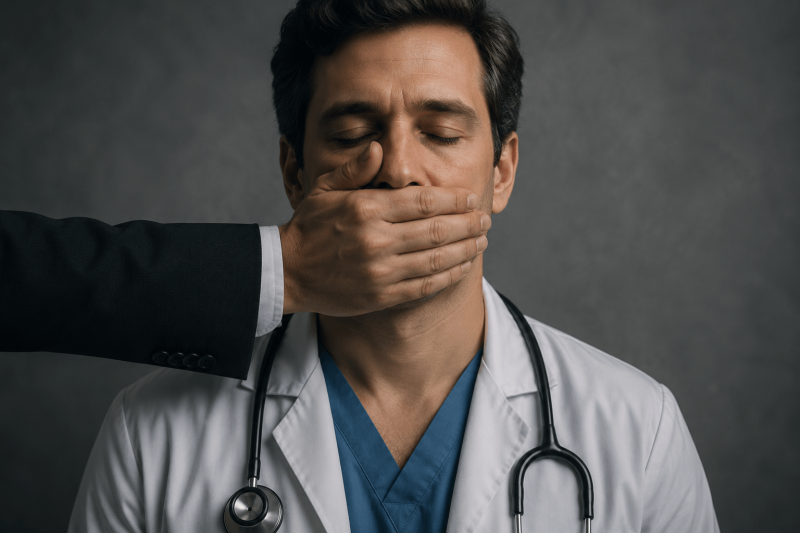
But calls for more participation [from doctors] online miss a key constraint. Nearly 4 of 5 physicians are now employees of hospitals/health systems and other corporate entities, according to the latest statistics.

Follow the latest news and policy debates on sustainable agriculture, biomedicine, and other ‘disruptive’ innovations. Subscribe to our newsletter.

Hospitals and health systems have understandable concerns, among them liability, reputational damage, and unprofessional behavior. 

So, institutions respond by creating vague policies, broad restrictions, slow approval processes, and a culture of caution that leads many physicians to decide it’s safer not to engage at all. While few clinicians are told outright that they are forbidden from speaking, many are given enough signals to understand that speaking freely may come at a cost.

Meanwhile, online information ecosystems do not tolerate silence. When credible clinicians pull back, the space does not remain empty. More often than not, it becomes a vacuum filled by whoever is willing to post first, loudest, and most confidently.


This is an excerpt. Read the original post here

{{ reviewsTotal }}{{ options.labels.singularReviewCountLabel }}
{{ reviewsTotal }}{{ options.labels.pluralReviewCountLabel }}
{{ options.labels.newReviewButton }}
{{ userData.canReview.message }}

Related Articles

Infographic: Global regulatory and health research agencies on whether glyphosate causes cancer

Infographic: Global regulatory and health research agencies on whether glyphosate causes cancer

Does glyphosate—the world's most heavily-used herbicide—pose serious harm to humans? Is it carcinogenic? Those issues are of both legal and ...

Most Popular

Screenshot-2026-04-22-at-12.21.32-PM
Viewpoint: Why the retracted Monsanto glyphosate study doesn’t change the science—the world’s most popular herbicide is safe 
Picture1
The FDA couldn’t find a vaccine safety crisis, so it buried its own research
ChatGPT-Image-May-1-2026-11_42_59-AM-2
Viewpoint: NAD is the wellness grifters latest evidence-lite longevity fad. At least the mice are impressed.
ChatGPT-Image-Apr-16-2026-02_56_53-PM
Financial incentives, over diagnosis, and weak oversight: Autism claims are driving up Medicare costs
global warming
‘Implausible’: Top climate scientists reject worst-case scenario—soaring temperatures and fast-rising sea levels
ChatGPT-Image-May-12-2026-11_27_01-AM-2
AI likely to improve health care, research shows—but not for blacks and ethnic minorities
ChatGPT-Image-May-7-2026-01_23_27-PM-2
Viewpoint: Will AI democratize personalized cancer treatment or fuel medical misinformation?

Sorry. No data so far.

glp menu logo outlined

Get news on human & agricultural genetics and biotechnology delivered to your inbox.