Speed breeding: AI pollinating CRISPR gene-edited flowers are in development

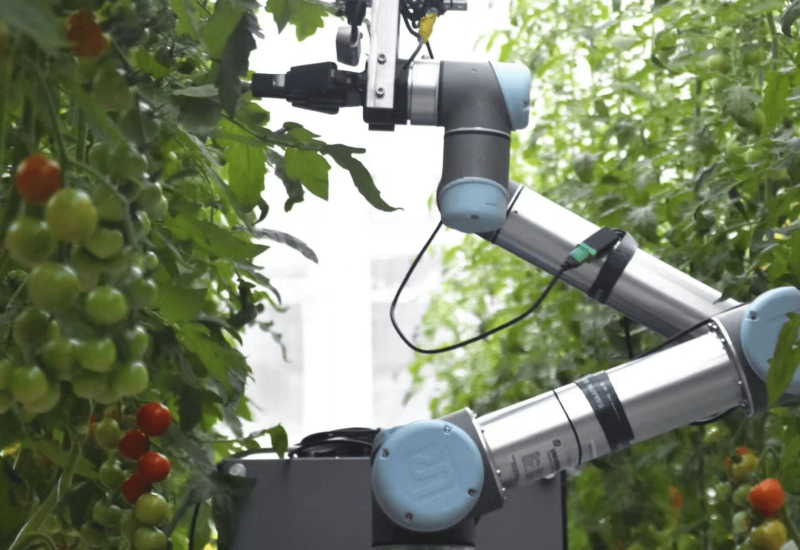
Robotic breeder GEAIR working in a greenhouse. Credit: IGDB

For millennia, developing resilient crops relied on pollination by nature or humans—making the process long and often costly. Now, scientists from the Institute of Genetics and Developmental Biology (IGDB) of the Chinese Academy of Sciences have reimagined the pollination process by developing a new system that uses gene editing to create flowers that can be easily pollinated by AI-controlled robots working round the clock.

The system, known as Genome Editing with Artificial-Intelligence-based Robots (GEAIR), addresses a long-standing pollination hurdle: Hybrid breeding—which involves cross-pollination between different parent plants—produces higher-yielding, hardier crops. However, it relies on slow, costly manual labor to manage the pollination since recessed stigmas (female organs) and complex floral structures in key crops like tomatoes and soybeans have stymied robotic automation.

Follow the latest news and policy debates on sustainable agriculture, biomedicine, and other ‘disruptive’ innovations. Subscribe to our newsletter.

Drawing inspiration from the Green Revolution—when crops were reengineered for machinery—the team pioneered “crop–robot co-design” to create crops well-adapted to robotic technology. 

The result is plants that are both male-sterile (eliminating the need for emasculation) and have protruding stigmas, making them easy for robots to access.


This is an excerpt. Read the original post here

{{ reviewsTotal }}{{ options.labels.singularReviewCountLabel }}
{{ reviewsTotal }}{{ options.labels.pluralReviewCountLabel }}
{{ options.labels.newReviewButton }}
{{ userData.canReview.message }}

Related Articles

Infographic: Global regulatory and health research agencies on whether glyphosate causes cancer

Infographic: Global regulatory and health research agencies on whether glyphosate causes cancer

Does glyphosate—the world's most heavily-used herbicide—pose serious harm to humans? Is it carcinogenic? Those issues are of both legal and ...

Most Popular

Screenshot-2026-04-12-135256
Bixonimania: The fake disease scam that AI swallowed whole
Screenshot-2026-05-01-at-1.29.41-PM
Viewpoint: What happens when whole grains meet modern food manufacturing? Labels don’t tell the whole story.

Sorry. No data so far.

glp menu logo outlined

Get news on human & agricultural genetics and biotechnology delivered to your inbox.