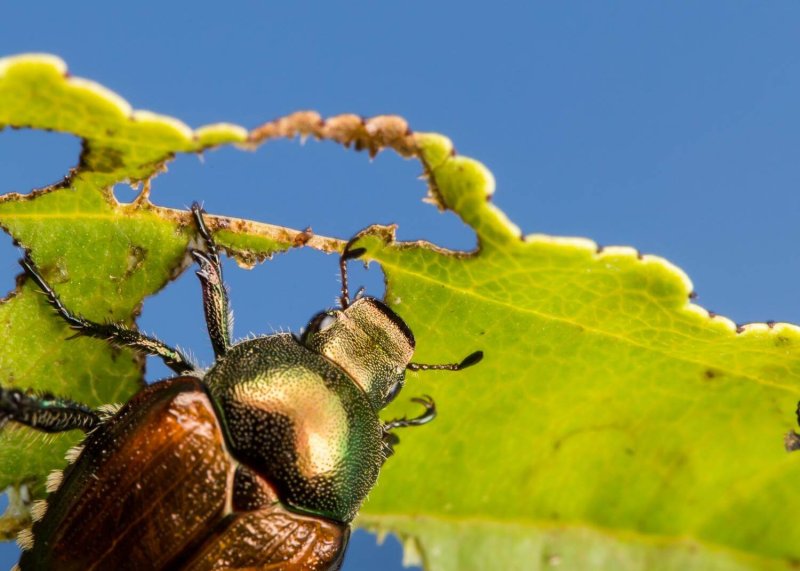
It would be incredible if we could breed plants that pests couldn’t gorge on. CRISPR is making it a reality

fe b e
Credit: Bill Ravlin/Michigan State University

Insects that feed on starch can find veritable feasts in corn, pea, and bean crops or warehouses. It is no coincidence that the ancestors of these commercial plants developed α-amylase (alpha-amylase) inhibitor proteins, which make the starch in their seeds indigestible to pests, keeping them from becoming serious threats. However, the domestication of wild plants by humans to increase productivity and digestibility may have reduced the presence of these inhibitors.

In an article published in the Biotechnology Journal, an international group of researchers discusses the advances made in the last two decades and emphasizes the potential of gene editing to develop plants that produce these inhibitors in greater quantities to combat insect pests.

Follow the latest news and policy debates on sustainable agriculture, biomedicine, and other ‘disruptive’ innovations. Subscribe to our newsletter.

“Gene editing using the technique known as CRISPR … and its variations gives us the possibility of increasing the production of these inhibitors or making them more active in plants of interest to act specifically against insect pests, without the molecules being a problem for humans and animals,” [said Marcos Fernando Basso, a researcher at the Genomics for Climate Change Research Center (GCCRC)].

This is an excerpt. Read the original post here
{{ reviewsTotal }}{{ options.labels.singularReviewCountLabel }}
{{ reviewsTotal }}{{ options.labels.pluralReviewCountLabel }}
{{ options.labels.newReviewButton }}
{{ userData.canReview.message }}

Related Articles

Infographic: Global regulatory and health research agencies on whether glyphosate causes cancer

Infographic: Global regulatory and health research agencies on whether glyphosate causes cancer

Does glyphosate—the world's most heavily-used herbicide—pose serious harm to humans? Is it carcinogenic? Those issues are of both legal and ...

Most Popular

d-b
Blocked arteries, kidney stones, nausea, constipation, fatigue: Long list of health problems caused by too much vitamin D 
circular-bioeconomy-should-focus-on-sustainable-wellbeing
GLP podcast: What's wrong with 'doomsday' environmentalism? It's false.
Screenshot-PM-24
Viewpoint: The herbicide glyphosate isn’t perfect. Banning it would be far worse.
Screenshot 2026-02-25 at 11.20
Why the herbicide glyphosate is key to sustainable agriculture
ChatGPT-Image-Feb-16-2026-01_04_32-PM
Raw milk myth wake-up call
screen shot at pm
Word games: How Moderna is selling its newest vaccine without using the “v” word
ChatGPT-Image-Apr-28-2026-12_46_14-PM-2
Kennedy has quietly stopped touting problematic raw milk. Health concerns aren’t why
ChatGPT-Image-Feb-16-2026-01_57_31-PM
Viewpoint: ‘Science-as-Satan’ unites the MAHA—MAGA movements. Is a breakup in the works?
png-pill-omega-Supp-fish-oil
Fish oil supplements for brain injuries probably don’t work 
ChatGPT-Image-Apr-22-2026-11_06_18-AM
Wellness influencer nonsense: No, nicotine does not boost cognition and productivity, but it can damage your health 
bayer-supremecourt-lt
EPA concludes glyphosate is not carcinogenic. Missouri courts say Monsanto failed to warn it might be. SCOTUS weighs in.
glp menu logo outlined

Get news on human & agricultural genetics and biotechnology delivered to your inbox.