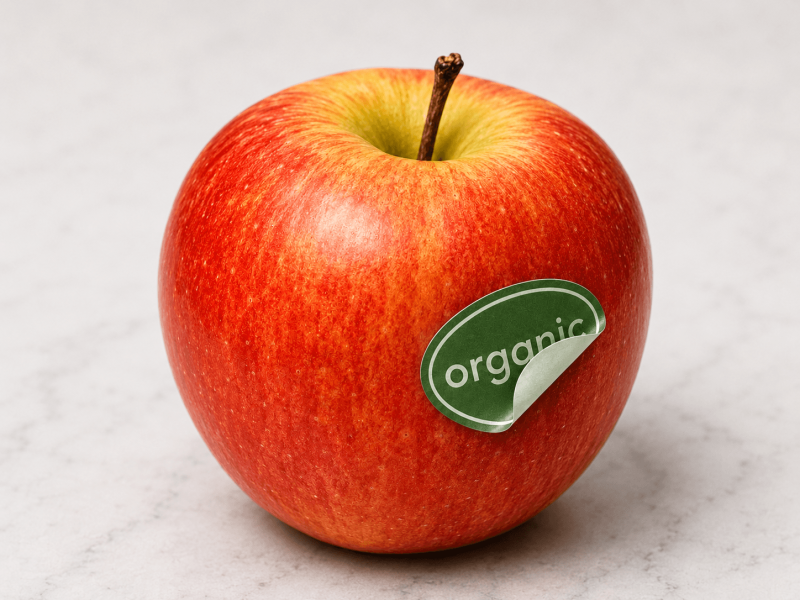
Long-debunked myths about organic farming and food safety are surging again on social media, fueled by selective studies and fear-driven algorithms. On this crossover episode of Talking Biotech and Facts & Fallacies, Cam English is joined by geneticist and farmer Dr. Kevin Folta to explain why these claims—e.g., switching to organic food reduces disease risk—keep returning and why they harm consumers and farmers.
Even experts who should know better amplify these false narratives about organic food’s superiority, often chasing virality rather than sticking to the evidence. The result is a familiar cycle in which weak observational data and out-of-context abstracts are presented as proof that conventional produce carries serious downsides.
These messages gain traction because most people struggle to evaluate risk accurately. Air travel, for instance, terrifies many people—up to 40 percent of travelers experience some degree of flight anxiety—even though it remains one of the safest forms of transportation. Yet many of the same people drive to the airport without a second thought, despite the fact that driving is far riskier on a per-mile basis: recent U.S. data show roughly 177 times higher fatality risk for passenger vehicles than for commercial flights. Statistical safety, however, often fails to override the visceral sensation of sitting in an aluminum tube at 30,000 feet.
The same gap appears when consumers confront pesticide residues measured in parts per billion. The residues are real, yet they sit far below levels that regulatory science deems harmful. Organic production uses its own approved pesticides, some with higher toxicity profiles than modern synthetics, while both systems operate under strict residue limits designed to protect public health.
The practical consequences are clear. Myths shape shopping habits, prompting many households to pay premiums for organic labels that deliver no meaningful safety or nutritional advantage on pesticide exposure. That added cost falls hardest on families already stretched thin. At the same time, the messaging harms American farmers—particularly the contract growers and family operations who produce the bulk of conventional fruit and vegetables on razor-thin margins. When fear reduces demand for safe, nutritious produce, those farmers absorb the economic hit.
Clearer communication remains the most effective response: placing residues in proper context, distinguishing genuine hazards from trace exposures, and refusing to let long-settled science be displaced by viral anxiety. Join Kevin Folta and Cam English as they break down the resurgence of some of the most persistent food-safety myths.




Podcast: Play in new window | Download
Subscribe: RSS
Kevin M. Folta is a professor in the Horticultural Sciences Department at the University of Florida and host of the Talking Biotech podcast. Follow Professor Folta on X @kevinfolta
Cameron J. English is the executive vice president at the American Council on Science and Health. Follow him on X @camjenglish