
GMO crops: To label or not to label?

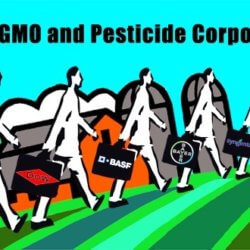
This fall, California voters will be asked to vote on Proposition 37, a law which would require that all foods including “GMO Crop ingredients” be labeled as such.   There are many reasons that this isn’t a good use of governmental authority for mandatory food labeling.  A look at historical logic and precedents for labeling, and at the misleading messages this initiative would foster, should inspire Californians to reject it at the ballot box.

Labeling for a Known Hazard

If a food is hazardous to some consumers, but not others(e.g. peanut allergy), then it makes sense to require that it be labeled to protect that minority.  If a food contains something generally hazardous, but difficult to immediately remove from the food supply, it makes sense to label those foods as well (e.g.trans-fats for which labeling was required after 2006).  If a particular GMO crop were to be found to be hazardous to certain people, or people in general, the appropriate response would to ban the use of that particular trait nationally, not to label it at a state level! No such hazard has been documented for dozens of biotech crops crop traits over 16 years of extensive commercialization, so “hazard” has never been a reason to require labeling of a GMO crop.
View the original article here: GMO crops: To label or not to label?

Related Articles

Infographic: Global regulatory and health research agencies on whether glyphosate causes cancer

Infographic: Global regulatory and health research agencies on whether glyphosate causes cancer

Does glyphosate—the world's most heavily-used herbicide—pose serious harm to humans? Is it carcinogenic? Those issues are of both legal and ...

Most Popular

Nurturing Care Beneath the Crunchy Moms Logo
Crunchy Moms disinformation flood: Zuckerberg's Facebook has opened floodgates on measles and vaccines
Screenshot-2026-11-16-at-2.37.32-PM
30 years of GMO farming: Is the boom in glyphosate and glufosinate use harming the environment? Data show they’re the most sustainable choice
Screenshot-2026-11-19-at-7.54.57-PM
European General Court sides with scientists, dismisses activist claims that glyphosate is toxically dangerous
Stormlit Portrait Over Golden Mountains
Searching for life where no one thought to look: A renowned astrophysicist’s seemingly quixotic quest to explore Venus’s clouds
Soybean Harvest in Cupped Hands
30 years of GMO farming: Defying cynics, we’ve had larger harvests, lower costs, and $385 billion in added global farmer income
ChatGPT-Image-Mar-10-2026-01_39_01-PM
Viewpoint—“Miracle molecule” debunked: Why acemannan supplements don’t work
Screenshot-2026-11-19-at-7.23.23-PM
Viewpoint: After a yearlong hiatus, the U.S. Preventive Services Task Force is back in business—gutted by RFK Jr. and promoting junk science
Screenshot-2026-11-18-at-2.44.24-PM
Why should thousands of Americans die every year waiting for a kidney transplant? There’s an easy fix to this morbid reality
Screenshot-2026-11-17-at-12.18.09-PM
Challenging glyphosate fear-mongering: Statewide Nebraska study finds no link between weedkiller use and non-Hodgkin lymphoma
glp menu logo outlined

Get news on human & agricultural genetics and biotechnology delivered to your inbox.











