Mediterranean peoples share a common recent ancestry—except mainland Greeks

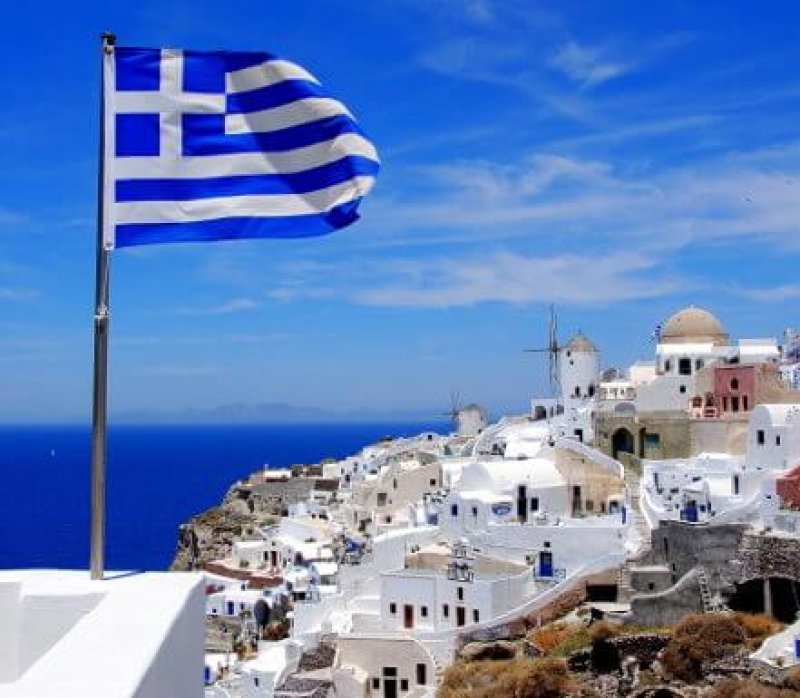
Greece Santorini Flag e

Genetic analysis proves that following thousands of years of conquests and migrations, peoples living around the Mediterranean today share common ancestors, with one surprising outlier: Greece.

The peoples living today around the Mediterranean Sea are all related, after thousands of years of intermittently attacking and loving each other, a new genetic study has unsurprisingly shown. However, the data from the international team of scientists found a startling exception: mainland Greeks seem to be genetically closer to Albanians than to their brethren in the Greek islands.

“Present-day population diversity is composed by multiple genetic layers, which make the deciphering of different ancestral and historical contributes particularly challenging,” write the scientists behind a new study, that looked at 23 populations.

The scientists were not expecting to find that the people in the Greek islands appear genetically closer to southern Italians than to the people in continental Greece. Meanwhile, the mainland Greeks, including the Peloponnese in southern Greece, had become slightly differentiated. They clustered with populations from the southern Balkans, including Kosovo and Albania. All the tested populations from Southern Italy, Sicily, mainland Greece, and the Greek islands including Cyprus share a genetic component inherited from early Neolithic farmers, say the researchers. They also have a smattering of traits originating in the Levant and Near East.

The GLP aggregated and excerpted this blog/article to reflect the diversity of news, opinion, and analysis. Read full, original post: Mainland, Island Greeks Genetically Diverged in Middle Ages


{{ reviewsTotal }}{{ options.labels.singularReviewCountLabel }}
{{ reviewsTotal }}{{ options.labels.pluralReviewCountLabel }}
{{ options.labels.newReviewButton }}
{{ userData.canReview.message }}

Related Articles

Infographic: Global regulatory and health research agencies on whether glyphosate causes cancer

Infographic: Global regulatory and health research agencies on whether glyphosate causes cancer

Does glyphosate—the world's most heavily-used herbicide—pose serious harm to humans? Is it carcinogenic? Those issues are of both legal and ...

Most Popular

Picture1
The FDA couldn’t find a vaccine safety crisis, so it buried its own research
Screenshot-2026-04-22-at-12.21.32-PM
Viewpoint: Why the retracted Monsanto glyphosate study doesn’t change the science—the world’s most popular herbicide is safe 
Screenshot-2026-05-19-at-11.23.34-AM
West-originated vaccine disinformation sparks murders of health care workers across Africa
Screenshot-2026-05-08-at-11.55.47-AM
Anti-vax activists falsely blame COVID vaccines for the rising U.S. cancer rate among younger people.
ChatGPT-Image-Apr-16-2026-02_56_53-PM
Financial incentives, over diagnosis, and weak oversight: Autism claims are driving up Medicare costs
ChatGPT-Image-May-7-2026-12_32_36-PM
Viewpoint: The state of U.S. vaccine policy? Dismal nationally, but some states are stepping up.
ChatGPT-Image-May-12-2026-11_27_01-AM-2
AI likely to improve health care, research shows—but not for blacks and ethnic minorities
modi visit sikkim
Viewpoint: Indian PM wants farmers to switch to 50% organic. It would take at least 10 years, likely won’t work, and isn’t more sustainable
Screenshot-2026-04-13-at-1.39.26-PM
Viewpoint: ‘Safer for children?’ Stonyfield yogurt under fire for deceptive organic marketing
ChatGPT-Image-May-18-2026-12_06_18-PM-2
Defying death: The immortality movement goes mainstream
glp menu logo outlined

Get news on human & agricultural genetics and biotechnology delivered to your inbox.