Why hunter-gatherer civilizations did not destroy themselves through inbreeding

shutterstock x c default

Much like hunter-gatherers today, ancient Eurasians married outside their home groups and formed webs of friends and in-laws vital for eventually building cities and civilizations, a new study suggests.

Long-gone hunter-gatherers lived in groups with few close relatives, thus limiting opportunities for inbreeding, say evolutionary geneticist Martin Sikora of the Natural History Museum of Denmark in Copenhagen and his colleagues. It’s likely that adolescents of both sexes found mates in communities other than their own, fostering social ties among groups that might otherwise avoid or fight each other, the scientists conclude online October 5 in Science. Modern hunter-gatherers likewise find partners among nearby groups.

Sikora’s findings support a proposal that hunter-gatherer bands composed mainly of in-laws and unrelated individuals appeared by the late Stone Age and probably much earlier than that, says anthropologist Kim Hill of Arizona State University in Tempe, who did not participate in the new study. The emergence of in-laws boosted communication and social learning across groups, a prerequisite for creating civilizations.

…
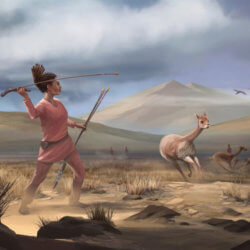
Sikora’s study “shows that modern humans already lived in socially fluid societies well before the origins of agriculture,” says anthropologist Andrea Migliano of University College London.

The GLP aggregated and excerpted this blog/article to reflect the diversity of news, opinion, and analysis. Read full, original post: Ancient humans avoided inbreeding by networking

Related Articles

Infographic: Global regulatory and health research agencies on whether glyphosate causes cancer

Infographic: Global regulatory and health research agencies on whether glyphosate causes cancer

Does glyphosate—the world's most heavily-used herbicide—pose serious harm to humans? Is it carcinogenic? Those issues are of both legal and ...

Most Popular

ChatGPT-Image-Mar-10-2026-01_39_01-PM
Viewpoint—“Miracle molecule” debunked: Why acemannan supplements don’t work
Screenshot-2026-11-06-at-11.44.47-AM
'Gattaca stack': The eugenic, technological push to 'improve the human stock'
Colorful GLP-1 Pens with Clocks_tagger
Biohacker influencers are claiming GLP-1 weight loss drugs extend lifespan. One mice experiment suggests there may be some truth to the claim
Screenshot-2026-11-04-at-11.31.42-AM
Uneasy allies: Are MAHA and American agriculture careening toward a breakup?
Stern-Profile-and-Marked-U.S.-Map
RFK Jr.’s collapsing legacy: U.S. poised to lose measles elimination status
Screenshot-2026-11-09-at-3.01.19-PM
Are Texas data centers killing calves? Debunking viral AI claims
Neon Binary Code Bacteriophage
AI medicine breakthrough: Could ‘good viruses’ created by AI, cure deadly viruses?
Children’s Health Defense Press Conference
As measles deaths among the unvaccinated hit a 35-year high, Kennedy-founded Children’s Health Defense bizarrely blames doctors for slow-walking a cure
Screenshot-2026-11-09-at-1.40.16-PM
As measles cases continue to surge, RFK Jr. blocks CDC scientists from issuing emergency alert warning unvaccinated pregnant women of significantly increased risks
glp menu logo outlined

Get news on human & agricultural genetics and biotechnology delivered to your inbox.