Should cancer be treated based on what part of the body it attacks—or its genetic make-up?

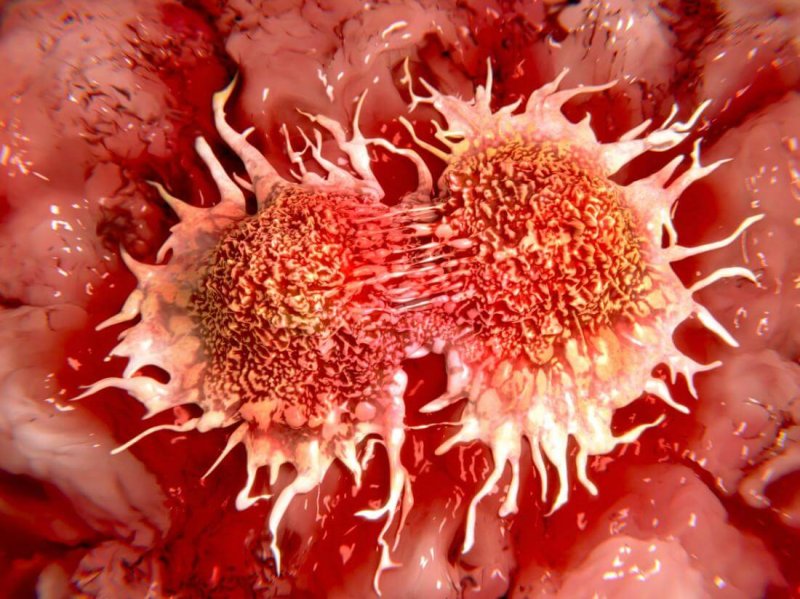
cancer cells dividing
[D]octors have organized their notions of cancer according to that fundamental principle of real estate: location, location, location.

Oncologists often specialize in treating cancer in one organ, to the exclusion of all others. Treatment regimens for one type of cancer (thyroid, say) seldom resemble those of another (such as bone). But that centuries-old view of cancer is changing.

As scientists and physicians better understand the genetic factors that initiate, drive and sustain cancer’s growth, they’ve noticed striking commonalities in cancers that once looked very different from one another.

The cells of certain lung cancers, for instance, have the same mistakes in their DNA-repair machinery as cells from melanomas, urothelial carcinomas and cancers of the head and neck. And the versions of the BRCA1 and BRCA2 genes that cause breast cancer to run in certain families also make ovarian and possibly prostate cancers more likely.

…

The discovery of links like these is leading to changes in cancer treatment. For example, some patients with pancreatic cancer are being put on the same medicine, and in the same oncology suites, as patients with certain types of lung cancer or Hodgkin lymphoma.Ultimately, the discovery could lead to a rewrite of the taxonomy of cancers.

The GLP aggregated and excerpted this blog/article to reflect the diversity of news, opinion, and analysis. Read full, original post: With cancer, it’s not necessarily where it starts but how it starts

Related Articles

Infographic: Global regulatory and health research agencies on whether glyphosate causes cancer

Infographic: Global regulatory and health research agencies on whether glyphosate causes cancer

Does glyphosate—the world's most heavily-used herbicide—pose serious harm to humans? Is it carcinogenic? Those issues are of both legal and ...

Most Popular

Nurturing Care Beneath the Crunchy Moms Logo
Crunchy Moms disinformation flood: Zuckerberg's Facebook has opened floodgates on measles and vaccines
Screenshot-2026-11-19-at-7.54.57-PM
European General Court sides with scientists, dismisses activist claims that glyphosate is toxically dangerous
Screenshot-2026-11-16-at-2.37.32-PM
30 years of GMO farming: Is the boom in glyphosate and glufosinate use harming the environment? Data show they’re the most sustainable choice
Stormlit Portrait Over Golden Mountains
Searching for life where no one thought to look: A renowned astrophysicist’s seemingly quixotic quest to explore Venus’s clouds
Soybean Harvest in Cupped Hands
30 years of GMO farming: Defying cynics, we’ve had larger harvests, lower costs, and $385 billion in added global farmer income
Screenshot-2026-11-18-at-2.44.24-PM
Why should thousands of Americans die every year waiting for a kidney transplant? There’s an easy fix to this morbid reality
Screenshot-2026-11-19-at-7.23.23-PM
Viewpoint: After a yearlong hiatus, the U.S. Preventive Services Task Force is back in business—gutted by RFK Jr. and promoting junk science
ChatGPT-Image-Mar-10-2026-01_39_01-PM
Viewpoint—“Miracle molecule” debunked: Why acemannan supplements don’t work
Screenshot-2026-11-17-at-12.18.09-PM
Challenging glyphosate fear-mongering: Statewide Nebraska study finds no link between weedkiller use and non-Hodgkin lymphoma
glp menu logo outlined

Get news on human & agricultural genetics and biotechnology delivered to your inbox.