
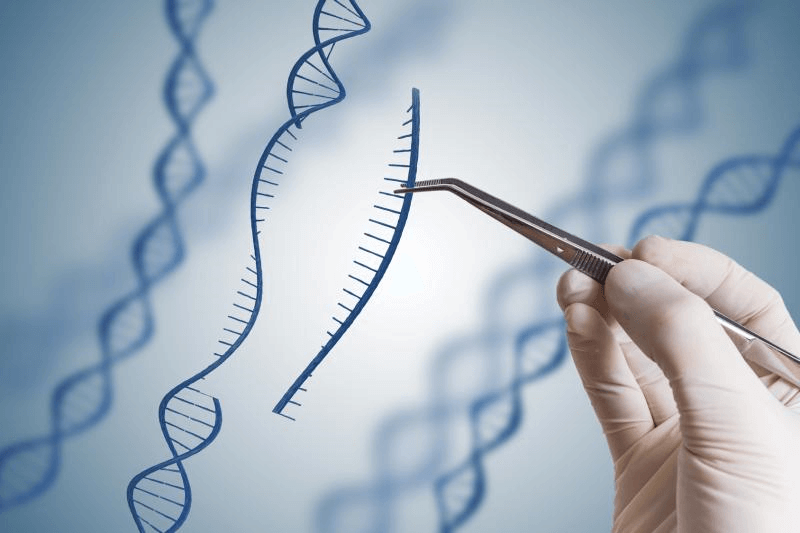
Calling for a ‘richer’ global conversation about CRISPR, gene editing

crispr

Over the past three years, leading scientists have called for global deliberation on the possible effects of gene editing on the human future. In our view, the discussions that have taken place fall far short of the expansive, cosmopolitan conversation that is needed.

An important milestone was the International Summit on Human Gene Editing, held in Washington DC in December 2015.

…

[However,] the meeting format offered little opportunity for deeper listening or learning.

Instead, it encouraged an all-too-common pattern. Discussion split into two camps: scientific experts explored technical issues, whereas scholars who study science and society addressed questions about the possible disruption to social norms. The two camps did not inform each other.

To break out of this bifurcation between the ‘science’ and the ‘ethics’, methods must be found to get people to engage substantively with each other. In our view, an entirely new type of infrastructure is needed to promote a richer, more complex conversation — one that does not originate from scientific research agendas but that instead invites multiple viewpoints.

We advocate the establishment of a global observatory for gene editing, as a crucial step to determining how the potential of science can be better steered by the values and priorities of society.

…

An international, interdisciplinary observatory would be an important step in this direction.

Editor’s note: Sheila Jasanoff is a professor of science and technology studies at the Harvard Kennedy School. Benjamin Hurlbut is associate professor of biology and society at Arizona State University.

Read full, original post: A global observatory for gene editing

Related Articles

Infographic: Global regulatory and health research agencies on whether glyphosate causes cancer

Infographic: Global regulatory and health research agencies on whether glyphosate causes cancer

Does glyphosate—the world's most heavily-used herbicide—pose serious harm to humans? Is it carcinogenic? Those issues are of both legal and ...

Most Popular

Screenshot-2026-11-16-at-2.37.32-PM
30 years of GMO farming: Is the boom in glyphosate and glufosinate use harming the environment? Data show they’re the most sustainable choice
Nurturing Care Beneath the Crunchy Moms Logo
Crunchy Moms disinformation flood: Zuckerberg's Facebook has opened floodgates on measles and vaccines
Stormlit Portrait Over Golden Mountains
Searching for life where no one thought to look: A renowned astrophysicist’s seemingly quixotic quest to explore Venus’s clouds
Soybean Harvest in Cupped Hands
30 years of GMO farming: Defying cynics, we’ve had larger harvests, lower costs, and $385 billion in added global farmer income
ChatGPT-Image-Mar-10-2026-01_39_01-PM
Viewpoint—“Miracle molecule” debunked: Why acemannan supplements don’t work
Screenshot-2026-11-19-at-7.23.23-PM
Viewpoint: After a yearlong hiatus, the U.S. Preventive Services Task Force is back in business—gutted by RFK Jr. and promoting junk science
Screenshot-2026-11-19-at-7.54.57-PM
European General Court sides with scientists, dismisses activist claims that glyphosate is toxically dangerous
Screenshot-2026-11-17-at-12.18.09-PM
Challenging glyphosate fear-mongering: Statewide Nebraska study finds no link between weedkiller use and non-Hodgkin lymphoma
Screenshot-2026-11-18-at-2.44.24-PM
Why should thousands of Americans die every year waiting for a kidney transplant? There’s an easy fix to this morbid reality
glp menu logo outlined

Get news on human & agricultural genetics and biotechnology delivered to your inbox.











