Viewpoint: Do neonicotinoid insecticides really boost crop yields? New study raises doubts

feature
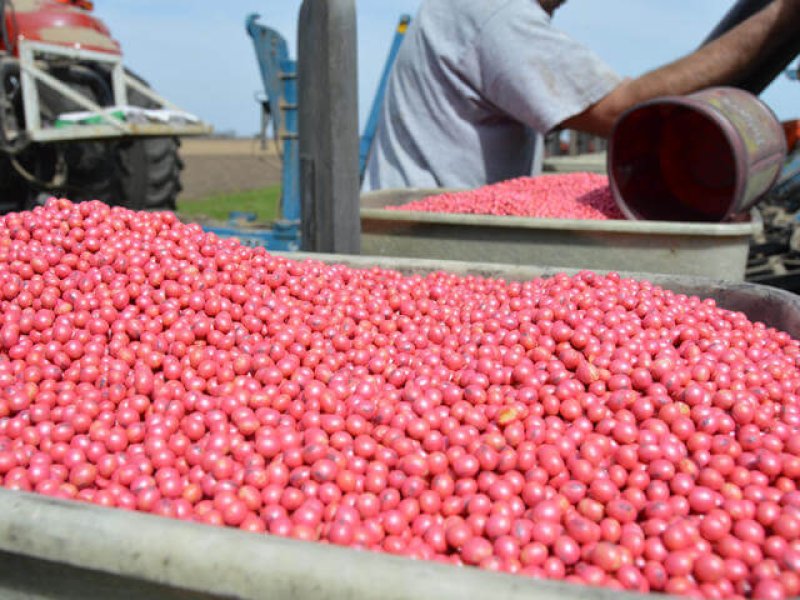
Seeds coated with neonicotinoids. Image: ACSESS Digital Library

Ever year, farmers in the United States devote at least 80 million acres, a combined landmass three-quarters the size of California, to soybeans. At least half the crop comes from proprietary seeds coated with insecticides and fungicides. These chemicals infuse the plants as they emerge, protecting them from damage by insects and fungal pathogens.

At least, that’s the pitch to farmers: Spend extra for treated seeds, and enjoy higher crop yields in return. But according to a new meta-analysis of past research from nearly two dozen scientists at top public agriculture-research universities—the bargain isn’t paying off.

[Editor’s note: To learn more, read Neonicotinoid seed treatments: Effective crop protectants—or unnecessary, with potential collateral damage to bees?]

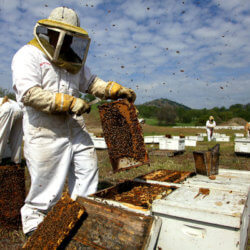
And while economic gains for farmers are vanishingly tiny, at best, the potential ecological risks are high, the authors note. The insecticides in the treatments are called neonicotinoids, which have been banned in Europe for their potential harmful effects on pollinators. A “growing body of research” suggests these chemicals have a “host of negative effects” on beneficial organisms, the paper notes, including honey bees, wild bees, monarch butterflies, birds, and terrestrial and aquatic invertebrates.

Read full, original article: A Big New Study Finds Bee-Killing Pesticides Aren’t Even Worth it for Soybean Farmers


Related Articles

Infographic: Global regulatory and health research agencies on whether glyphosate causes cancer

Infographic: Global regulatory and health research agencies on whether glyphosate causes cancer

Does glyphosate—the world's most heavily-used herbicide—pose serious harm to humans? Is it carcinogenic? Those issues are of both legal and ...

Most Popular

Screenshot-2026-11-17-at-12.18.09-PM
Challenging glyphosate fear-mongering: Statewide Nebraska study finds no link between weedkiller use and non-Hodgkin lymphoma
Soybean Harvest in Cupped Hands
30 years of GMO farming: Defying cynics, we’ve had larger harvests, lower costs, and $385 billion in added global farmer income
Screenshot-2026-11-18-at-2.44.24-PM
Why should thousands of Americans die every year waiting for a kidney transplant? There’s an easy fix to this morbid reality
Health vs
Health vs. Hype’s rocky debut: American Medical Association’s misinformation-debunking podcast platforms ‘leaky gut’ wellness crank 
Low-Poly Climate Connections Infographic
Viewpoint: EU-backed climate “disinformation” crackdown—who polices what’s false?
measles
The grim human cost of the Trump—RFK Jr. measles-prevention failure: 16 times more cases than in 2024
Gloved Hand Holding M-M-R Vaccine Vial
Viewpoint: The dangerous lie RFK Jr.-founded Children’s Health Defense is circulating to discredit one of medicine’s great breakthroughs: the MMR (measles-mumps-rubella) vaccine
ChatGPT-Image-Mar-10-2026-01_39_01-PM
Viewpoint—“Miracle molecule” debunked: Why acemannan supplements don’t work
Screenshot-2026-11-17-at-12.56.22-PM
RFK Jr.’s CDC blocked measles risk alert for pregnant women; 112 contracted the disease, and one-quarter were hospitalized
BEMT Lotion for Freckled Skin
Burned by FDA bureaucracy: Why Americans waited decades for cancer-preventing sunscreen
Screenshot-2026-11-17-at-11.04.14-AM
There are more than 6,000 genetic disorders. For the first time, gene editing is making some treatable. Are we ready?
glp menu logo outlined

Get news on human & agricultural genetics and biotechnology delivered to your inbox.