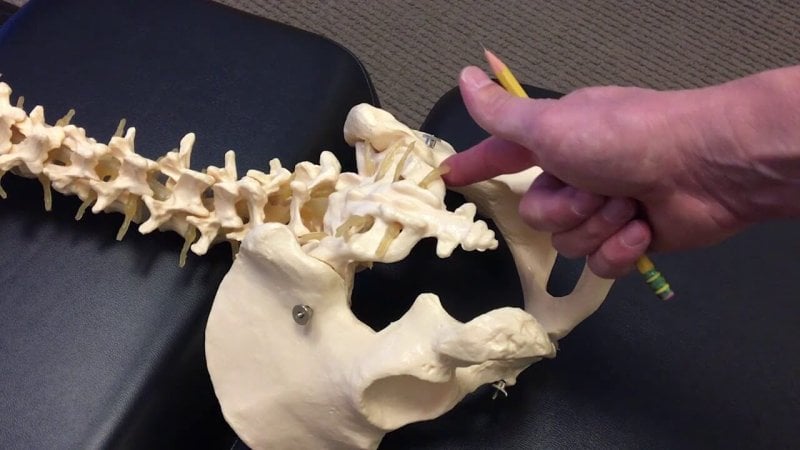
Why do humans have tailbones?

maxresdefault
Image: Steven Becker

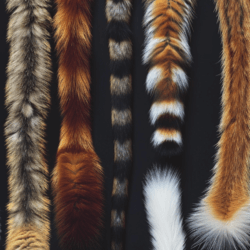
Though it’s currently useless, the human coccyx—commonly referred to as the tailbone—remains nestled at the bottom of the spine, a remnant of our tailed ancestors. Long before human tail-lessness, our early fish relatives had two: A fleshy one and a more flexible fin. As animals took to land, they lost the back fin and kept the fleshier appendage.

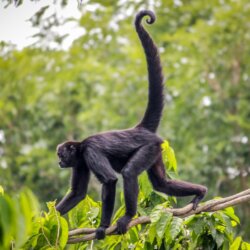
Eventually, apes ditched them. These primates no longer required tails to maintain balance or send social signals.

Other land animals still use tails for functions like movement, communication, and swatting insects, while fish maintained their fins to masterfully navigate through water.

Meanwhile, we humans have held onto a tailbone—several fused caudal vertebrae of the same sort found in actual tails—for no apparent reason. Neither harmful nor beneficial, it simply sits attached to the sacrum.
Scientists call these evolutionary holdovers “vestiges”: The term comes from the Latin word vestigium, meaning footprint. Vestigial features can range from anatomical structures like bones and organs to physiological phenomena like goosebumps; when our furrier ancestors got cold, their hairs stood up to provide insulation.

Though scientists disagree on the specifics, the standard definition claims that vestiges lack a present function.

Read the original post

{{ reviewsTotal }}{{ options.labels.singularReviewCountLabel }}
{{ reviewsTotal }}{{ options.labels.pluralReviewCountLabel }}
{{ options.labels.newReviewButton }}
{{ userData.canReview.message }}

Related Articles

Infographic: Global regulatory and health research agencies on whether glyphosate causes cancer

Infographic: Global regulatory and health research agencies on whether glyphosate causes cancer

Does glyphosate—the world's most heavily-used herbicide—pose serious harm to humans? Is it carcinogenic? Those issues are of both legal and ...

Most Popular

newborn infant baby mother
Facts & Fallacies Podcast: The truth about vitamin K shots
Screenshot-2026-06-16-at-10.02.22-PM
Viewpoint: ‘Industrial food’ primer—Challenging the dangerous delusions of the alternative food movement
ChatGPT-Image-Jun-9-2026-01_11_37-PM
Turmeric supplements: More risks than benefits
ChatGPT-Image-Jun-16-2026-10_29_11-AM
What’s behind Anthropic’s warning about the accelerating development of AI
ChatGPT Image Jun 16, 2026, 12_03_37 PM
Kennedy accused of trying to ‘bully’ science journal that retracted study linking vaccines to infant deaths
Screenshot-2026-06-16-at-11.23.32-AM
In a rebuke to RFK, Jr.’s anti-vax crusade, journal retracts study claiming hepatitis B vaccine–autism link
ChatGPT-Image-Jun-3-2026-04_29_13-PM
Viewpoint: While unvaccinated children are dying overseas, Congress challenges Trump and Kennedy’s block on aid
ChatGPT-Image-Jun-16-2026-10_01_45-AM-2
Viewpoint—Recursive self-improvement: AI leader Anthropic calls for AI slowdown
Screen Shot at AM
Facts & Fallacies Podcast: Right-wing politics bad for your health? Separating speculation from science
ChatGPT-Image-Jun-15-2026-11_00_13-AM-2
Glucosamine alert: Alzheimer’s progresses faster among those taking the popular supplement
Screenshot-2026-06-14-at-9.53.54-AM
Is the World Cup a perfect storm for the spread of infectious diseases?
Screenshot-2026-06-05-at-2.12.30-PM
Some plants can poison you. So how did humans figure out what is safe to eat?
ChatGPT-Image-Mar-10-2026-01_39_01-PM
Viewpoint—“Miracle molecule” debunked: Why acemannan supplements don’t work
glp menu logo outlined

Get news on human & agricultural genetics and biotechnology delivered to your inbox.