
Disease-specific human embryonic stem cell lines placed on NIH Stem Cell Registry

Scientists from King’s College London have announced that 16 human embryonic stem (hES) cell lines have been approved by the US National Institutes of Health (NIH) and placed on their Stem Cell Registry, making them freely available for federally-funded research in the USA. The stem cell lines, which carry genes for a variety of hereditary disorders such as Huntington’s disease, spinal muscular dystrophy and cystic fibrosis, are considered to be ideal research tools for designing models to understand disease progression, and ultimately in helping scientists develop new treatments for patients.

The development is a significant milestone for King’s and keeps the university at the forefront of global research into regenerative medicine.
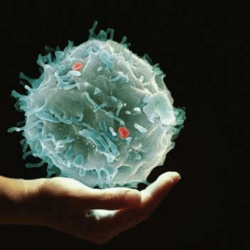

Read the full, original story here: Disease-Specific Human Embryonic Stem Cell Lines Placed On NIH Registry

Related Articles

Infographic: Global regulatory and health research agencies on whether glyphosate causes cancer

Infographic: Global regulatory and health research agencies on whether glyphosate causes cancer

Does glyphosate—the world's most heavily-used herbicide—pose serious harm to humans? Is it carcinogenic? Those issues are of both legal and ...

Most Popular

ChatGPT-Image-Mar-10-2026-01_39_01-PM
Viewpoint—“Miracle molecule” debunked: Why acemannan supplements don’t work
Screenshot 2026-11-23 at 11.51
Calley Means’ demonization of glyphosate is ‘just craziness’. Farmers are responding with science.
Pastel Breakfast Pedestals with Yogurt Bowl
RFK Jr. is about to issue an edict defining ultra-processed foods. What could go wrong?
Screenshot-2026-11-16-at-2.37.32-PM
30 years of GMO farming: Is the boom in glyphosate and glufosinate use harming the environment? Data show they’re the most sustainable choice
glp menu logo outlined

Get news on human & agricultural genetics and biotechnology delivered to your inbox.














