Appealing to ‘scientific consensus’ can correct GMO misconceptions — but is not effective against climate change denial, study finds

Credit: Mark Dixon/Flickr

Despite mountains of evidence that genetically modified foods are safe and climate change is real, many people still doubt these and other well-established scientific findings. Unfortunately, there seems to be no easy way to correct misinformation in the minds of the public.

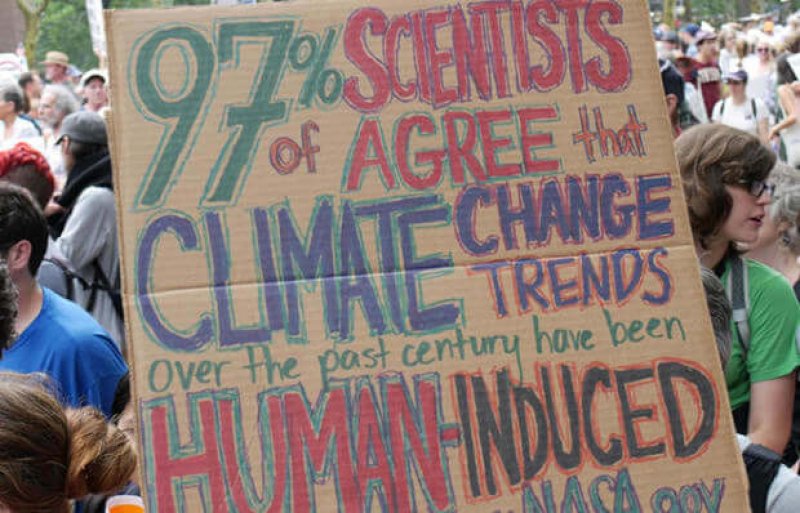
New research published in the journal Psychological Science finds that a two-step process—first explaining what “scientific consensus” means and then explaining what most scientists have to say about a specific subject—is effective at changing misconceptions about the safety of genetically modified foods. This approach, however, is not as effective at changing beliefs about humanity’s impact on the climate.

“Contrary to overwhelming scientific evidence, some people still believe that genetically modified food is unsafe or that climate change is not caused by humans,” said Aart van Stekelenburg, a communication scientist at Radboud University in the Netherlands and lead author on the paper. “We wanted to study if first helping people understand and identify scientific consensus could help change their beliefs and lead them to a better scientific understanding.”

Van Stekelenburg and his colleagues used an online crowdsourcing platform to select 1,500 U.S. participants who believed that genetically engineered food is worse for one’s health than non-engineered food or that climate change is not primarily caused by human action.

The participants were first presented with an infographic about the value of scientific consensus and how to identify it. They then read a news article about a scientific consensus that contradicted their beliefs.

Mis- and disinformation are distorting science and public policy. Subscribe to our Daily and Weekly Digests for incisive coverage of ‘disruptive’ innovations in AI, agricultural biotechnology, food, chemicals, nuclear energy, vaccines, and other disruptive innovations.

The researchers found strong evidence that when it came to genetically engineered food, this two-step communication strategy was successful in correcting misperceptions

“We presented this infographic together with a news item in which the scientific consensus had already emerged. In the case of genetically modified food, it worked even better when people were simultaneously informed of the facts and given an explanation about how scientific consensus works,” said van Stekelenburg. “When it came to reports about climate change, the results were less clear, which is why we’re not so sure whether this strategy would be so helpful when informing people about this topic.”

Van Stekelenburg believes that this may be because people in the United States have less trust in climate scientists than in biomedical scientists. “It may be that because there is less trust, the emphasis on consensus among climate scientists has also had less influence on the convictions of climate naysayers.”


Read the original post here.

Related Articles

Infographic: Global regulatory and health research agencies on whether glyphosate causes cancer

Infographic: Global regulatory and health research agencies on whether glyphosate causes cancer

Does glyphosate—the world's most heavily-used herbicide—pose serious harm to humans? Is it carcinogenic? Those issues are of both legal and ...

Most Popular

Screenshot 2026-11-23 at 11.51
Calley Means’ demonization of glyphosate is ‘just craziness’. Farmers are responding with science.
PFAS Molecules and Hazard Icons
Viewpoint: $$$ Billions of reasons why environmental activists are trying to slap a ‘killer PFAS’ label on many safe and essential ‘forever chemicals’
ChatGPT-Image-Mar-10-2026-01_39_01-PM
Viewpoint—“Miracle molecule” debunked: Why acemannan supplements don’t work
Facebook Icons with No Syringe and Thumbs-Up
RFK Jr.’s science-twisting anti-vaccine group Children’s Health Defense is back on Facebook and Instagram after Meta inexplicably lifts its ban
Pastel Breakfast Pedestals with Yogurt Bowl
RFK Jr. is about to issue an edict defining ultra-processed foods. What could go wrong?
Digital Code Doctor Holding Medicine Bottle
Did you know you’re storing years’ worth of poop in your intestines? Beware: That’s the kind of junk science AI “doctors” are peddling 
Screenshot-2026-11-17-at-12.18.09-PM
Challenging glyphosate fear-mongering: Statewide Nebraska study finds no link between weedkiller use and non-Hodgkin lymphoma
Screenshot 2026-11-23 at 11.11
Sweat lodges and canoe journeys: Native American healing gains Medicaid coverage as Trump cuts funding and restricts eligibility nationwide
Wholewheat Bread and Yogurt Ingredients
Viewpoint: RFK Jr.’s reckless good intentions: Do we really want to ban whole-wheat bread and yogurt?
Grayscale Collage of Protest and Choice
Viewpoint: Medical Freedom movement? A sobering look at RFK Jr.’s disastrous two years as our health and food czar 
Screenshot-2026-11-18-at-12.42.18-PM
Viewpoint: MAHA/MAGA/RFK Jr. health disinformation crackup is coming. Beware as Bhattacharya, Makary, Prasad, and Oz seek lucrative second acts
Screenshot-2026-11-16-at-2.37.32-PM
30 years of GMO farming: Is the boom in glyphosate and glufosinate use harming the environment? Data show they’re the most sustainable choice
glp menu logo outlined

Get news on human & agricultural genetics and biotechnology delivered to your inbox.