What is ‘Big Data’ in agriculture and why does it matter?

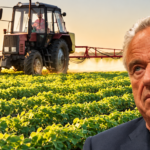
A Bayer employee explains some selling points of digital agriculture. Detractors have their points as well, arguing big data is easily biased. Credit: Bayer

We should pay close attention. Agricultural big data is likely to have far-reaching detrimental environmental and social impacts.

While farmers have used satellite weather data for decades, today’s big data practices are different. Data gets collected by sensors built into precision farm machinery. Then, corporate data scientists aggregate and “mine” this data for insights.

Mis- and disinformation are distorting science and public policy. Subscribe to our Daily and Weekly Digests for incisive coverage of ‘disruptive’ innovations in AI, agricultural biotechnology, food, chemicals, nuclear energy, vaccines, and other disruptive innovations.

It is likely that firms collecting data from farms about weather and pest pressures will be able to predict which products are most needed where and then use this information to maximize profit.

Companies supplying farmers with seeds and chemicals have for years used price discrimination, selectively setting higher prices for inputs within those demographics or regions that are seen to depend on them.

Big agricultural data could entrench the market advantage of large agribusinesses.

Companies collecting and controlling the most data are likely to accrue the most power. This is because of the scale-driven proposition of artificial intelligence: AI is only as good as the data that feeds it.

…

This design bias toward large, commodity crops and capital-intensive farms presents implications at a large scale, such that our food system could become increasingly characterized by an industrial mode of agriculture.

This is an excerpt. Read the original post here

Related Articles

Infographic: Global regulatory and health research agencies on whether glyphosate causes cancer

Infographic: Global regulatory and health research agencies on whether glyphosate causes cancer

Does glyphosate—the world's most heavily-used herbicide—pose serious harm to humans? Is it carcinogenic? Those issues are of both legal and ...

Most Popular

ChatGPT-Image-Mar-10-2026-01_39_01-PM
Viewpoint—“Miracle molecule” debunked: Why acemannan supplements don’t work
AI Doctor with a Digital Neural Head
Utah becomes first state to empower AI to bypass doctors and prescribe certain drugs
Screenshot-2026-10-07-at-2.00.02-PM
9 wellness myths busted
Screenshot 2026-07-29 at 10.40
The COVID vaccine turbo cancer scare is back. Science still proves it’s wrong.
Screenshot-2026-09-22-at-12.26.15-PM
‘Forever chemical’ concerns: Separating hysteria from reasonable concern in the debate over PFAS danger
Screenshot-2026-09-28-at-11.26.17-AM
Viewpoint: Wellness movement activists reposition nicotine from a killer addictive drug into a cure-all for brain ills
glp menu logo outlined

Get news on human & agricultural genetics and biotechnology delivered to your inbox.