Viewpoint: Technology hypocrites? Greenpeace is far less ecological than it claims

Credit: Mail & Guardian

In July 2022, Greenpeace leaders deplored the inclusion of gas and nuclear in the European green taxonomy (this new classification of sustainable finance aimed at directing financing towards clean or transitional energies), denouncing a “defeat for the climate.”

Mis- and disinformation are distorting science and public policy. Subscribe to our Daily and Weekly Digests for incisive coverage of ‘disruptive’ innovations in AI, agricultural biotechnology, food, chemicals, nuclear energy, vaccines, and other disruptive innovations.

“Their contradictions are becoming heavy to bear,” observes historian Anna Veronika Wendland, a former figure of the German Greens, now panicked by the disastrous climate record of the energy policy conducted in Germany, where the Greens-SPD coalition in the Bundestag has just decided to intensify the production of its coal-fired power plants.

“You can’t fight a low-carbon energy source and at the same time claim to defend the climate. For the first time in twenty years, their narrative is cracking… And the questions that hover around the organization, which in fifty years has become a formidable multinational agit-prop, are resurfacing.

…

While some campaigns will allow real progress by forcing companies to become aware of their ecological impact and a profound change in their practices (in terms of deforestation, recycling, overfishing…), others have only a distant relationship with the environment and have pushed several historical members of the movement to distance themselves.
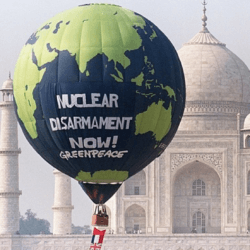

“Greenpeace‘s first goal today is to spread fear – of nuclear, GMOs, technology – because fear allows them to collect donations,” said Patrick Moore, who was one of the organization’s first presidents.

[Editor’s note: This article has been translated from French and edited for clarity.]

This is an excerpt. Read the original post here (behind paywall)

Related Articles

Infographic: Global regulatory and health research agencies on whether glyphosate causes cancer

Infographic: Global regulatory and health research agencies on whether glyphosate causes cancer

Does glyphosate—the world's most heavily-used herbicide—pose serious harm to humans? Is it carcinogenic? Those issues are of both legal and ...

Most Popular

Screenshot-2026-11-16-at-2.37.32-PM
30 years of GMO farming: Is the boom in glyphosate and glufosinate use harming the environment? Data show they’re the most sustainable choice
ChatGPT-Image-Mar-10-2026-01_39_01-PM
Viewpoint—“Miracle molecule” debunked: Why acemannan supplements don’t work
Soybean Harvest in Cupped Hands
30 years of GMO farming: Defying cynics, we’ve had larger harvests, lower costs, and $385 billion in added global farmer income
Stormlit Portrait Over Golden Mountains
Searching for life where no one thought to look: A renowned astrophysicist’s seemingly quixotic quest to explore Venus’s clouds
Screenshot-2026-11-19-at-7.23.23-PM
Viewpoint: After a yearlong hiatus, the U.S. Preventive Services Task Force is back in business—gutted by RFK Jr. and promoting junk science
Screenshot-2026-11-19-at-7.54.57-PM
European General Court sides with scientists, dismisses activist claims that glyphosate is toxically dangerous
Nurturing Care Beneath the Crunchy Moms Logo
Crunchy Moms disinformation flood: Zuckerberg's Facebook has opened floodgates on measles and vaccines
glp menu logo outlined

Get news on human & agricultural genetics and biotechnology delivered to your inbox.