Smart bandage: This high-tech bandaid can monitor wound healing in real time

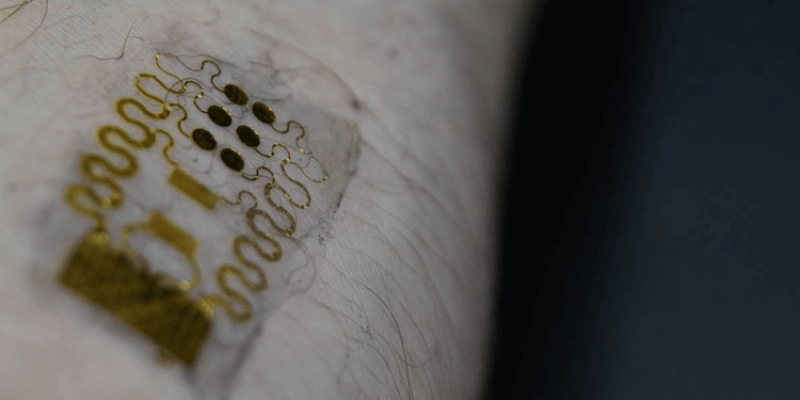
smart bandages that can monitor wounds as they heal
Credit: Binghamton University

Millions of people dealing with diseases and suppressed immune systems are often forced to deal with chronic wounds—often minor injuries that nonetheless take much longer to heal because of compromised health. In addition to vastly varying degrees of recovery, issues like diabetic ulcers are also incredibly expensive, with treatment for a single incident costing as much as $50,000. Overall, chronic injuries cost Americans $25 billion a year, but a remarkable new device could soon offer a much more effective and cost-efficient way to not only help patients heal, but do so better than ever before.

Follow the latest news and policy debates on sustainable agriculture, biomedicine, and other ‘disruptive’ innovations. Subscribe to our newsletter.

Researchers at Stanford University have designed a smart bandage capable of monitoring wounds’ healing in real time, as well as accelerate tissue growth and blood flow around them while reducing scar severity. First described today through findings published in Nature Biotechnology, the team’s new material is only 100 microns thick (equivalent to a single layer of latex paint), yet contains radio antenna, electrical stimulator, biosensors, and other components resting atop a skin-like polymer known as a hydrogel. Once adhered atop a patient’s injury, the smart bandage monitors temperature and other biometric readings, then transmits that data to a smart phone program. If the wound is found to be healing too slowly or if an infection is detected, the device emits small electrical stimulations across the site to boost tissue growth and reduce inflammation.


This is an excerpt. Read the full article here

{{ reviewsTotal }}{{ options.labels.singularReviewCountLabel }}
{{ reviewsTotal }}{{ options.labels.pluralReviewCountLabel }}
{{ options.labels.newReviewButton }}
{{ userData.canReview.message }}

Related Articles

Infographic: Global regulatory and health research agencies on whether glyphosate causes cancer

Infographic: Global regulatory and health research agencies on whether glyphosate causes cancer

Does glyphosate—the world's most heavily-used herbicide—pose serious harm to humans? Is it carcinogenic? Those issues are of both legal and ...

Most Popular

Picture1
The FDA couldn’t find a vaccine safety crisis, so it buried its own research
Screenshot-2026-04-22-at-12.21.32-PM
Viewpoint: Why the retracted Monsanto glyphosate study doesn’t change the science—the world’s most popular herbicide is safe 
Screenshot-2026-05-19-at-11.23.34-AM
West-originated vaccine disinformation sparks murders of health care workers across Africa
Screenshot-2026-05-08-at-11.55.47-AM
Anti-vax activists falsely blame COVID vaccines for the rising U.S. cancer rate among younger people.
ChatGPT-Image-Apr-16-2026-02_56_53-PM
Financial incentives, over diagnosis, and weak oversight: Autism claims are driving up Medicare costs
ChatGPT-Image-May-7-2026-12_32_36-PM
Viewpoint: The state of U.S. vaccine policy? Dismal nationally, but some states are stepping up.
ChatGPT-Image-May-12-2026-11_27_01-AM-2
AI likely to improve health care, research shows—but not for blacks and ethnic minorities
modi visit sikkim
Viewpoint: Indian PM wants farmers to switch to 50% organic. It would take at least 10 years, likely won’t work, and isn’t more sustainable
Screenshot-2026-04-13-at-1.39.26-PM
Viewpoint: ‘Safer for children?’ Stonyfield yogurt under fire for deceptive organic marketing
ChatGPT-Image-May-18-2026-12_06_18-PM-2
Defying death: The immortality movement goes mainstream
glp menu logo outlined

Get news on human & agricultural genetics and biotechnology delivered to your inbox.