
Why Vitamins A and E may do more harm than good

bfa b
Credit: Shannon Kringen (CC BY-SA 2.0)

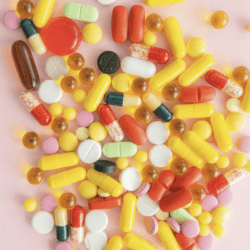
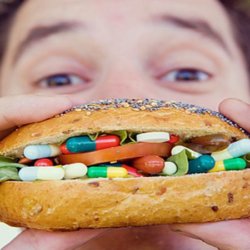
There are many important supplements that benefit people with specific deficiencies or certain health conditions; but research shows, and experts say, that some synthetic vitamins might do more harm than good.

“Everyone is always searching for that magic pill that will give them great health, but dietary supplements just aren’t it because the benefits often don’t outweigh the risks,” says JoAnn Manson, chief of preventive medicine at Brigham and Women’s Hospital in Boston, Massachusetts.

That’s not to say that some groups of people don’t need to supplement certain nutrients at certain points in their life; only that most people don’t need to supplement all the vitamins they may think they do.

“Generally, I don’t suggest the use of vitamin supplements unless there is a specific reason to do so,” says Walter Willett, a professor of epidemiology and nutrition at Harvard T. H. Chan School of Public Health.
Such advice is especially pertinent to fat-soluble vitamins.

Mis- and disinformation are distorting science and public policy. Subscribe to our Daily and Weekly Digests for incisive coverage of ‘disruptive’ innovations in AI, agricultural biotechnology, food, chemicals, nuclear energy, vaccines, and other disruptive innovations.
Fat-soluble nutrients—vitamins A, D, E, and K—are stored in the liver and adipose (fatty) tissue throughout the body for future use. While that helps to stockpile vitamin D during the summer sunshine to compensate for less sunlight exposure during winter months, it also means these vitamins can accumulate to potentially toxic levels.

This is an excerpt. Read the original post here

Related Articles

Infographic: Global regulatory and health research agencies on whether glyphosate causes cancer

Infographic: Global regulatory and health research agencies on whether glyphosate causes cancer

Does glyphosate—the world's most heavily-used herbicide—pose serious harm to humans? Is it carcinogenic? Those issues are of both legal and ...

Most Popular

ChatGPT-Image-Mar-10-2026-01_39_01-PM
Viewpoint—“Miracle molecule” debunked: Why acemannan supplements don’t work
Screenshot 2026-11-23 at 11.51
Calley Means’ demonization of glyphosate is ‘just craziness’. Farmers are responding with science.
Pastel Breakfast Pedestals with Yogurt Bowl
RFK Jr. is about to issue an edict defining ultra-processed foods. What could go wrong?
Neon-AI-Globe-Network
Viewpoint: The three biggest threats posed by AI hyper-intelligence
Screenshot-2026-11-16-at-2.37.32-PM
30 years of GMO farming: Is the boom in glyphosate and glufosinate use harming the environment? Data show they’re the most sustainable choice
glp menu logo outlined

Get news on human & agricultural genetics and biotechnology delivered to your inbox.















