We have the tools to develop genetics-based personalized medicine, but the data used is outdated and lacks diversity

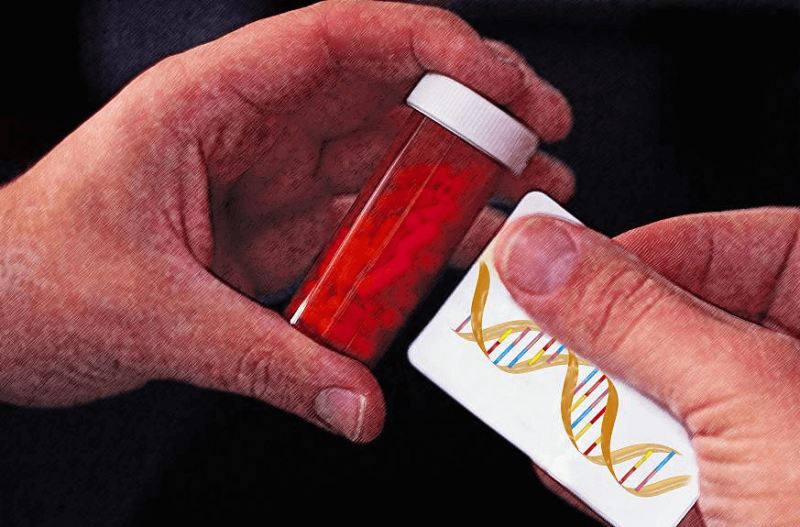
applying dna to medicine bottle
Credit: NIH

Warfarin is a powerful blood thinner and a leading drug for cardiovascular disease worldwide. But in South Africa, it is among the top four drug varieties leading to hospitalization from adverse drug reactions. It’s reasonable to suppose that the drug has similar problematic effects farther across sub-Saharan Africa, though the national data needed to show it are lacking.

Mis- and disinformation are distorting science and public policy. Subscribe to our Daily and Weekly Digests for incisive coverage of ‘disruptive’ innovations in AI, agricultural biotechnology, food, chemicals, nuclear energy, vaccines, and other disruptive innovations.

The fact that warfarin is riskier in some populations than others isn’t a surprise. Different geographic regions tend to host people with slightly different genetic makeups, and sometimes those genetic differences lead to radically different reactions to drugs. For certain people, a higher dosage of warfarin is fine; for others, it’s dangerous. Researchers have known this for decades.

The problem is that the majority of medical research, including genetic research, is still done mainly on one subset of the world’s population: men of Northern European origin. This means that negative drug-gene interactions in other, less well-studied populations can fly beneath the radar. In the case of warfarin, one study concluded that using someone’s genetic information to help guide their drug dosing would benefit 18 percent to 24 percent of people categorized as white, but have no benefit for people identified as Black, Chinese or Japanese.

This is an excerpt. Read the full article here

Related Articles

Infographic: Global regulatory and health research agencies on whether glyphosate causes cancer

Infographic: Global regulatory and health research agencies on whether glyphosate causes cancer

Does glyphosate—the world's most heavily-used herbicide—pose serious harm to humans? Is it carcinogenic? Those issues are of both legal and ...

Most Popular

Screenshot-2026-11-17-at-12.18.09-PM
Challenging glyphosate fear-mongering: Statewide Nebraska study finds no link between weedkiller use and non-Hodgkin lymphoma
Wholewheat Bread and Yogurt Ingredients
Viewpoint: RFK Jr.’s reckless good intentions: Do we really want to ban whole-wheat bread and yogurt?
Screenshot-2026-11-18-at-12.42.18-PM
Viewpoint: MAHA/MAGA/RFK Jr. health disinformation crackup is coming. Beware as Bhattacharya, Makary, Prasad, and Oz seek lucrative second acts
Soybean Harvest in Cupped Hands
30 years of GMO farming: Defying cynics, we’ve had larger harvests, lower costs, and $385 billion in added global farmer income
Grayscale Collage of Protest and Choice
Viewpoint: Medical Freedom movement? A sobering look at RFK Jr.’s disastrous two years as our health and food czar 
Screenshot-2026-11-16-at-2.37.32-PM
30 years of GMO farming: Is the boom in glyphosate and glufosinate use harming the environment? Data show they’re the most sustainable choice
ChatGPT-Image-Mar-10-2026-01_39_01-PM
Viewpoint—“Miracle molecule” debunked: Why acemannan supplements don’t work
Neon-AI-Globe-Network
Viewpoint: The three biggest threats posed by AI hyper-intelligence
Screenshot-2026-11-19-at-7.54.57-PM
European General Court sides with scientists, dismisses activist claims that glyphosate is toxically dangerous
Screenshot-2026-11-17-at-10.41.13-AM
Viewpoint: The cost of resurgence: Let’s not forget how difficult it was to wipe out measles in the U.S.
Screenshot-2026-11-19-at-11.15.27-AM
'It's easier to open a surrogacy agency than a nail salon in most states'
Facebook Icons with No Syringe and Thumbs-Up
RFK Jr.’s science-twisting anti-vaccine group Children’s Health Defense is back on Facebook and Instagram after Meta inexplicably lifts its ban
glp menu logo outlined

Get news on human & agricultural genetics and biotechnology delivered to your inbox.