
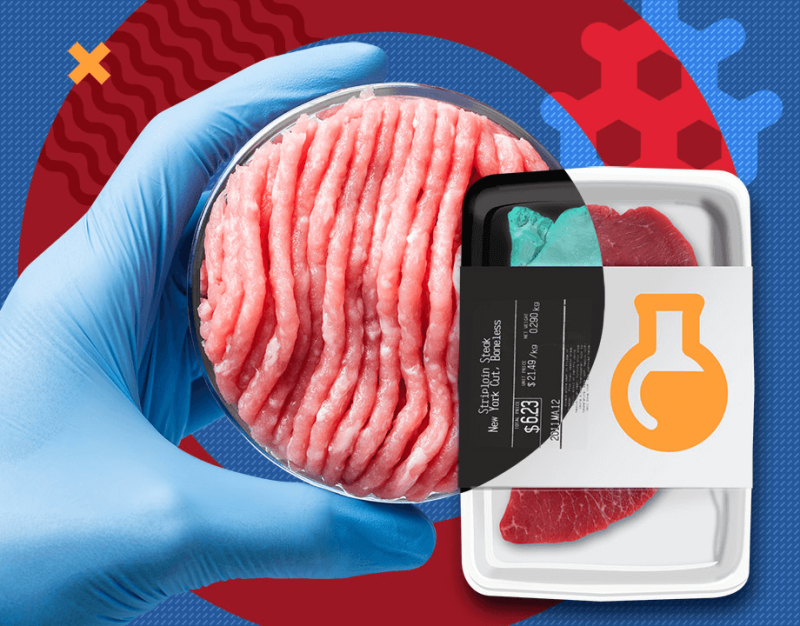
Why gene editing could slingshot cell-based meat to economic viability

lab grown meat a big step forward hero
Credit: ASME

A shocking report from the University of California, Berkeley suggests that cultivated meat could reduce emissions by 96 percent. However, currently, the biggest challenge with cultivated or lab-grown meat is that it’s so expensive that most people can’t afford it.

A new study from Tufts University researchers reveals an interesting solution to this problem.

Mis- and disinformation are distorting science and public policy. Subscribe to our Daily and Weekly Digests for incisive coverage of ‘disruptive’ innovations in AI, agricultural biotechnology, food, chemicals, nuclear energy, vaccines, and other disruptive innovations.
[Growth factors] trigger the growth and multiplication of animal cells, playing a crucial role in the cell culture process, ensuring that the cells develop into the desired tissues that make up meat. Without adding this ingredient, one can’t turn cells into meat.

However, the price for just one gram of a growth factor can range from a few hundred dollars to millions, depending on the type, and they are manufactured and sold by big industrial suppliers.


“Growth factors contribute to a majority of the cost of production for cultivated meat (up to or above 90%). Since they don’t last long in the cell culture media, they also have to be replenished every few days. This limits the ability to provide an affordable product to consumers,” the researchers note.

The researchers from Tufts University modified bovine muscle cells such that the cells were able to produce fibroblast growth factors (FGF) on their own, eliminating the need to purchase growth factors from external sources.

This is an excerpt. Read the original post here

Related Articles

Infographic: Global regulatory and health research agencies on whether glyphosate causes cancer

Infographic: Global regulatory and health research agencies on whether glyphosate causes cancer

Does glyphosate—the world's most heavily-used herbicide—pose serious harm to humans? Is it carcinogenic? Those issues are of both legal and ...

Most Popular

Weed Killer, Gavel, and Cash on Wood Table
Who were the biggest winners in Bayer’s $7.25 billion glyphosate settlement? The tort lawyers, natch
Donkey Symbol Meets Speaking Politician
Democrats’ bid to win over MAHA voters faces a hard limit: Their loyalty to RFK Jr.
ChatGPT-Image-Mar-10-2026-01_39_01-PM
Viewpoint—“Miracle molecule” debunked: Why acemannan supplements don’t work
Screenshot-2026-11-24-at-11.07.44-AM
Here's a sure way to increase testosterone levels and jack up your sex drive
PFAS Molecules and Hazard Icons
Viewpoint: $$$ Billions of reasons why environmental activists are trying to slap a ‘killer PFAS’ label on many safe and essential ‘forever chemicals’
Neon-AI-Globe-Network
Viewpoint: The three biggest threats posed by AI hyper-intelligence
Screenshot-2026-11-16-at-2.37.32-PM
30 years of GMO farming: Is the boom in glyphosate and glufosinate use harming the environment? Data show they’re the most sustainable choice
Screenshot 2026-11-24 at 1.51
Viewpoint: Embrace aging and reject the longevity industry’s eternal-life delusion
Screenshot 2026-11-23 at 11.51
Calley Means’ demonization of glyphosate is ‘just craziness’. Farmers are responding with science.
Glassy Molecules Above Floral Pads
Viewpoint: ‘Forever' PFAS chemicals in panty liners? The only ‘forever’ truth is endless lawsuits that do not protect women’s health 
glp menu logo outlined

Get news on human & agricultural genetics and biotechnology delivered to your inbox.
















