Republican legislators push bill that would prohibit low-income families from accessing cultivated meat

Credit: Warren Davidson/X

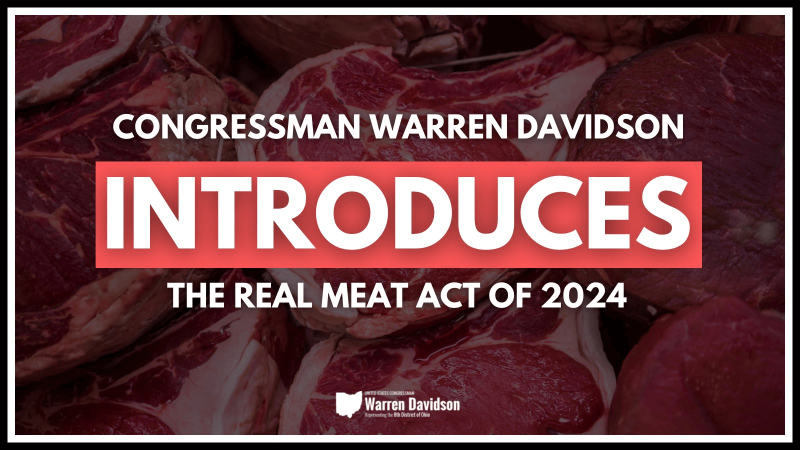
In the House of Representatives, a group of politicians have co-sponsored a bill that would prohibit the US government from investing in cultivated meat.

It is the latest version of theย Real Marketing Edible Artificials Truthfully Act โ€“ or the REAL Meat Act โ€“ which has been introduced by Ohio representative Warren Davidson.

The draft legislation targets cultivated meat, specifically federal support of these proteins. โ€œFake cell-cultured meat not only poses a health risk to the human body, but it also threatens the livelihoods of Americaโ€™s hard-working ranchers, livestock farmers, and butchers,โ€ Davidson said in a statement, invoking a familiar rhetoric and escalating theย misinformationย about theย health credentials of cultivated meat.

โ€œCongress must act to ensure US taxpayers are not footing the bill for this inferior, experimental product,โ€ he added.

Follow the latest news and policy debates on sustainable agriculture, biomedicine, and other ‘disruptive’ innovations. Subscribe to our newsletter.

The bill aims to prohibit federal funding for the research and advancement, promotion, advertisement, and production of cultivated meat. If passed, the legislation would also prevent these foods from being part ofย federal nutrition programmesย like the Supplemental Nutrition Assistance Program (SNAP) for low-income families.

Even theย meat industry has been against bans like the ones issued by Florida and Alabama. The North American Meat Institute, the countryโ€™s oldest and largest trade association (representing 95% of the USโ€™s meat output, has argued that such legislation โ€œlimits consumer choiceโ€ and denies people โ€œaccess to food optionsโ€).

This is an excerpt. Read the original post here

{{ reviewsTotal }}{{ options.labels.singularReviewCountLabel }}
{{ reviewsTotal }}{{ options.labels.pluralReviewCountLabel }}
{{ options.labels.newReviewButton }}
{{ userData.canReview.message }}

Related Articles

Infographic: Global regulatory and health research agencies on whether glyphosate causes cancer

Infographic: Global regulatory and health research agencies on whether glyphosate causes cancer

Does glyphosateโ€”the world's most heavily-used herbicideโ€”pose serious harm to humans? Is it carcinogenic? Those issues are of both legal and ...

Most Popular

ChatGPT-Image-May-7-2026-12_32_36-PM
Viewpoint: The state of U.S. vaccine policy? Dismal nationally, but some states are stepping up.
Screenshot-2026-04-13-at-1.39.26-PM
Viewpoint: โ€˜Safer for children?โ€™ Stonyfield yogurt under fire for deceptive organic marketing
Screenshot-2026-04-22-at-10.46.29-AM
Viewpoint: How to counter science disinformation? Science journalist offers 12 practical tips
the magic of mRNA
Viewpoint: Anti-vax fake โ€˜turbo cancerโ€™ claims threaten cancer treatment breakthroughs
ChatGPT-Image-May-7-2026-12_16_37-PM-2
Viewpoint: Are cancer rates โ€˜skyrocketingโ€™ as RFK, Jr. and MAHA claim? The evidence says mostly the opposite
Defense_Secretary_Ash_Carter_tours_the_Microsoft_Cybercrime_Center_in_Seattle_March_3_2016
How criminals are using AI to target social media users and steal their money and confidential data
Picture1-1
Cooling the planet with balloons: Could a geoengineering gamble slow global warming?
artificial intelligence brain think illustration md
Viewpoint โ€” Digital gods and human extinction: Will we be the first species ever to design our own descendants?
ChatGPT-Image-May-7-2026-01_23_27-PM-2
Viewpoint: Will AI democratize personalized cancer treatment or fuel medical misinformation?
Screenshot-2026-04-23-at-11.00.36-AM
Regulators' dilemma: Thalidomide, Metformin, and the cost of getting drug approvals wrong
ChatGPT Image May 12, 2026, 01_21_30 PM
How big health brands are funding online medical misinformationย 
glp menu logo outlined

Get news on human & agricultural genetics and biotechnology delivered to your inbox.