The proposed “Nutrition Info box” is set to transform how Americans shop for food, offering a quick “Low,” “Med,” or “High” snapshot of saturated fat, sodium, and added sugars content. And it has been a long time coming.
…
Driven by the alarming prevalence of chronic diseases and escalating healthcare costs, the FDA’s initiative goes beyond mere labeling—it’s a strategic intervention aimed at empowering consumers to make more informed dietary choices.
The FDA’s proposed rule on FOP nutrition labeling is currently open for public comments until May 16, 2025. After this period, the FDA will review the comments and potentially make revisions before issuing a final rule, which can take several years. Once finalized, large companies with $10MM+ in food sales have 3 years to implement; small companies have 4 years.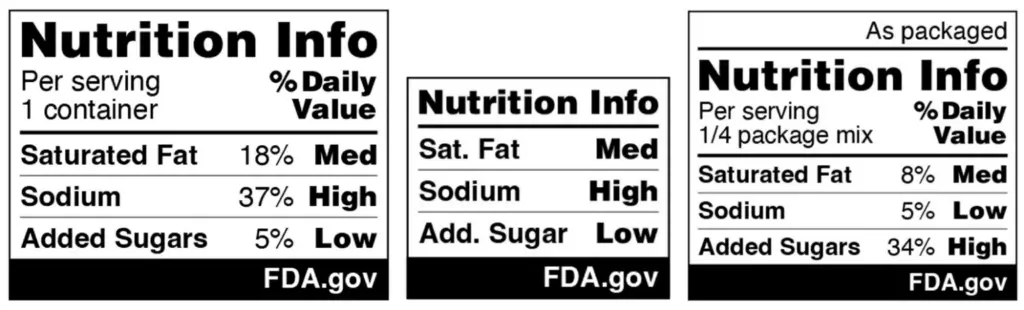
…




What are the economic impacts to the food industry?
Here are some of the potential economic impacts on the food industry:
- Reformulation Costs: Many food manufacturers are likely to reformulate their products to meet new “healthy” criteria. This could lead to substantial upfront research and development expenses until economies of scale are achieved
- Price Changes: There’s evidence of a 5.5% increase in prices of unlabeled products relative to labeled ones due to regulations. This suggests that companies may adjust pricing strategies to offset costs or capitalize on perceived healthier options.
- Demand Shifts: Products receiving labels, especially those previously perceived as healthy, could experience up to a 40% decrease in demand. This may lead to revenue losses for some manufacturers and gains for others producing healthier alternatives.
- Compliance Costs: The industry will face expenses related to implementing new labeling requirements, including design changes and printing costs.
- Potential Cost Savings for U.S.: Despite initial costs, the regulations could lead to long-term healthcare and societal cost savings. The US calorie menu labeling law alone is estimated to result in net lifetime savings of $10.42 billion from a healthcare perspective and $12.71 billion from a societal perspective.
- Market Differentiation: Some companies may benefit from increased product differentiation, potentially allowing for premium pricing of healthier options.
- Industry-wide Impact: Experts estimate that food fraud, which stricter labeling aims to combat, affects 1% of the global food industry at a cost of about $10-$15 billion annually. New regulations could help reduce these losses.

While the US is moving towards more transparent FOP labeling, its proposed regulations appear to be less stringent than those in some other countries, particularly in identifying ultra-processed products. The approach differs from the EU’s color-coded system and the more comprehensive labeling requirements seen in countries like Chile.