How biotech supercharged by AI, robotics and blockchain can help tackle climate change and food shortages

0ceec2e5-7df8-4d4f-abc7-f4eb5be14579

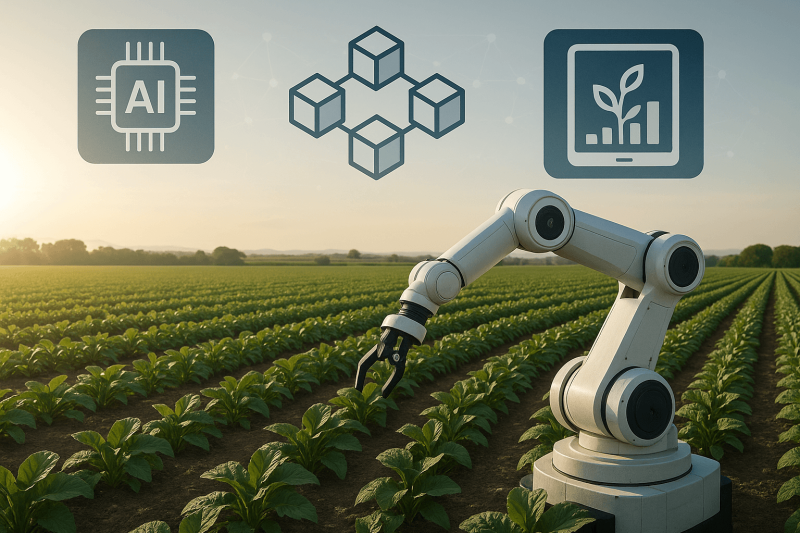
The integration of artificial intelligence (AI), biotechnology, robotics, and blockchain is transforming agriculture worldwide. These technologies tackle pressing issues such as food security, climate change, labour shortages, and supply chain inefficiencies.

AI is changing agriculture through data-driven decision-making, precision farming, and predictive analytics. AI-powered tools analyse data from sensors, drones, and satellites to optimise irrigation, fertilisation, and pest control – reducing resource waste while increasing yields.

Follow the latest news and policy debates on sustainable agriculture, biomedicine, and other ‘disruptive’ innovations. Subscribe to our newsletter.

Biotechnology is improving crop resilience, productivity, and sustainability. Genetically modified organism (GMO) crops are designed to withstand drought, resist pests, and provide higher nutritional value – helping farmers adapt to climate change.

Precision gene-editing technologies like CRISPR (Clustered Regularly Interspaced Short Palindromic Repeats) are enhancing crops without introducing foreign DNA, making them more widely accepted.

A significant trend is the merging of these technologies into comprehensive solutions. AI-powered robots are performing complex agricultural tasks like selective harvesting and precision spraying.


This is an excerpt. Read the original post here

{{ reviewsTotal }}{{ options.labels.singularReviewCountLabel }}
{{ reviewsTotal }}{{ options.labels.pluralReviewCountLabel }}
{{ options.labels.newReviewButton }}
{{ userData.canReview.message }}

Related Articles

Infographic: Global regulatory and health research agencies on whether glyphosate causes cancer

Infographic: Global regulatory and health research agencies on whether glyphosate causes cancer

Does glyphosate—the world's most heavily-used herbicide—pose serious harm to humans? Is it carcinogenic? Those issues are of both legal and ...

Most Popular

vax-misinformation-main
Facts & Fallacies Podcast: Limit free speech to blunt social media misinfo?
Picture1
The FDA couldn’t find a vaccine safety crisis, so it buried its own research
ChatGPT-Image-Apr-16-2026-02_56_53-PM
Financial incentives, over diagnosis, and weak oversight: Autism claims are driving up Medicare costs
ChatGPT-Image-May-12-2026-11_27_01-AM-2
AI likely to improve health care, research shows—but not for blacks and ethnic minorities
modi visit sikkim
Viewpoint: Indian PM wants farmers to switch to 50% organic. It would take at least 10 years, likely won’t work, and isn’t more sustainable
Screenshot-2026-04-22-at-12.21.32-PM
Viewpoint: Why the retracted Monsanto glyphosate study doesn’t change the science—the world’s most popular herbicide is safe 
newborn infant baby mother
Sharp rise in number of parents refusing newborn vitamin K shots, putting babies at 81-fold higher risk of severe bleeding
ChatGPT-Image-May-20-2026-04_53_21-PM-2
Viewpoint: Doctors can fight health misinformation — if hospitals let them
ChatGPT-Image-May-7-2026-12_32_36-PM
Viewpoint: The state of U.S. vaccine policy? Dismal nationally, but some states are stepping up.
Screenshot-2026-05-18-at-3.04.37-PM-2
Social media’s health advice red flags
Screenshot-2026-04-13-at-1.39.26-PM
Viewpoint: ‘Safer for children?’ Stonyfield yogurt under fire for deceptive organic marketing
Screenshot-2026-05-19-at-11.23.34-AM
West-originated vaccine disinformation sparks murders of health care workers across Africa
glp menu logo outlined

Get news on human & agricultural genetics and biotechnology delivered to your inbox.