Future ‘bleak’ for genetically identical Cavendish bananas

cf cc e e z
Hooray for mid-morning snacks (Credit: Kevin Trotman/ Flickr)

Two weeks ago, at a conference in South Africa, scientists met to discuss how to contain a deadly banana disease outbreak in nearby Mozambique, Africa. At fault was a fungus that continues its march around the planet.

In recent years, it has spread across Asia and Australia, devastating plants there that bear the signature yellow supermarket fruit. Only days after the meeting, however, a devastating new survey of the stricken Mozambique farm was released. Scientists at the conference assumed that the fungus was limited to a single plot. The new report suggested the entire plantation was infested, expanding 125 diseased acres to more than 3,500. All told, 7 million banana plants were doomed to wilt and rot.

“The future looks bleak,” says Altus Viljoen, the South African plant pathologist who organized the conference. “There’s no way they’ll be able to stop any further spread if they continue to farm.” Worse, he says, the disease’s rapid spread endangers banana crops beyond Mozambique’s borders.

Chiquita is now researching a replacement banana for the Cavendish. One possibility is a modified version of the fruit developed in Taiwan; the “GCTCV 219” is sweeter than standard Cavendish, and takes a little longer to harvest, but is highly resistant to Panama Disease. The variety is currently being tested in the Philippines and Australia, and it has the market advantage of not being a GMO banana; the technique used to develop it involves “somoclonal variation,” or hand-selection and rebreeding of hardier varieties. (The problem with GMO bananas isn’t the fruit or the technology, it’s that most consumers wouldn’t buy them, banana marketers say.)
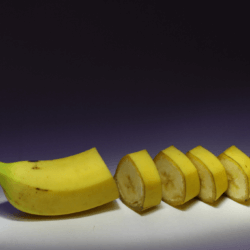
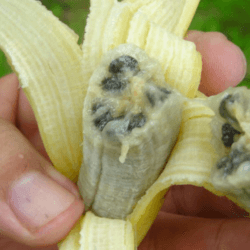
Other possibilities include alternate breeds. Those would require new packaging technology, but the industry overcame that obstacle during the original Gros Michel changeover. Or, if consumer and regulatory resistance breaks down, a transgenic banana, perhaps crossed with Fusarium-resistant peppers.

Read the full, original article: Has the end of the banana arrived?

Related Articles

Infographic: Global regulatory and health research agencies on whether glyphosate causes cancer

Infographic: Global regulatory and health research agencies on whether glyphosate causes cancer

Does glyphosate—the world's most heavily-used herbicide—pose serious harm to humans? Is it carcinogenic? Those issues are of both legal and ...

Most Popular

Screenshot-2026-11-17-at-12.18.09-PM
Challenging glyphosate fear-mongering: Statewide Nebraska study finds no link between weedkiller use and non-Hodgkin lymphoma
Soybean Harvest in Cupped Hands
30 years of GMO farming: Defying cynics, we’ve had larger harvests, lower costs, and $385 billion in added global farmer income
Health vs
Health vs. Hype’s rocky debut: American Medical Association’s misinformation-debunking podcast platforms ‘leaky gut’ wellness crank 
Screenshot-2026-11-18-at-2.44.24-PM
Why should thousands of Americans die every year waiting for a kidney transplant? There’s an easy fix to this morbid reality
Low-Poly Climate Connections Infographic
Viewpoint: EU-backed climate “disinformation” crackdown—who polices what’s false?
ChatGPT-Image-Mar-10-2026-01_39_01-PM
Viewpoint—“Miracle molecule” debunked: Why acemannan supplements don’t work
BEMT Lotion for Freckled Skin
Burned by FDA bureaucracy: Why Americans waited decades for cancer-preventing sunscreen
measles
The grim human cost of the Trump—RFK Jr. measles-prevention failure: 16 times more cases than in 2024
Screenshot-2026-11-17-at-12.56.22-PM
RFK Jr.’s CDC blocked measles risk alert for pregnant women; 112 contracted the disease, and one-quarter were hospitalized
Gloved Hand Holding M-M-R Vaccine Vial
Viewpoint: The dangerous lie RFK Jr.-founded Children’s Health Defense is circulating to discredit one of medicine’s great breakthroughs: the MMR (measles-mumps-rubella) vaccine
Energetic Speaker on Stage
Viewpoint: Why are the stars of the MAHA revolution standing by convicted rapist — and conservative firebrand — Russell Brand?
Screenshot-2026-11-17-at-11.04.14-AM
There are more than 6,000 genetic disorders. For the first time, gene editing is making some treatable. Are we ready?
glp menu logo outlined

Get news on human & agricultural genetics and biotechnology delivered to your inbox.