
GMOs could reduce Vietnam’s dependence on feed imports

The GLP aggregated and excerpted this blog/article to reflect the diversity of news, opinion and analysis.

GMOs would be a good solution to the problems facing Vietnam’s cereal producers, a conference on food biotechnology held on October 16 by the Center for Vietnam Science and Technology Internationalization Promotion (VISTIP), under the Ministry of Science and Technology, and the International Food Information Council Foundation (IFIC) was told.

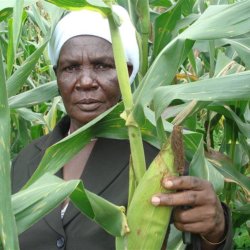
Mr. Le Huy Ham, Director of the Agricultural Genetics Institute at the National Center of Natural Science and Technology, told VET that GMO products would partly reduce the dependence on imported animal feed materials such as soybean and maize. “Around 95 percent of soybean for animal feed is imported,” he said. “Vietnam has 1.1 million ha of maize and produces 5 million tons a year, which is half the productivity seen in the US.”

Regarding GMO products for the cotton industry, Mr. Ham said almost all of the cotton planted in Vietnam is GMO and brings major profits to farmers because of its insect-resilience and strength.

Concerns were expressed at the conference over GMO products being harmful to human health. Many speakers, however, held the view that there is no scientific evidence of harmful effects.
In Vietnam, due to concerns over selecting GMO products, the government carefully considers the issue with advice coming from scientific committees and related ministries. Any GMO planted in Vietnam must have already been planted in at least five developed countries.

In terms of public communication over the pros and cons of GMO products, Ms. Helen Yu from the World Health Organization said that information needs to be delivered by trustworthy organizations to avoid any misunderstandings in the public domain.

Read full, original post: GMO products good for Vietnam

Related Articles

Infographic: Global regulatory and health research agencies on whether glyphosate causes cancer

Infographic: Global regulatory and health research agencies on whether glyphosate causes cancer

Does glyphosate—the world's most heavily-used herbicide—pose serious harm to humans? Is it carcinogenic? Those issues are of both legal and ...

Most Popular

Nurturing Care Beneath the Crunchy Moms Logo
Crunchy Moms disinformation flood: Zuckerberg's Facebook has opened floodgates on measles and vaccines
Screenshot-2026-11-19-at-7.54.57-PM
European General Court sides with scientists, dismisses activist claims that glyphosate is toxically dangerous
Screenshot-2026-11-16-at-2.37.32-PM
30 years of GMO farming: Is the boom in glyphosate and glufosinate use harming the environment? Data show they’re the most sustainable choice
Stormlit Portrait Over Golden Mountains
Searching for life where no one thought to look: A renowned astrophysicist’s seemingly quixotic quest to explore Venus’s clouds
Soybean Harvest in Cupped Hands
30 years of GMO farming: Defying cynics, we’ve had larger harvests, lower costs, and $385 billion in added global farmer income
Screenshot-2026-11-18-at-2.44.24-PM
Why should thousands of Americans die every year waiting for a kidney transplant? There’s an easy fix to this morbid reality
Screenshot-2026-11-19-at-7.23.23-PM
Viewpoint: After a yearlong hiatus, the U.S. Preventive Services Task Force is back in business—gutted by RFK Jr. and promoting junk science
ChatGPT-Image-Mar-10-2026-01_39_01-PM
Viewpoint—“Miracle molecule” debunked: Why acemannan supplements don’t work
Screenshot-2026-11-17-at-12.18.09-PM
Challenging glyphosate fear-mongering: Statewide Nebraska study finds no link between weedkiller use and non-Hodgkin lymphoma
glp menu logo outlined

Get news on human & agricultural genetics and biotechnology delivered to your inbox.











