Chromosomal abnormality could theoretically create new human species

The GLP aggregated and excerpted this blog/article to reflect the diversity of news, opinion and analysis.

In this age of genome sequencing, we can lose sight of the importance of how our genomes are distributed over 23 pairs of chromosomes. Rearrangements of the pairs are invisible to sequencing if the correct amount of genetic material is present.

A recent genetic counseling session reminded me of a chromosomal quirk that flies completely under the radar of genome sequencing, yet if it were to turn up in two copies in a bunch of people who have children together, could theoretically seed a second human species, one characterized by a chromosome number of 44, not 46.

The young couple I counseled had suffered several early pregnancy losses, and tests had revealed extra material from chromosome 22. Although it’s a tiny chromosome, it is gene-dense and the extra genetic material ends development just as an embryo is becoming a fetus.

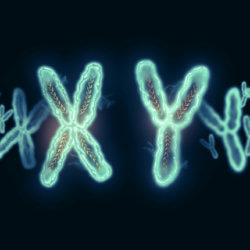
The lab report profiled single nucleotide polymorphism (SNP) landmarks, and detected overrepresentation of pieces of chromosome 22. But this was on a genomewide basis using microarray technology — not the cut-and-paste size-ordered chromosome chart that is an old-fashioned karyotype. SNPs may be newer, but the distinction between an extra chromosome 22, which the lab report inferred, and the actuality of an extra tiny chromosome glommed onto one of the other chromosomes, is critical for predicting recurrence in a family — because such a piggybacked chromosome would explain the repeated losses. It is a case of not seeing the genetic forest for the trees. Chromosomes still count.

Read full, original post: Can a Quirky Chromosome Create a Second Human Species?

Related Articles

Infographic: Global regulatory and health research agencies on whether glyphosate causes cancer

Infographic: Global regulatory and health research agencies on whether glyphosate causes cancer

Does glyphosate—the world's most heavily-used herbicide—pose serious harm to humans? Is it carcinogenic? Those issues are of both legal and ...

Most Popular

Screenshot-2026-11-17-at-12.18.09-PM
Challenging glyphosate fear-mongering: Statewide Nebraska study finds no link between weedkiller use and non-Hodgkin lymphoma
Soybean Harvest in Cupped Hands
30 years of GMO farming: Defying cynics, we’ve had larger harvests, lower costs, and $385 billion in added global farmer income
Screenshot-2026-11-18-at-2.44.24-PM
Why should thousands of Americans die every year waiting for a kidney transplant? There’s an easy fix to this morbid reality
Health vs
Health vs. Hype’s rocky debut: American Medical Association’s misinformation-debunking podcast platforms ‘leaky gut’ wellness crank 
Low-Poly Climate Connections Infographic
Viewpoint: EU-backed climate “disinformation” crackdown—who polices what’s false?
ChatGPT-Image-Mar-10-2026-01_39_01-PM
Viewpoint—“Miracle molecule” debunked: Why acemannan supplements don’t work
BEMT Lotion for Freckled Skin
Burned by FDA bureaucracy: Why Americans waited decades for cancer-preventing sunscreen
measles
The grim human cost of the Trump—RFK Jr. measles-prevention failure: 16 times more cases than in 2024
Screenshot-2026-11-17-at-12.56.22-PM
RFK Jr.’s CDC blocked measles risk alert for pregnant women; 112 contracted the disease, and one-quarter were hospitalized
Gloved Hand Holding M-M-R Vaccine Vial
Viewpoint: The dangerous lie RFK Jr.-founded Children’s Health Defense is circulating to discredit one of medicine’s great breakthroughs: the MMR (measles-mumps-rubella) vaccine
Screenshot-2026-11-17-at-11.04.14-AM
There are more than 6,000 genetic disorders. For the first time, gene editing is making some treatable. Are we ready?
glp menu logo outlined

Get news on human & agricultural genetics and biotechnology delivered to your inbox.