Would ‘USDA Process Verified’ label for GMO-free foods be a marketplace driven solution?

The GLP aggregated and excerpted this blog/article to reflect the diversity of news, opinion and analysis.

The United States Department of Agriculture has developed a new government certification and labeling for foods that are free of genetically modified organisms.

Good. This is exactly what is needed to allow consumers choice in what they buy while eliminating the need for government mandates on how to label food that might contain GMOs.

. . . .

Although there is no clear scientific proof that foods with GMOs are dangerous or unhealthy . . . the sci-fi term does make some folks squeamish about consuming those foods.

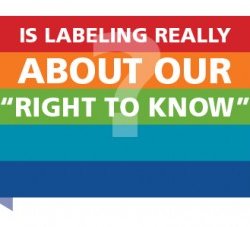
This is why there have been efforts to mandate labeling of GMOs, particularly at the state level. In 2013, Washington state voters wisely rejected the mandates in Initiative 522.

We urged voters at the time to reject I-522 because we believed (and still do) GMO product labeling should be driven by the marketplace.

Those selling products without GMOs should label them as such to attract the crowds skeptical about GMOs. If sales boomed, the practice would grow and, perhaps, the GMO market would shrink.
. . . .

The certification would be optional and companies would have to pay for it, according to The Associated Press. If approved, the foods would be able to carry a “USDA Process Verified” label along with a claim they are free of GMOs.

. . . .

It reduces the need for states to get involved, potentially eliminating a patchwork of state laws that could drive up food distribution costs and be confusing for consumers.

This voluntary system would make it easier to promote GMO-free products because they would have the USDA stamp of approval. It has the potential to boost sales and gives consumers options.

Read full, original post: USDA plan for voluntary GMO labeling sound

Related Articles

Infographic: Global regulatory and health research agencies on whether glyphosate causes cancer

Infographic: Global regulatory and health research agencies on whether glyphosate causes cancer

Does glyphosate—the world's most heavily-used herbicide—pose serious harm to humans? Is it carcinogenic? Those issues are of both legal and ...

Most Popular

Screenshot-2026-11-17-at-12.18.09-PM
Challenging glyphosate fear-mongering: Statewide Nebraska study finds no link between weedkiller use and non-Hodgkin lymphoma
Screenshot-2026-11-16-at-2.37.32-PM
30 years of GMO farming: Is the boom in glyphosate and glufosinate use harming the environment? Data show they’re the most sustainable choice
Soybean Harvest in Cupped Hands
30 years of GMO farming: Defying cynics, we’ve had larger harvests, lower costs, and $385 billion in added global farmer income
ChatGPT-Image-Mar-10-2026-01_39_01-PM
Viewpoint—“Miracle molecule” debunked: Why acemannan supplements don’t work
Stormlit Portrait Over Golden Mountains
Searching for life where no one thought to look: A renowned astrophysicist’s seemingly quixotic quest to explore Venus’s clouds
Wholewheat Bread and Yogurt Ingredients
Viewpoint: RFK Jr.’s reckless good intentions: Do we really want to ban whole-wheat bread and yogurt?
Screenshot-2026-11-13-at-10.02.02-AM
Viewpoint: Why it’s such a big deal that under Trump-RFK Jr., the U.S. has lost its ‘measles-free’ status  
Screenshot-2026-11-18-at-12.42.18-PM
Viewpoint: MAHA/MAGA/RFK Jr. kook health disinformation crackup is coming. Beware as Bhattacharya, Makary, Prasad, and Oz seek lucrative second acts
Screenshot-2026-11-19-at-7.54.57-PM
European General Court sides with scientists, dismisses activist claims that glyphosate is toxically dangerous
Screenshot-2026-11-09-at-3.01.19-PM
Are Texas data centers killing calves? Debunking viral AI claims
glp menu logo outlined

Get news on human & agricultural genetics and biotechnology delivered to your inbox.