CRISPR could immunize citrus trees against devastating greening disease

Screen Shot at PM
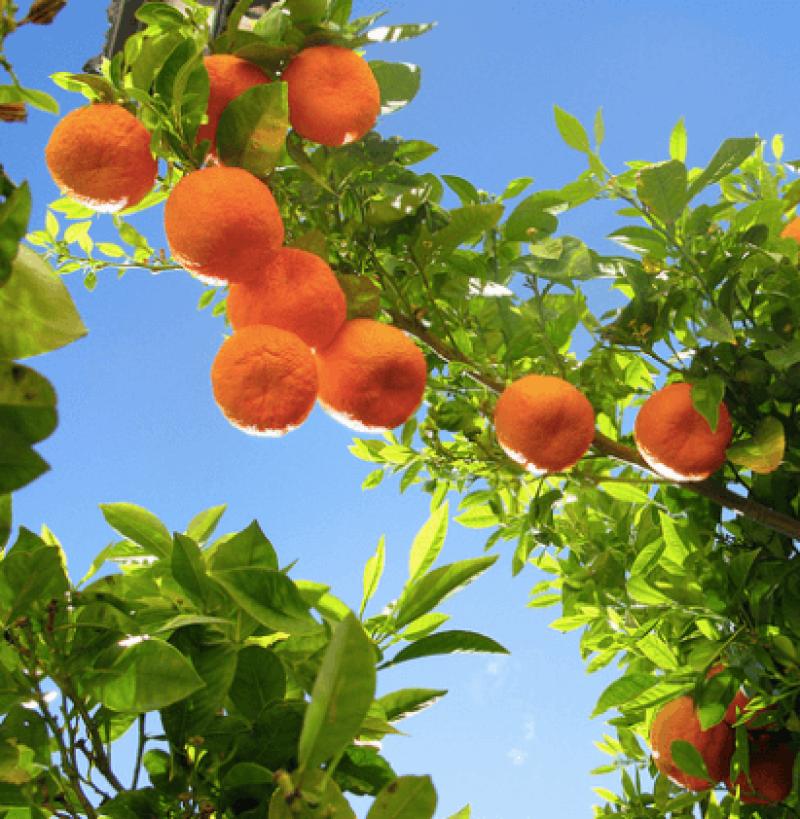
Photo by Ronnie McDonald/Flickr

Nian Wang, the University of Florida professor leading this CRISPR research team at Lake Alfred, said the tool could cut decades from reaching the holy grail of citrus research — producing varieties immune from the disease that has devastated Florida’s most iconic industry.

“Come back in two or three years, and I’ll show you a tree,” Wang said.

The benefits of CRISPR are not just that it can eliminate genes that make citrus vulnerable to greening. It can replace them with other genes from the same plant, rather than from jellyfish or spinach, as has been the case with some previous genetically modified organisms.

Mostly because CRISPR products don’t borrow genes from other plants or animals, the U.S. Department of Agriculture ruled last spring that they won’t face the same regulation as earlier generations of GMOs.

. . . .

“To knock out a specific gene without introducing a new gene would solve the challenge facing growers and would be more acceptable for consumers,” said Larry Black, a grower from Fort Meade.

The GLP aggregated and excerpted this blog/article to reflect the diversity of news, opinion and analysis. Read full, original post:  UF research shows promise in finding cure for citrus greening

{{ reviewsTotal }}{{ options.labels.singularReviewCountLabel }}
{{ reviewsTotal }}{{ options.labels.pluralReviewCountLabel }}
{{ options.labels.newReviewButton }}
{{ userData.canReview.message }}

Related Articles

Infographic: Global regulatory and health research agencies on whether glyphosate causes cancer

Infographic: Global regulatory and health research agencies on whether glyphosate causes cancer

Does glyphosate—the world's most heavily-used herbicide—pose serious harm to humans? Is it carcinogenic? Those issues are of both legal and ...

Most Popular

Screenshot-2026-05-01-at-1.29.41-PM
Viewpoint: What happens when whole grains meet modern food manufacturing? Labels don’t tell the whole story.
ChatGPT-Image-Mar-27-2026-11_47_30-AM-2
FDA’s expedited drug reviews are hailed in some quarters but other approval practices are problematic
ChatGPT-Image-Apr-13-2026-02_20_22-PM
Viewpoint: Misinformation infodemic? Why assessing evidence is so challenging 
Farmers can talk to plants
Farmers are a major source of misinformation—about farming
S
As vaccine rejectionism spreads, measles may be taking a more dangerous turn
What explains Homo sapiens’ huge brains? Ancient climate change played a role
Viewpoint: Internal White House documents detail administration’s strategy to undermine climate science
Screenshot-2026-04-20-at-2.26.27-PM
Viewpoint — Food-fear world: The latest activist scientists campaign: Cancer-causing additives
ChatGPT-Image-May-7-2026-11_28_04-AM-2
‘Conflict entrepreneurs’ are driving disinformation and shaping public opinion
bigstock opioids on chalkboard with rol
GLP podcast: 'Safe injection sites': enabling drug addiction or saving lives?
ChatGPT-Image-May-6-2026-03_41_05-PM
‘Protecting the integrity of science’: Kennedy’s FDA blocks release of taxpayer-funded studies finding COVID and shingles vaccines safe
Screenshot 2026-05-06 at 2.19
Vaccine shootout at the CDC 
Screenshot-2026-05-06-at-2.07.43-PM
Manufacturing a conspiracy: The timeline of how  the White House embraced the fringe claim that scientists are being mysteriously murdered
circular-bioeconomy-should-focus-on-sustainable-wellbeing
GLP podcast: What's wrong with 'doomsday' environmentalism? It's false.

Sorry. No data so far.

glp menu logo outlined

Get news on human & agricultural genetics and biotechnology delivered to your inbox.