Insect-resistant GMO Bt rice poses ‘negligible risks’ to non-target species, study finds

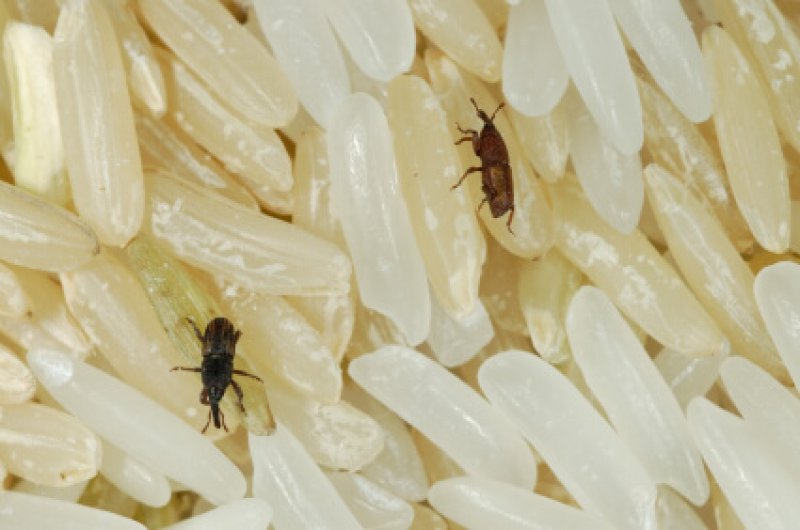
Weevils Rice Bugs
This type of very small beetles infests uncooked rice.

Transgenic Bt rice expressing the insecticidal proteins derived from Bacillus thuringiensisย Berliner (Bt) have been developed since 1989. Their ecological risks toward non-target organisms have been investigated, however, these studies were conducted individually, yielding uncertainty regarding potential agroecological risks associated with large-scale deployment of Bt rice lines. Here, we developed a meta-analysis of existing literature to synthesize current knowledge of the impacts of Bt rice on functional arthropod guilds, including herbivores, predators, parasitoids and detritivores in laboratory and field studies. Laboratory results indicate Bt rice did not influence survival rate and developmental duration of herbivores, although exposure to Bt rice led to reduced egg laying, which correctly predicted their reduced abundance in Bt rice agroecosystems. Similarly, consuming prey exposed to Bt protein did not influence survival, development or fecundity of predators, indicating constant abundances of predators in Bt rice fields. Compared to control agroecosystems, parasitoid populations decreased slightly in Bt rice cropping systems, while detritivores increased. We draw two inferences. One, laboratory studies of Btย rice showing effects on ecological functional groups are mainly either consistent with or more conservative than results of field studies; and two, Bt rice will pose negligible risks to the non-target functional guilds in future large-scale Bt rice agroecosystems in China.

The GLP aggregated and excerpted this blog/article to reflect the diversity of news, opinion, and analysis. Read full, original post:ย Does Bt rice pose risks to non-target arthropods?โ€• Results of a meta-analysis in China

{{ reviewsTotal }}{{ options.labels.singularReviewCountLabel }}
{{ reviewsTotal }}{{ options.labels.pluralReviewCountLabel }}
{{ options.labels.newReviewButton }}
{{ userData.canReview.message }}

Related Articles

Infographic: Global regulatory and health research agencies on whether glyphosate causes cancer

Infographic: Global regulatory and health research agencies on whether glyphosate causes cancer

Does glyphosateโ€”the world's most heavily-used herbicideโ€”pose serious harm to humans? Is it carcinogenic? Those issues are of both legal and ...

Most Popular

Picture1
The FDA couldnโ€™t find a vaccine safety crisis, so it buried its own research
Screenshot-2026-04-22-at-12.21.32-PM
Viewpoint: Why the retracted Monsanto glyphosate study doesnโ€™t change the scienceโ€”the worldโ€™s most popular herbicide is safeย 
Screenshot-2026-05-19-at-11.23.34-AM
West-originated vaccine disinformation sparks murders of health care workers across Africa
Screenshot-2026-05-08-at-11.55.47-AM
Anti-vax activists falsely blame COVID vaccines for the rising U.S. cancer rate among younger people.
ChatGPT-Image-Apr-16-2026-02_56_53-PM
Financial incentives, over diagnosis, and weak oversight: Autism claims are driving up Medicare costs
ChatGPT-Image-May-7-2026-12_32_36-PM
Viewpoint: The state of U.S. vaccine policy? Dismal nationally, but some states are stepping up.
ChatGPT-Image-May-12-2026-11_27_01-AM-2
AI likely to improve health care, research showsโ€”but not for blacks and ethnic minorities
modi visit sikkim
Viewpoint: Indian PM wants farmers to switch to 50% organic. It would take at least 10 years, likely wonโ€™t work, and isnโ€™t more sustainable
Screenshot-2026-04-13-at-1.39.26-PM
Viewpoint: โ€˜Safer for children?โ€™ Stonyfield yogurt under fire for deceptive organic marketing
ChatGPT-Image-May-18-2026-12_06_18-PM-2
Defying death: The immortality movement goes mainstream
glp menu logo outlined

Get news on human & agricultural genetics and biotechnology delivered to your inbox.