



Ancestry & Evolution

Part I: Viewpoint—Many people believe ‘human biodiversity’ is alt-right code for embracing racism. Here’s why they are dangerously wrong
Why do some people equate the phrase “human biodiversity” with racism? And what does it really mean? HBD, as its ...

New COVID variant? Here’s why animals remain a possible source
It is important, for both human and animal health, to know what species are susceptible to infection by the coronavirus ...

Dog Aging Project: Multi-year sequencing of tens of thousands of dogs to find clues to longevity
How old is your dog in human years? And what factors contribute to a long and healthy life for a ...

Will the fast-spreading Omicron variant BA.2 sideline momentum to near-normal return?
As the omicron surge continues to decline in the U.S., infectious disease experts are keeping a close eye on an ...
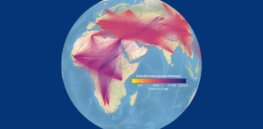
Video and infographic: Most comprehensive family tree ever retraces history of humanity
A new, enormous family tree for all of humanity attempts to summarize how all humans alive today relate both to ...
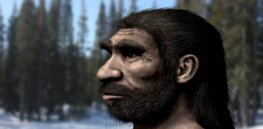
Will Homo longi elbow aside Neanderthals as our closest relative?
In 1933 a mysterious fossil skull was discovered near Harbin City in the Heilongjiang province of north-eastern China. Despite being ...
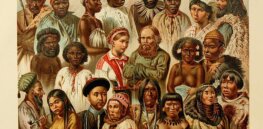
Christianity and ‘race science’: UCLA’S Terrence Keel examines the religious roots of scientific racism
Terence Keel is an associate professor with a joint appointment in the African American studies department and the UCLA Institute ...

COVID ground zero: Three new studies again point to Wuhan live animal market as source of coronavirus outbreak
Scientists have released three studies that reveal intriguing new clues about how the COVID-19 pandemic started. Two of the reports ...

Lefty or righty? Is handedness genes or chance?
Many geniuses, from Einstein to Bill Gates were lefties. But left-handedness remains a rarity--only 1 in 10 of us are ...
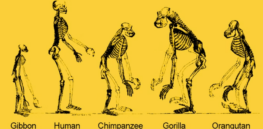
Re-thinking evolution: If we ‘evolved from apes’, why do they still exist?
In 2017, actor-comedian Tim Allen famously tweeted a question that revealed just how little he understands about evolution. It seems ...
Danger ahead? How a COVID variant with the transmissibility of Omicron and the deadliness of SARS could emerge
As SARS-CoV-2, the coronavirus that causes COVID-19, has spread throughout the world, many observers have failed to take note of ...

Why ‘better looking’ people may be genetically programmed to be healthier as well
An extensive new study has found evidence that links physical attractiveness to the functioning of the immune system. While there ...
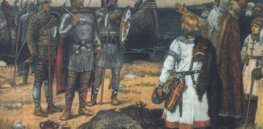
Did White Europeans evolve separately from the rest of the world? A new book examines the racist allure of this pseudoscientific hypothesis
The model of evolution developed by Charles Darwin increasingly gained traction, bringing about a revolution in scientific thinking. It was now ...
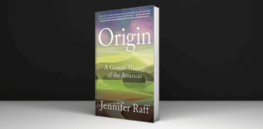
‘A Genetic History of the Americas’: In new book, geneticist claims first Americans did not arrive in North America via Siberian land bridge, as is widely believed
It’s Anthropology 101. At the end of the last ice age, around 13,000 years ago, retreating glaciers created an inland ...

Why have humans evolved to like sour foods?
Scientists don’t know much about how our acidic taste evolved. Enter Rob Dunn. The North Carolina State University ecologist and ...
How did the Omicron COVID variant emerge? Here are 3 theories
Omicron’s arrival in November 2021 took scientists by surprise. Not because there was a new variant on the block, but ...
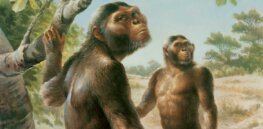
Deciphering the confusing puzzle of how modern humans developed from ape-like ancestors
How did modern humans develop from their ape-like ancestors? When did they start walking on two legs and making tools? ...

Red Queen Hypothesis: Why are most humans programmed to want to procreate?
Through meiosis, the process that underlies sexual reproduction, the gametes must form in their respective bodies, then the member of ...

Pet love: Humans nurture their animals as they parent their children. Here’s the evolutionary reason why
Have you noticed more cats riding in strollers lately? Or bumper stickers that read, “I love my granddogs”? You’re not ...
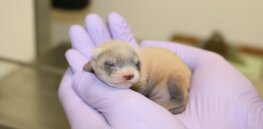
Some endangered species can no longer survive in the wild. So should we alter their genes to protect them?
Around the world, populations of many beloved species are declining at increasing rates. According to one grim projection, as many as ...
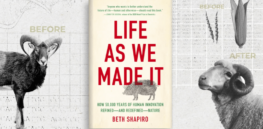
‘Life as We Made It’: Evolutionary biologist illuminates how humans have tinkered with evolution over thousands of years
With genetic engineering, humans have recently unleashed a surreal fantasia: pigs that excrete less environment-polluting phosphorus, ducklings hatched from chicken ...

What science says about the future of COVID-19
With pandemic fatigue becoming more intense, there is increasing speculation about when the SARS-CoV-2 virus, which causes COVID-19, might become ...

Did humans leave (or try to leave) Africa in waves? A 1.5-million-year-old vertebrae found in Israel is challenging evolutionary canon
Scientists had debated whether ancient humans dispersed from Africa in a one-time event or in multiple waves. Now, researchers have ...
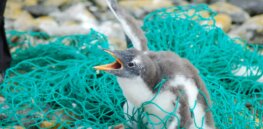
How are animals and plants adapting to our increasingly warming and polluted world?
Peppered moths living in industrial areas of Britain were getting darker, better for blending in against the soot-blackened buildings and ...
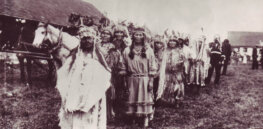
A genetic history: ‘Origin’ book looks at how the Americas were settled
Scientific understanding of the peopling of the Americas is as unsettled as the Western Hemisphere once was. Skeletal remains, cultural ...

Mom brain: How can science explain ‘maternal instincts’?
Is there such a thing as maternal instinct? Not exactly, scientists say. It is true that while pregnant, breastfeeding and ...

Active grandparents theory: Has evolution programmed us to remain physically active late in life?
Why is physical activity so good for us as we age? According to a novel new theory about exercise, evolution ...
