


Patrick Whittle
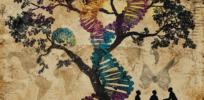
Selective Pressure, Selective Silence
Human evolution, particularly of the brain, ended a long time ago—at least that is what many educated people, wary of ...
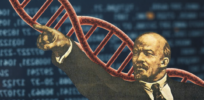
From Hitler to Richard III to Lenin, DNA can illuminate the lives, characters, and motivations of people long dead
Hitler left blood. Richard III left bones. Lenin left an entire body, preserved like a specimen. For centuries, historians and ...

Confronting the elephant in the human biodiversity room — the explosive issue of IQ
Here’s a thought experiment. Imagine two widely separated human groups living for thousands of years in different cultural and ecological ...

Fighting climate change with gene editing: Can we slash cows’ methane production?
Preventing ruminant methane from being produced in the first place seems a sensible way to limit its damaging effects ...

Viewpoint: Darwin’s ‘Descent of Man’ is both deeply disturbing and more relevant than ever
Charles Darwin’s Descent of Man is full of unexpected delights — such as the trio of hard drinking, chain-smoking koalas ...

Organic farming acreage in the U.S. is in steep decline
[A]merica’s certified organic acreage fell almost 11% between 2019 and 2021. Numerous farmers who implement sustainable practices told The Associated ...
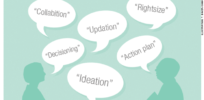
Blame human evolution for corporate jargon and thick academic prose
For anyone who’s ever worked in a large organization, this kind of message will be depressingly familiar: “Do you have ...

‘Warrior gene’: If we genetically screen children to protect them from diseases, why shouldn’t we investigate their proclivity to act agressively
“Some people have real problems right out of the starting block. We can't dodge the responsibility for social action." ...
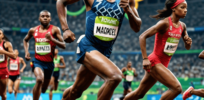
Race and the Olympics: ‘Yes’, Blacks will sweep the running events, and ‘yes’, genetics is the reason (and Eurasian whites will dominate field events and weight lifting)
The Summer Olympics is rightly billed as an international celebration of global diversity. Athletes are competing and excelling from all ...

‘Race’, anti-racism and biology
Using biology to determine the racial ancestry of human remains is racist. Except when it’s done in the name of ...
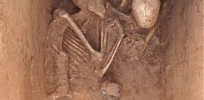
Viewpoint: The ‘culture wars’ infection of anthropology and archaeology grows
In 1941, at the height of World War 2, troops stationed on Hoy in the remote Scottish Orkney Islands made ...
Why it’s so critical to move beyond liberal rejectionism of human biodiversity
The way in which evolutionary explanations can be so readily applied to apparent differences in human psychology does highlight the ...
How to argue about ‘race’: Charles Murray and Adam Rutherford are not so far apart
Shortly before the killing of George Floyd by a white Minneapolis police officer in May this year, two (now tragically ...
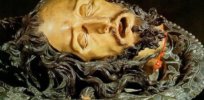
Science vs spirituality: The case of the severed head
There’s a ghastly severed head in St Robert’s Roman Catholic church, just down the road from me in Catforth, northern ...

Is biology sexist and racist? The escalating battle over ‘inclusive terminology’ and the language of science
Science, biology in particular, is rife with racism and other egregious forms of prejudice and bigotry. That’s the belief now ...
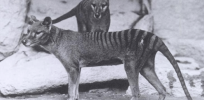
De-extinction: The Second Coming
Ten years ago it burst into mainstream popular life: the possibility of resurrecting extinct species ...
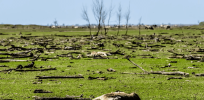
Part II: Nature is complex — Rewilding offers promising ecological benefits, but it is not the panacea its proponents contend — and can cause harm
Nature can be unpredictable, often foiling the best of intentions. And rewilding experiments gone awry are only a fraction of ...
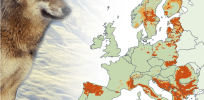
Part I: Europe’s rewilding movement — A victory for environmentalism or a romantic, scientifically-debatable notion that does not revive ancient ecosystems? Or both?
It’s less than half a mile from the crowded marina to the site of cannibalistic excess — at least, that’s ...
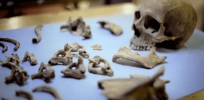
Part II: Jewish skeletal remains in a Norwich well — Do they undermine the controversial theory of ‘Jewish IQ’?
Gregory Cochran, Jason Hardy and Henry Harpending, co-authors of “Natural History of Ashkenazi Intelligence”, did not clearly address how disease ...
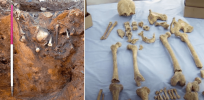
Part I: Intelligence, disease, prejudice — and Jewish skeletal remains in a Norwich well
Who would have thought that bones found at the bottom of a medieval well in England could stir up such ...
How germs and ancient migrations help explain our world of ‘haves’ and ‘have nots’
The Gökhem graves provide hard evidence for the ancient community's demise: genetic traces of the plague bacterium, Yersinia pestis ...
Is science racist? Genetics, evolutionary human differences and ‘critical race theory’
The killing of George Floyd at the knee of a policeman last May ignited a global wave of protest. Almost ...
Part II: How COVID upended the taboo on limiting constructive discussion about human biodiversity
The coronavirus crisis has brought to light the societal downside of ignoring patterned, population-based differences. Consider the latest research findings ...
Part I: Viewpoint—Many people believe ‘human biodiversity’ is alt-right code for embracing racism. Here’s why they are dangerously wrong
Why do some people equate the phrase “human biodiversity” with racism? And what does it really mean? HBD, as its ...
Genetics and race: An awkward conversation during volatile times
Discussing inter-group divergence is largely taboo. So do we just ignore the deluge of data? ...
Part 2: How anti-biotechnology activists came to embrace COVID vaccine hesitancy
Even as many progressives champion the various COVID vaccines, many Democrats in the US and leftists in other countries remain ...

Part 1: How much responsibility for COVID vaccine rejectionism rests with the progressive Left?
Twenty-five years ago, in 1996, physicist Alan Sokal pulled off a now notorious academic hoax by submitting a spoof article, ...

Taboo: Why has Africa emerged as the global coronavirus ‘Cold Spot’ — and why are we afraid to talk about it?
The first COVID-19 case in Africa was confirmed on February 14th, 2020, in Egypt. The first in sub-Saharan Africa appeared ...
