Why do some people equate the phrase “human biodiversity” with racism? And what does it really mean?
HBD, as its often referred to, is the “pseudoscience of the alt-right,” opines Vox. Some progressive academics say it’s a clarion phrase for white supremacists, a code phrase cnnjuring up a pre-genetic era when so-called “races” were considered distinctive categories and were hierarchically ranked by skin color, with “Caucasians” (white Europeans) at the top followed by “Mongoloids” (Asians) and “Negroids” (black Africans). Those who use the HBD term, or don’t aggressively reject it, are often labeled as closet racists.
[su_panel color=”#3A3A3A” border=”1px solid #3A3A3A” radius=”2″ text_align=”left”]This is part one of a four part series on the controversy over “human biodiversity”.
Read part two: How COVID upended the taboo on limiting constructive discussion about human biodiversity
Read part three: Confronting the elephant in the room — the explosive issue of IQ
Read part four: Why it’s so critical to move beyond liberal rejectionism of human biodiversity[/su_panel]
Writing in 2016, as the far right coalesced in support of Donald Trump’s candidacy in the United States, Ari Feldman wrote in Forward a scathing analysis on the ideology he believed undergirded the alt-right movement.
An ideological successor to eugenics, human biodiversity (HBD) is, like eugenics (from the Greek words for “good” and “breeding”) primarily a euphemism. Ostensibly, HBD refers to the scientifically proven (and therefore apolitical) genetic differences between groups of humans. …
But it is just pseudoscientific racism, updated for the Internet age.
“Human biodiversity” appropriates scientific authority by posing as an empirical, rational discourse on the genetically proven physical and mental variation between humans.
The refrain of HBD bloggers and forum commenters is that the (gene-driven, according to them) dissimilarities they outline are “non-negligible” or “non-trivial” and have, accordingly, social policy implications. Though it has a rational, policy-wonk zing to it, that’s just Internet forum-ese for “you’re genetically distinct from us and should be treated differently.
The Forward piece became a template for many journalists and some academics who saw a reactionary movement embedded in the HBD term. Of course, any phrase can take on connotations beyond what those who use it mean. You don’t have to be a scientist or a racist to acknowledge that some human differences pattern by populations.
We are not talking about cultural diversity—we’re encouraged to celebrate that—but evolved patterns of genetic or biological diversity linked to ancestry and geography, from body type (small Inuits; tall Danes) to disease proclivity (diseases among the Basques or Costa Ricans or so-called “Jewish disorders”, all the result of centuries of intermarriage within cultural or geographically circumscribed populations).
Is it racist to research or write about similarities and differences rooted in our ancestry across a range of characteristics? The larger question is whether in this polarized world, it’s even possible to have a good faith, science-grounded discussion on the genetics of human group differences. We’re going to try.
Origins of the controversy
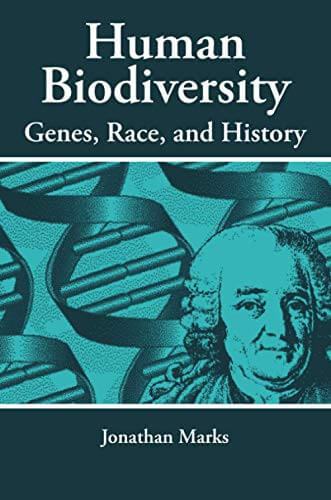 If you review Google Trends, the term “human biodiversity” sprang into use as the human genome map began unfolding more than two decades ago. The phrase and its HBD abbreviation trace to Jonathan Marks, an anthropologist at the University of North Carolina-Charlotte, who authored the 1995 book Human Biodiversity: Race, Genes and History. Marks’ primary thesis: humans are defined more by their similarities than group differences shaped by geographical isolation. That’s hardly controversial on its face, but at the time it needed to be said, and loudly. After all, for centuries, humans had been ranked by a racist hierarchy with European-descended whites at the pinnacle.
At its best, Human Biodiversity served as an enlightened attack on simplistic notions that “races” are limited to four or five major defined categories and are rankable based on often superficial characteristics like skin color, which racists correlated with highly complex characteristics like intelligence.
But Marks wrote a polemic not a science book. HBD (as the book came to be known) created its own monster. Marks claimed there were no meaningful group differences. All significant population-based characteristics were the result of culture and environment, a resurrection of John Locke’s tabula rasa/blank slate theory of human nature. The book was a hit among post-modern social scientists and in the media eager to replace ‘equality’ with ‘equity’; not so much among scientists. Marks’ feckless views have been scathingly dismantled over the years for their exaggerative simplism and their ideological rejection of any meaningful, population-based differences.
Ancestral genetics shape body types and physiology
No reasonable person disputes there are geographically rooted differences in physiology and physique that impact athletic performance, though Marks has argued that. These are not ‘racial’ differences as that highly-charged ideological term has come to be used. Rather, they are differences rooted in ancestry—populations circumscribed by geography, like Icelanders, or scattered geographically but historically evolving as a group because of adherence to religious and cultural principles groups like the Amish or gypsies.
Inuits, sometimes known as Eskimos, are an indigenous group originally of Siberian Asian descent who inhabited, and adapted to, the North American Arctic and sub-Arctic. They have been a relatively coherent population group tracing back 4,000 years. Evolving in the frigid far north has shaped the Inuit body type— heavily built with a high natural amount of body fat. And they are short relative to other human populations, with the men averaging 5’4” (the average Canadian male, by contrast, is 5’10”).



Why? Because evolving shorter, stouter bodies with extra layers of fat helped to preserve body heat, an essential evolutionary adaptation to survive in the coldest habituated region on Earth.
We know in reconstructing history that pockets of humans evolved in far different and often geographically isolated regions for tens of thousands of years. That’s shaped different body types: longer arms and legs relative to the torso, for instance, is found in some African peoples as an evolutionary adaptation to dissipate body heat in equatorial climes, while shorter and stouter “endomorphic” bodies are a distinct feature of many human groups in Euro-Asia, again as an adaptation to climatic conditions.
East African and West African running dominance—similar and different
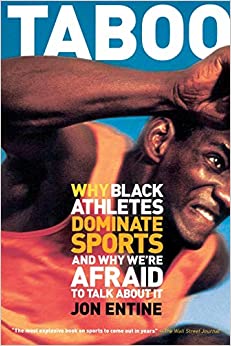 Geography has long shaped body patterns. Sports, running in particular, provides an unusually informative template to understand patterned human differences. As Jon Entine documented in Taboo: Why Black Athletes Dominate Sports and Why We’re Afraid to Talk About It, coincidence and culture cannot explain why every world record in running, from the 100-meters to the marathon, is held by a person of African ancestry.
Unlike Inuits, equatorial Africans have longer limbs relative to their torsos, which helps in dissipating heat. That’s also a key advantage in running. But Africa is a large continent with many geographical differences. It is made up of multiple sub-populations, some of which have very distinctive physical characteristics that scientists believe give them advantage over other population groups when it comes to running.
East Africans, such as Kenyans who totally dominate distance running, evolved in the mountains of the Nandi region as ectomorphs, with slender limbs, large lungs and a preponderance of slow twitch muscles suited for endurance races.
As a generalization, Africans who trace their origins to the coastal west central flatlands—the heart of the slave trade to the Americas—are more mesomorphic, athletic and strong with more compact lungs and a preponderance of fast twitch muscle fibers better suited for sprints races.
No surprise that the top 300 100-meter times are held by runners of West African ancestry. There are no West African long distance runners of note. East Africans, who are absent in shorter races, dominate distance running.
Although humans have fooled around and moved around for many centuries, Eurasians as a generalization are more likely to have endomorphic body types, with more muscle and body fat. Based on patterned body type differences, it’s hardly a surprise that Eurasian totally dominate strength events, from the shot putt to the hammer throw to weight-lifting. They are the prototypical beefy football lineman. Opportunity and environmental factors play a role on the margins, but at the elite level of sports where access is wide open (such as running and field events), the genetic cream rises to the top.
Is it racist to acknowledge that science is embracing a nuanced understanding of ‘group differences’ to address biomedical disorders?
Over the past twenty years, the controversy over whether ancestral body types produce elite runners has disappeared. No one believes that a white from the Europe or the Americas can regularly compete at the elite level in races from 10 thousand meters to the marathon with Kenyans. That’s an acknowledgment of human biodiversity. But beyond the indisputable, when discussing other aspects of human differences, just expressing an interest in the subject is often treated with deep suspicion or challenged with vitriol by many otherwise open-minded people, or worse: one is accused of being a ‘scientific racist’. As some liberal commentators have put it, the study of “HBD (human biodiversity)” is a form of hierarchical thinking, blatant “eugenicist pseudoscience, popular among white nationalists and Neo-Nazis”, the “pseudoscientific racism of the alt-right” that provides “scientific-sounding cover for [racists’] odious ideas”.
Given such vituperation, it is hardly surprising that prominent anti-racists react so strongly at the very mention of human differences—expressing concern, for instance, about Stormfront White supremacists “having a good time … discussing HLA [human leukocyte antigens] diversity” among different races; or fretting over American neo-Nazis “gulping down cow’s milk with their shirts off” to demonstrate Europeans’ “genetically encoded capacity to process lactose, a sugar in milk that cannot be digested by the majority of humans after weaning”.
And yes, there are white racists who use the fact of human differences to make sweeping judgements on character and capacity, with Blacks and Jews ranked as ‘inferior races.’ Such racists twist the fact of human group differences to suit their equally twisted beliefs. As a result, discussing any and all evidence of human genetic diversity is viewed with suspicion—even when those findings are important to understanding history or unlocking medical mysteries. But as we will address going forward, in Part II and beyond, as the field of medicine has shifted towards trying to understand the patterned genetic basis of disease, it’s become increasingly clear that proclivities and behavior are shaped in part by geographic and ancestral group differences. Scientists know this, and it’s become the central focus of much of the research into biomedicine. But it considering the racist past of US history, it is a direction that touches social and political nerves, and therefore remains an often unspoken taboo.
Jon Entine is the founding executive director of the Genetic Literacy Project, and winner of 19 major journalism awards. He has written extensively in the popular and academic press on agricultural and population genetics. You can follow him on Twitter @JonEntine
Patrick Whittle has a PhD in philosophy and is a freelance writer with a particular interest in the social and political implications of modern biological science. Follow him on his website patrickmichaelwhittle.com or on Twitter @WhittlePM