



Chemical Controversies
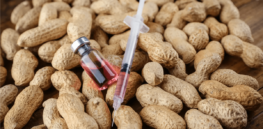
Viewpoint: Does peanut oil in vaccines cause an allergy to peanuts? That’s the latest RFK, Jr. health claim and like most others he’s wrong
I want to address this recent excerpt from RFK Jr.’s appearance on Mikhaila [Peterson's] podcast, so let’s get into it ...
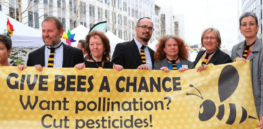
Viewpoint: ‘Progressives think rural people are dumb rubes’—Farmers know that neonicotinoid insecticides do not harm honeybees
Minnesota is having a challenging year, so challenging they are approaching California as the wackiest state, according to other states ...

Robert F. Kennedy, Jr ‘would put the public’s health in jeopardy: 75+ Nobel laureates urge Senate to reject HHS nominee
More than 75 Nobel Prize winners have signed a letter urging senators not to confirm Robert F. Kennedy Jr., President-elect ...

What is the likely future for glyphosate and other synthetic crop chemicals under the Trump Administration
Robert F. Kennedy Jr., President-elect Trump’s choice to lead the Department of Health and Human Services, will likely not be ...

Trump pledges to crack down on ‘harmful chemical poisoning’ and address a ‘chronic disease epidemic’. Here are some details
The next four years of federal food and health leadership could bring changes to what packaging materials are allowed in ...

‘Science won the battle but lost the war’: Ten years after routing GMO deniers in historic Q2 debate, geneticist Alison Van Eenennaam worries about the technology’s future
[O]n December 3, 2014, I participated in an Intelligence Squared (IQ2) debate in the Kaufmann [T]heater [in] New York City ...

GLP podcast: Processed food doesn’t speed aging; Ozempic may treat addiction; When science journals won’t retract junk research
Does processed food speed up the aging process? A recent study says yes, but we have our doubts. The blockbuster ...
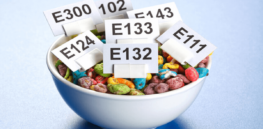
Podcast: Banned in Europe? Here’s how and why the US is more relaxed in its approvals of chemical additives in food
“How is America allowed to feed us certain products that are harmful and banned in other countries?” [Vox reader, Sommer] ...

Who would be hit hardest if the herbicide glyphosate is banned on US farms?
Marketing consultant The Directions Group has released a report titled Farm Bill Programs and the Role of Crop Protection Tools, exploring ...
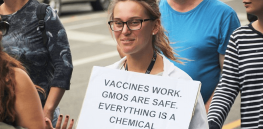
Viewpoint: How to resist the allure of science disinformation swamping social media
If you haven’t been following my social channels, I just returned home from CSICon, a fantastic conference filled with presentations ...
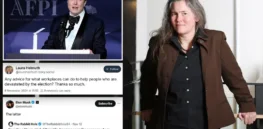
Viewpoint: Scientific American editor Laura Helmuth notorius for putting woke ideology ahead of science resigns under a cloud after a rant against Donald Trump
When magazines like Scientific American are run by ideologues producing biased dreck, it only makes it more difficult to defend ...

Republicans wary about RFK’s pledge to ‘wage war against ‘industrial agriculture, industrial meat production, factory farming and chemical based agriculture’
Republican Senators on Capitol Hill ... share their hesitations about [Donald] Trump’s preferred candidate to lead the Department of Health ...

Do ‘forever chemicals’ impact seafood? The FDA wants to know
The Food and Drug Administration (FDA) will be investigating the presence of “forever chemicals” in seafood, [to understand] how such ...
GLP podcast: From medicine to Monsanto—Why one physician left health care to work for ‘Big Ag’
"Over the years, the bureaucracy began to grow. Before you knew it, you went from spending lots of time talking ...

Viewpoint: Vani Hari’s food recipe: The Food Babe promotes 100% fear, 0% facts
If you haven’t heard of Vani Hari, consider yourself fortunate. For many of us in the science, nutrition, and public ...

What would the effect on US agriculture be on farm profits and climate change if glyphosate is banned?
What’s a future without glyphosate look like? How about a nearly $2.9 billion drop in net farm income, food inflation ...
99+% pesticide free: While activists claim chemicals soak our fruits and vegetables, USDA provides facts
[T]he U.S. Department of Agriculture (USDA) released its annual Pesticide Data Program report to little fanfare or attention. We’ve said repeatedly ...
GLP podcast: Break out of your echo chamber—an ER physician explains how to win over vaccine skeptics
Dr. Liza Dunn has an impressive resume. She's cared for malnourished children in developing countries, treated drug overdoses in the ...
Pesticides cause prostate cancer? Cedars Sinai Medical Center epidemiologist criticizes ‘biased’ ecological study
A recent study published in Cancer, an international interdisciplinary journal of the American Cancer Society, concluded that there is an association ...

Podcast viewpoint: RFK, Jr spewed misinformation about glyphosate, vaccines and cellphones on Joe Rogan—clues on how he could impact US policy” ← Go to editor
Robert F. Kennedy Jr. is recognized for his bad science around critical issues like vaccination and agricultural chemistry. Recently he ...

Viewpoint: ‘Doubt factory’—How a French journalist manufactures facts to manipulate the media, enrich toxic tort law firms and undermine science
Editor's Introduction: Readers who live outside of France have likely never heard of Le Monde environmental journalist Stéphane Foucart. He ...

Viewpoint: Understanding risk—Why does trace pesticide residue spark intense fear?
At speaking engagements, I would often remind audiences of Bruce Ames’ quote on coffee and pesticides. In an attempt to ...

‘Banning pesticides would upend the US food system’: Farmers alarmed that the Trump-RFK, Jr. alliance could cripple US agriculture
Donald Trump’s embrace of Robert F. Kennedy Jr. and his fringe health theories is triggering a flurry of outreach in ...

Mexico’s ban on GM corn ‘could disproportionately affect the nation’s lower-income consumers’
A fully implemented ban on genetically modified corn in Mexico could disproportionately affect the nation's lower-income consumers, according to a ...
Podcast: Glyphosate doesn’t cause Celiac disease or alter gluten structure
Disinformation clouds the public understanding of science, especially technology in agriculture and medicine. So when a leading journal publishes false ...

Glyphosate free farming is not in any country’s near future
Glyphosate, the world’s most widely used herbicide, is the subject of widespread controversy in scientific literature, media, policy, and society ...

Video—Viewpoint: Nutritionist Dr. Sarah Ballantyne: Environmental Working Group’s Dirty Dozen vegetables and fruits is ‘fear-mongering’ and “not scientifically credible’
The Environmental Working Group’s Dirty Dozen list is based on the number of pesticide residue detections found on foods, but ...
