


Featured in Weekly Newsletter

The bioengineered label replacing GMO claims has been in place for four months. Here’s what we know
You may have recently noticed new labels on some of your food. As of January 1st, 2022, the United States ...
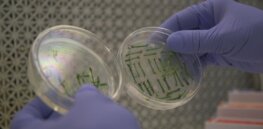
How crop gene editing increases nutrition and sustainability
The Sustainable Development Goals (SDGs) were launched in 2015, with the top three goals being poverty eradication, improved food security ...

Prudent predators: Can humans mimic animal evolution to avoid over-exploiting our natural resources?
People have been trying to understand how predators and prey are able to stay balanced within our planet’s ecosystems for ...

Roma ‘gypsy’ people of Europe have long held a fascination for geneticists. Here’s why
The Roma people have long held a special fascination for population geneticists who study the frequencies of genetic diseases. The ...

Sustainable GM farming innovation: How Argentina’s drought-tolerant genetically-engineered wheat reduces greenhouse gas emissions and increases yields
In October 2020, Argentina approved the world’s first genetically engineered wheat for cultivation and consumption. Production expanded dramatically in 2021, and will continue to ...

Viewpoint: Anti-vaccine backlash is not going away — and its long term consequences are grim
As of January 25, 2022, some 40% of Americans [1] have not been fully vaccinated. [2] This, notwithstanding valiant efforts ...

Viewpoint: GMO grapes could be engineered to cut pesticide use and reduce pest damage. Why are they not yet commercialized?
The standard story most people know about “GMOs” centers around a handful of commodity crops engineered to withstand exposure to ...

Viewpoint: Africans need to be part of the conversation in determining the future of artificial intelligence (AI)
Artificial intelligence (AI) was once the stuff of science fiction. But it’s becoming widespread. It is used in mobile phone ...

Does crop genetic engineering promote monoculture, as anti-GMO activists claim?
Genetic modification of agricultural crops, or green genetic engineering for short, is viewed critically by the majority of the German ...

GLP Podcast: Vaccine denier vs skeptic; Food changes DNA? Biotech will help solve next health crisis
Treating vaccine-hesitant individuals like they are hardcore vaccine "deniers" could backfire as a science-outreach strategy. Can the food you eat ...

Viewpoint: Are American farmers overusing neonicotinoid-coated seeds and harming the environment?
Planting season for corn and soybeans across the U.S. will begin as soon as March in Southern states and then move north ...

Human life span may have few limits, analysis of supercentenarians suggests
In 1875, Harper’s Weekly declared one Lomer Griffin of Lodi, Ohio, to be, “in all probability,” the oldest man in the ...

Unveiling the genome of the ancient dingo — whose DNA is in every dog in the world
“Maybe a dingo ate your baby!” suggested Elaine Benis (Julia Louis Dreyfus) in an episode of Seinfeld in season 3, ...

Podcast: Do facts matter when we we make policy decisions about sustainable agriculture? That’s being tested as the public debate over the benefits of gene editing in food and farming ramps up
Innovation Forum founder Toby Webb talks with Jon Entine, executive director of the Genetic Literacy Project, about the rise of ...

Viewpoint — COVID fallout raises prickly question: Does science need a ‘rebrand’ to restore credibility as nonpartisan?
Harley-Davidson is one of the most iconic brands in the world. Harley-Davidson, however, doesn’t sell motorcycles – it sells a ...

Viewpoint: Anti-biotechnology activists claim Western corporations ‘colonize’ the developing world. Here’s why they are wrong
Today, many scientific discussions are shot through with social justice rhetoric, and the debate over food security in the developing world ...

Ukraine war exposes EU’s organic obsession and biotechnology rejectionism
Beyond needless loss of life, the war in Ukraine has caused a trade war that could slash global food production, ...

Artificial wombs: The coming era of motherless births?
Scientifically, it’s called ectogenesis, a term coined by J.B.S. Haldane in 1924. The technology is on its way. How will ...
GLP Podcast: ‘Science-backed’ case for organic food; Dirty Dozen debunked; Gene therapy treats deadly immune disorder
Is there a science-based case for organic farming? One professor says yes, but how compelling are his arguments? Environmental Working ...

Meeting UN sustainability goals: Why gene editing is key
Innovations in agriculture productivity between 2005 and 2015, greatly contributed to reductions in the number of people that were food ...
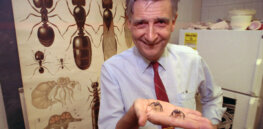
Viewpoint: E.O. Wilson’s legacy under fire in some quarters after donated papers underscore fascination with racial differences and human diversity
Did Edward O. Wilson — Harvard professor, iconic biologist, champion of global biodiversity — promote racist ideas? For years, some ...
When will CRISPR gene editing be widely adopted in farming — and what are the blockages?
If you’re involved in animal or plant sciences, you’ve been reading about CRISPR technology for many years. Ranging from the ...

Part 2: Misinformation or disinformation? Deniers or skeptics? How the GMO and vaccine controversies are undermining science communication
“Disinformation” is a clever term to relegate the views we don’t like or care to hear to the realm of ...

Universal ‘pan coronavirus vaccine’? Scientists believe it’s possible within 2-3 years
Masks are coming off and we’re venturing back into the world, thanks largely to vaccines and natural immunity. Still, viral ...

Part 1: Does Europe-based Precautionary Principle protect consumers from reckless corporations or retard innovation and undermine public trust in science?
Proponents of the precautionary principle often claim that it is necessary to secure public trust in research and technology. Without ...
Viewpoint: Before we ban all PFAS ‘forever chemicals’ — found in products from non-stick frying pans to medical equipment — let’s require ideologically-neutral cost-benefit analysis
Recently, calls for a complete ban of per- and polyfluoroalkyl substances (PFAS), also known as “forever-chemicals”, have intensified in the ...

Technological innovation is spurring evolutionary changes. Here’s how humanity may look 10,000 years from now
Humanity is the unlikely result of 4 billion years of evolution. From self-replicating molecules in Archean seas, to eyeless fish ...
