


Featured in Weekly Newsletter

GMO coffee is on the horizon—but will we drink it?
Remember the Gros Michel banana? If you're under the age of seventy, you probably don't. That's because in the 1950s ...

Getting to the roots of insomnia and what you can do about it
Ever struggle with sleep? Almost all of us will at some point our lifetime. Several factors are at play--including travel ...
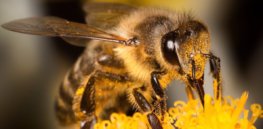
Viewpoint: Bans on neonicotinoid insecticides may not actually help bees
Public pressure is growing in Australia to ban the sale of pesticides called neonicotinoids because of their harmful effects on bees. The ...

Biodiversity is more than just beauty: ‘It is the very apparatus that holds us steady’
Biodiversity is integral to life, but is more than just a huge number of species: It also represents the variations ...

15 surprising GMO and gene-edited crop advances underway in South and Central America
Latin America is a vital region in the global production of genetically modified (GM) crops, with Brazil and Argentina ranked ...

Are consumer genetic tests misused by doctors and alternative health providers?
Health practitioners with little or no training or perspective in genetics are dabbling in this rapidly advancing field. Utilizing results ...
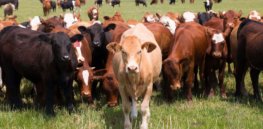
Engineering more digestible grass could reduce livestock pastures and give us cheaper biofuels
The problem with grass is that it has tough cellular walls that make it difficult to digest. But researchers say ...
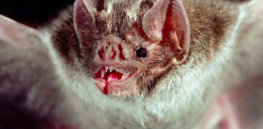
How the vampire bat came to feed on blood, and what we can learn from its droppings
Why do the three species of vampire bats eat only blood, compared to the 1,240 other species that are perfectly ...

Understanding the genetics of height—and why it matters in the fight against many human disorders
Hoping to help researchers find links between diseases and mutations, the UK Biobank opened its vault last summer, allowing access ...

Reinforcing the human heart: Integrating human cells, electronics and nanomaterials
Future of heart care: Cardiac patch that doesn't merely beat, but also provides monitoring and, if needed, electrical stimulation and ...

Africa could become a world agricultural leader in CRISPR and other new breeding techniques (NBTs)
It is 8:30 East African Standard Time. I disembark from a van filled with science journalists from Kampala, Uganda and ...

Why biodiversity might not always be such a good thing for our health
While some think of the "dilution effect" as settled science, some ecologists argue that claiming conservation will broadly reduce disease ...

Review of Whitewash (or Hogwash?): Carey Gillam’s glyphosate book betrays science, undermines our understanding of cancer
Last fall a new book hit the shelves, timed to coincide with public hearings on the European Union’s re-authorization of ...

Viewpoint: Public enthusiasm for genetics tempered by distrust, privacy concerns
Cheaper genome sequencing is expanding our ability to understand risks associated with genetic mutations. But not everyone embraces these advances, ...

Hope for peanut allergy sufferers: Gene-silenced hypoallergenic nuts could save lives
Moving to the United States helped [Hortense Dodo, a food scientist and entrepreneur from Ivory Coast] reach her academic goals, but ...

Questioning the decision to resurrect smallpox relative in the lab
In an effort to develop a safer vaccine substitute, Canadian researchers have resurrected a close relative—the extinct horsepox virus—from scratch ...

Growth in urban beekeeping hurting wild bees
The rise in amateur beekeepers keeping hives on roofs and gardens is contributing to the decline of wild bees, Cambridge ...

Human muscles from stem cells: Advance could aid research into muscular dystrophy, other diseases
Muscle created with stem cells is not quite as strong as the researchers would like. But they think these new ...
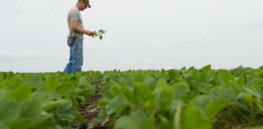
Lessons learned from the 2017 Monsanto dicamba herbicide fiasco
Farmers, university scientists, the EPA and ag companies are working together to figure out what went wrong and how to ...

Farmers, scientists worry anti-GMO activists could stymie CRISPR and other gene-edited crop research
[N]ew precision breeding tools are creating such a buzz that some activists suggest techniques like CRISPR Cas9 - which involves ...

For sale in Canada, genetically engineered salmon delayed by politics in US
A trivia question for American food shoppers: AquAdvantage, the genetically engineered Atlantic salmon being sold in Canada, is available in ...
Report: ‘Little doubt’ GMOs increase crop yields
Editor's note: Gary Brester is a professor of agricultural economics at Montana State University Some have questioned whether GM crops ...
‘Animal uplift’: Could we—and should we—make animals smarter?
Advances in neural implants and genetic engineering suggest that in the not–too–distant future we may be able to boost human intelligence. If that’s ...
Viewpoint: Headline-grabbing attempt to edit living human’s DNA needs reality check
For the first time, doctors have attempted to edit faulty genes inside the body of a human patient — a ...

Viewpoint: 6 ways IARC Director Christopher Wild lied to Congress about cancer agency’s glyphosate debacle
While the outgoing head of the embattled agency refused to testify before the US House Science Committee, he did send ...

Genetics may help us choose our friends
You may have more in common with your friends than you think, according to a new study published in Proceedings of the National ...
Are ‘incredible genes’ protecting President Trump’s health?
Unless someone swipes one of President Trump’s used forks from the Mar-a-Lago dining room and sends it to 23andMe for ...
