



Daily Food & Ag Digest

Can Hindus, Jews and Muslims eat cell-cultivated meat? Religions search for guidance as lab-grown food beckons
Israel’s Chief Rabbinate — a bellwether rabbinical council for religious certifications in Judaism — declared that an Israeli company’s lab-grown ...
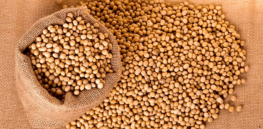
China approves its first gene-edited crop, a soybean that raises the level of healthy fat oleic acid in the plant
China has approved the safety of a gene-edited soybean, its first approval of the technology in a crop, as the ...
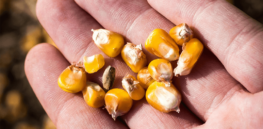
Canada will not regulate gene-edited crops as GMOs: ‘As the agriculture sector faces challenge of climate change, innovation is incomparable tool’
Minister of Agriculture and Agri-Food, the Honourable Marie-Claude Bibeau, announced updated guidance for seed regulations that will provide clear direction ...
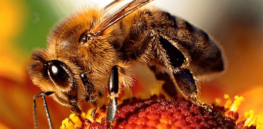
Viewpoint fact check: Honeybees aren’t disappearing and GMOs do not cause colony collapse disorder
In 2020 the EU had approximately 19 million honeybee hives, managed by 615,000 beekeepers. These hives altogether produced 275,000 tonnes ...

Podcast: A scientist alerted a journal that an article was based on cherry-picked data. Its ‘response’ illustrates the challenges in counteracting disinformation
Scientists are encouraged to step into the public conversation around controversial work, especially when that work seems to deliberately misinform, ...

Edible insects: Cultures around the globe eat environmentally friendly bug protein. Why shouldn’t the United States?
Although edible insects are far from common in American and European cuisines, over 3,000 ethnic groups in 130 countries eat them regularly ...

As plant-based protein demand grows, roadblocks limit scaling up: Price, regulation, nutrition and more
In recent years consumer demand for plant-based protein has often outpaced the industry's supply chain capabilities. And as the alternative ...

CRISPR sausages? FDA approves the first livestock for food: gene-edited ‘experimental pigs’
A sausage at Washington State University has made history. WSU received U.S. Food and Drug Administration authorization to have gene-edited ...

Fact: Genetically modified crops safe for the environment, farmers and the consumers
I have been involved with public education about Genetically Engineered (GE also known as GMO) crops and food for 25 ...

High-tech internet-connected precision agriculture provides myriad benefits to farmers and sustainability. How can it work better?
"Farming's come a long way, we're a little bit ahead of the straw hats and the overalls days now," [farmer ...

Indoor plants do not improve air quality very much. Startup Neoplants has a genetic fix
Neoplants’s marquee product, announced late last year, is the Neo P1, the first houseplant genetically engineered to remediate indoor air ...

Curse of good intentions? New York’s Birds and Bees Protection Act could undermine climate-adaptive farming
S. 1856/A. 3226 also known as “The Birds and the Bees Protection Act” does nothing to address the actual threats ...
Fact check: No, mRNA COVID-19 vaccines have not been added to livestock or produce
COVID-19 vaccines are not being passed along through livestock or produce, and experts say that would not be an efficient ...
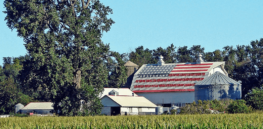
Does the US rely too much on GMO crops? Hear from scientists and farmers in this FDA, EPA and USDA-produced video
The U.S. Food and Drug Administration in collaboration with the U.S. Environmental Protection Agency (EPA), and U.S. Department of Agriculture ...

From Cavendish bananas to Arabica coffee, many favorite foods may succumb to disease and go extinct. CRISPR gene editing offers a solution
Some of our most beloved crops are currently under existential threat. Coffee, cacao, banana, and citrus fall into this unfortunate ...

How the battle over Ukrainian grain supplies threatens EU unity
The breadbasket of Europe, Ukraine has for years exported vast quantities of grain through the Black Sea. But after Russia’s invasion ...

Chronic food insecurity threatens many low-income countries. What can be done?
After more than fifteen years of heartening declines, global food insecurity and malnutrition are again on the rise. According to ...

Viewpoint: Italy’s lab grown meat ban follows in path of science rejectionism across Europe
Italy’s right-wing government provoked immediate controversy when it proposed banning the production of lab-grown meats to “safeguard our nation’s heritage.” The farm ...

Viewpoint: Can the International Agency for Research on Cancer be trusted to dispassionately assess potential dangers of aspartame when its key evaluator claims to know the answer in advance?
The International Agency for Research on Cancer (IARC), a United Nations epidemiology group headquartered in France, could be in ethical ...

Viewpoint: Health quacks like Mehmet Oz and Joe Mercola — and many mainstream environmental groups — use fear to promote their ideological agendas
Concern trolling is basically when you pretend to care about an issue in order to undermine and derail any measures ...

Gene editing targets pathogens that limit rice yields
As global food insecurity climbed to a perilous high in 2022, scientists ramped up their efforts to perfect best practices ...
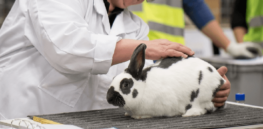
‘Cruelty-free’ lab-grown mini-organs could dramatically reduce need for animal testing
The traditional way of testing vaccines involves injecting them into animals and waiting weeks or months for the result. When ...
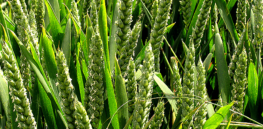
A plant pandemic is destroying wheat crops across the globe. Here’s how we can use genetics and fungicides to stop it
Wheat, the most important food crop, is threatened by a blast disease pandemic. Now a new study, conducted by an ...
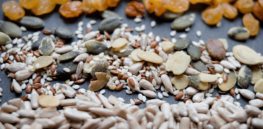
‘Super foods’ are more hype than science. Gene editing technology could make them reality
‘Superfoods’ are often touted as being exceptionally beneficial for our health. But currently, the concept is mostly just marketing hype ...
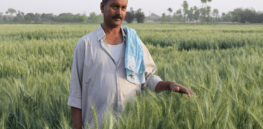
Indian farmers face threats from pest infestations, erratic weather, droughts, floods, salinity, and soil degradation. Gene-edited crops could help
Indian farmers have contributed significantly to the global agricultural industry with a wide range of crops. Agriculture employs nearly 60% ...
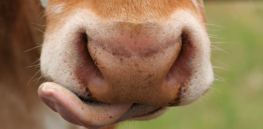
Breeding ‘green’ cows? CRISPR poised to reduce climate-polluting methane gas emissions
Scientists and companies are coming up with plenty of ways to curb cow methane, from simply changing their food source ...

Science-based reasons why Environmental Working Group’s Dirty Dozen list of ‘pesticide-laden’ fruits and vegetables is dangerously misleading
Fruits and vegetables are an important part of a healthy diet providing vitamins, minerals, antioxidants, dietary fiber and other benefits ...
