


Daily Human Digest

Life expectancy is improving in many high-income countries — but not in the US. Why?
Life expectancy in most countries took a hit during the COVID pandemic. But the U.S. has seen a sharper drop-off ...
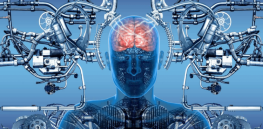
‘Mind-controlled wheelchairs’: Helping paralyzed people navigate the world with just their thoughts
Three people with paralysis of all four limbs used their thoughts to steer a wheelchair through a cluttered room with ...

$3.5 million per treatment: FDA approves the most expensive drug in the world, for blood disorder hemophilia
The US Food and Drug Administration on Tuesday approved Hemgenix, a new drug to treat hemophilia. Manufacturer CSL Behring set ...
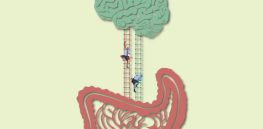
Gut-brain connection: How the microbiome affects our susceptibility to Alzheimer’s disease — and how we think
A growing body of evidence indicates that the gut microbiome plays an essential function in gastrointestinal health and in metabolic ...
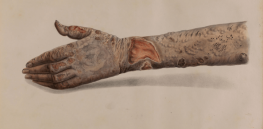
Hidden healing: The amazing nerve-mending effect of parasites linked to leprosy
In an ironic twist, researchers have just discovered that a tissue-damaging disease somehow has the potential to regenerate mammalian livers ...

Snatched as a baby 51 years ago, woman reunited with her family after a 23-and-Me DNA match
A family in Fort Worth, Texas, has been reunited with their daughter who was kidnapped as a baby more than ...
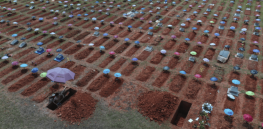
9 out of 10 COVID deaths are in people over 65, reviving questions about what we consider to be ‘acceptable loss’
More than 300 people are still dying each day on average from covid-19, most of them 65 or older, according ...

We haven’t approved a new type of antibiotic in nearly 40 years — and bacteria are taking advantage of this blind spot
Antimicrobials cost as much to develop as other drugs, but don’t earn the same returns. Congress could give drugmakers a ...
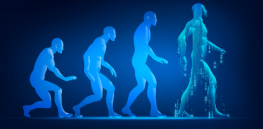
On foot: ‘Evolution of walking has everything to do with what makes us human’
Going places on foot isn’t a particularly glamorous way to get around. Sure, there are proven health, social and environmental ...

Children born during the great depression aged rapidly later in life. Here’s how trauma can affect you before you’re even born
The worst recession in US history shaped how well people would age — before they were even born. Researchers have ...
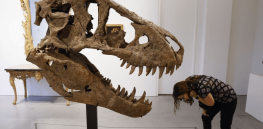
Want to buy a 76-million year old T-rex skull as an art object for your living room? Here’s how
Maximus Rex needs a home. What Sotheby’s calls one of the most complete Tyrannosaurus rex skulls ever discovered goes on ...

Is violence built into our genes and human nature?
Violence is clearly not a modern phenomenon, but is it an inherent part of being human? Have we evolved to ...

‘SuperAgers’: Here’s what elderly people into their 80s with superior memories have in common
To be a SuperAger, a term coined by the Northwestern researchers, a person must be over 80 and undergo extensive ...

What precautions should you take after a head injury? Saliva test for concussions possible as early as 2023
A saliva-based concussion test could become available in 2023 after a U.S. patent was awarded to Quadrant Biosciences, Penn State ...

‘Dawn of synthetic medicine’: How wearable devices can transform personalized medicine
We are at the dawn of synthetic medicine, which will forever change how doctors and patients approach healthcare. In fact, ...

Is a vaccination against deadly fentanyl addictions on the horizon?
Researchers report they have created a vaccine to fight fentanyl addiction, in a potential breakthrough in the opioid epidemic. The ...

BRCA blood test: Simple blood sample can identify breast cancer developing up to two years before a formal diagnosis
A new blood test developed by Dutch researchers can identify changes in serum proteins that signal the onset of breast ...
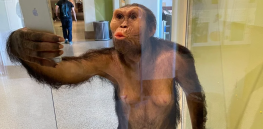
‘Unseen connections’: Iconic 3-million-year-old hominim Lucy marks 48th anniversary with a selfie
The iconic ancient hominin gets her hands on a smartphone in anticipation of the museum’s upcoming exhibition exploring the global ...

How closely are genes tied to our language abilities?
More than 7,000 languages are spoken in the world. This linguistic diversity is passed on from one generation to the ...

Smart octopuses: Getting to know one of the most intelligent invertebrates
Cephalopods like octopuses, squids, and cuttlefish are highly intelligent animals with complex nervous systems. A team of researchers has now ...

Viewpoint: ‘The WEIRDest People in the World’ resolves the nature-nurture debate with dazzling eloquence
Joseph Henrich’s extraordinary book, The WEIRDest People in the World (Farrar, Straus and Giroux, 2020), resolves the nature-nurture debate with ...

1 in 100 people stutter. Genetics or the environment?
People who stutter can experience more depression symptoms and face a decreased quality of life. Despite this, there’s no available treatment at the ...

Drugs that biologically block insomnia may also reduce addictive behavior and reduce cravings
Researchers think they’ve identified a biological process for drug and alcohol addiction and believe existing insomnia treatments could be used ...
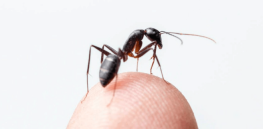
Ants: The world’s most successful species?
Given their centrality to life on the planet, not to mention their teeming populations, shouldn’t we think more highly of ...

‘8 extra years of mental aging’: Lead exposure in childhood affects cognitive health as you age
Exposure to lead-contaminated drinking water in childhood was tied to lower levels of cognition in late adulthood, U.S. data showed ...

How 3-billion year old blue green algae found in hot springs could help treat cancer and Alzheimer’s disease
While cyanobacteria can also produce certain toxins that can pose direct threats to humans and animals, there is also a ...

Meditation or medication? Mindfulness course as effective at reducing anxiety as drugs, study shows
A mindfulness meditation course may be as effective at reducing anxiety as a common medication, according to a new study ...
