Ants: The world’s most successful species?

are ants or humans the superior species
Credit: BBC Science Focus Magazine

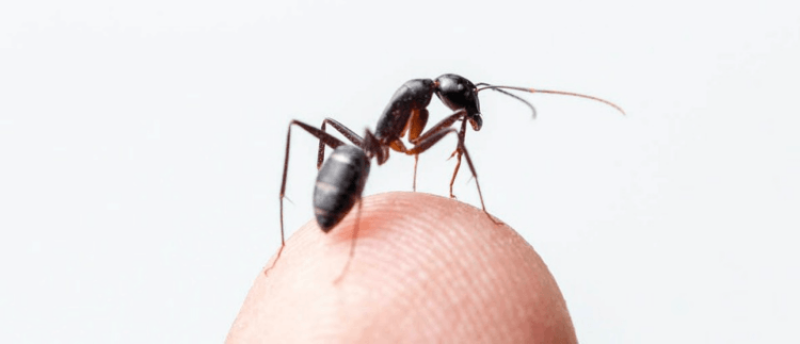
Given their centrality to life on the planet, not to mention their teeming populations, shouldn’t we think more highly of ants? They are among the most sophisticated and successful life-forms ever to crawl the earth.

Follow the latest news and policy debates on sustainable agriculture, biomedicine, and other ‘disruptive’ innovations. Subscribe to our newsletter.

Humans are, of course, smarter and bigger than ants, and in the past 300,000 years or so of our species’ reign, we have conquered the planet and commandeered its resources to a degree perhaps unmatched in the history of life. But compared with those of ants and other social insects — bees, termites and some wasps — our record is a hilarious blip.

Ants have been around for 140 million years. They are a dominant feature — often some of the primary ecosystem engineers — of nearly every land-based ecosystem on Earth. And they are the true inventors of what we think of as several quintessentially human endeavors.

Ants have been farming for at least 60 million years. Leafcutter ants, for instance, forage for vegetation, which they use to grow crops of a fungus that they have domesticated for their exclusive use. Other ants maintain herds of aphids that feed on the sap of plants; the ants then “milk” the aphids of their sugar-rich secretions. Ants are also master architectsformidable warriors that can also maintain peace through strength and even engage in compromise and a kind of democracy.

This is an excerpt. Read the full article here

{{ reviewsTotal }}{{ options.labels.singularReviewCountLabel }}
{{ reviewsTotal }}{{ options.labels.pluralReviewCountLabel }}
{{ options.labels.newReviewButton }}
{{ userData.canReview.message }}

Related Articles

Infographic: Global regulatory and health research agencies on whether glyphosate causes cancer

Infographic: Global regulatory and health research agencies on whether glyphosate causes cancer

Does glyphosate—the world's most heavily-used herbicide—pose serious harm to humans? Is it carcinogenic? Those issues are of both legal and ...

Most Popular

Screenshot 2026-05-06 at 2.56
Singularity crisis ahead? Can super babies save us from rogue AI geniuses?
Screenshot-2026-03-13-at-12.14.04-PM
The FDA wants to make many popular prescription drugs OTC—a great idea. Here’s why it’s unlikely to happen
Screenshot-2026-05-01-at-1.29.41-PM
Viewpoint: What happens when whole grains meet modern food manufacturing? Labels don’t tell the whole story.
Screenshot-2026-05-01-at-11.56.24-AM
‘Science moves forward when people are willing to think differently’: Memories of DNA maverick Craig Venter
Screenshot-2026-04-20-at-2.26.27-PM
Viewpoint — Food-fear world: The latest activist scientists campaign: Cancer-causing additives
images
The never-ending GMO debate: Pros and cons
Screenshot-PM-24
Viewpoint: The herbicide glyphosate isn’t perfect. Banning it would be far worse.
Screenshot-2026-04-03-at-11.15.51-AM
Paraben panic: How a flawed study, media hype, and chemophobia convinced the public of the danger of one of the safest classes of preservatives
Screenshot-2026-05-06-at-2.07.43-PM
Manufacturing a conspiracy: The timeline of how  the White House embraced the fringe claim that scientists are being mysteriously murdered
Screenshot-2026-04-12-135256
Bixonimania: The fake disease scam that AI swallowed whole
glp menu logo outlined

Get news on human & agricultural genetics and biotechnology delivered to your inbox.