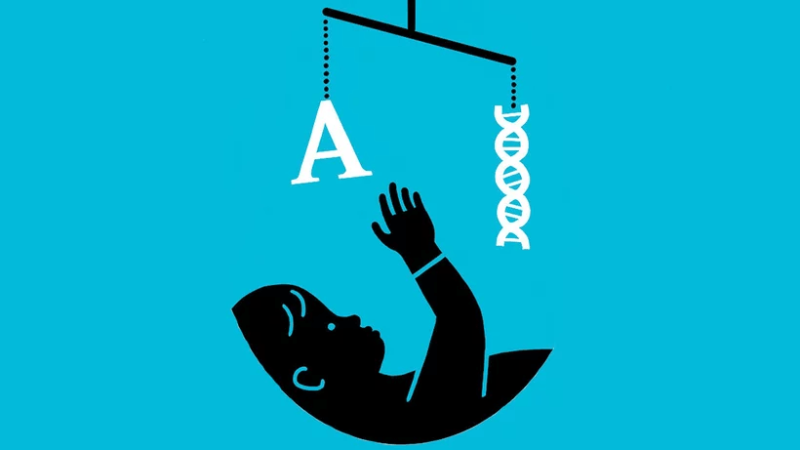
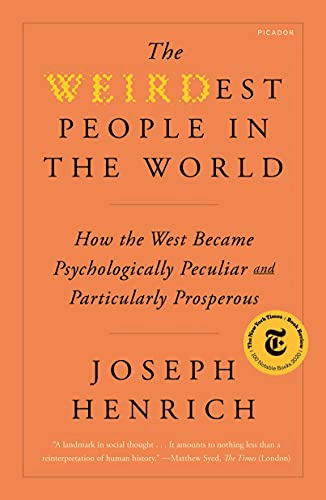
 Joseph Henrich’s extraordinary book, The WEIRDest People in the World (Farrar, Straus and Giroux, 2020), resolves the nature-nurture debate with dazzling eloquence. Settling such polarized arguments often requires climbing a ladder to a second-floor balcony and watching the contradictions vanish. The two opposing ideas are revealed as parts of a more abstract, profound and fruitful reality. It is not nature or nurture, but nature then nurture, and nurture then nature.
Without human genes, we would not be able to learn to read and write. But the acts of reading and writing themselves modify the brain. That is the essence of Henrich’s argument in his lengthy book. It’s the Western people of the world who are the weird ones alluded to in the book’s title. Henrich attributes this weirdness to the very high literacy rates of developed countries, still a rarity among the 1,000 or so diverse cultures on our planet. This is not because Westerners are born smarter, but because our societies and political systems have made us literate. And this has changed our brains. Nurture then nature.
Henrich takes the reader by the hand through a complex reality – our species is complex – showing how a scientific approach led to his conclusions, however shocking they may be. It’s a refreshing approach in a nonfiction landscape littered with baseless opinions.