We are entering a new era of personalized medicine—if you’re white

diversity

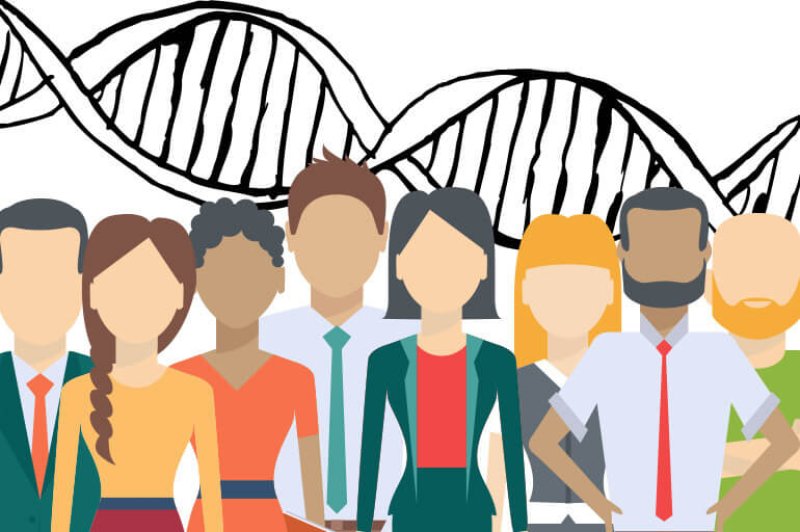
The National Institutes of Health recently announced a remarkable achievement: the world’s largest database of human genomes, a repository of information that the agency says will help usher in a new era in personalized medicine.

Scientists are already developing clinical tools and techniques based on genomic information gathered from the agency’s All of Us program. One of the most promising? Polygenic risk scores. These can help predict a person’s likelihood of developing complex diseases, like cardiovascular disease and breast cancer, from as early as infancy.

But there’s a glaring problem: The tools were trained overwhelmingly on the DNA of people of European descent … . For some conditions, the forecasts for people of color are almost no better than flipping a coin.

Follow the latest news and policy debates on sustainable agriculture, biomedicine, and other ‘disruptive’ innovations. Subscribe to our newsletter.

… [P]resent-day Europeans descend from a small group of Africans who expanded out of Africa about 50,000 years ago. As a result, they have much less diversity.

“If you’re going to pick a population to study for the sake of everybody’s good, the Europeans are the worst you could choose,” said Jay Kaufman, an epidemiologist at McGill University who has written about race and genomics.

This is an excerpt. Read the original post here

{{ reviewsTotal }}{{ options.labels.singularReviewCountLabel }}
{{ reviewsTotal }}{{ options.labels.pluralReviewCountLabel }}
{{ options.labels.noReviewsLabel }}
{{ options.labels.newReviewButton }}
{{ userData.canReview.message }}

Related Articles

Infographic: Global regulatory and health research agencies on whether glyphosate causes cancer

Infographic: Global regulatory and health research agencies on whether glyphosate causes cancer

Does glyphosate—the world's most heavily-used herbicide—pose serious harm to humans? Is it carcinogenic? Those issues are of both legal and ...

Most Popular

ChatGPT-Image-Jul-22-2026-09_13_07-AM
Viewpoint—The Strategic Litigation boom: Understanding the tightening coalition among NGOs, foundations, journalists, and tort lawyers
close up arabica coffee farmer s hands picking beans plant his farm colombia
Viewpoint: Why do so many ‘mainstream’ and ‘respected’ media outlets exaggerate climate change threats?
ChatGPT-Image-Mar-10-2026-01_39_01-PM
Viewpoint—“Miracle molecule” debunked: Why acemannan supplements don’t work
How to Include More Strawberries in Your Diet
Strawberries are berries—and 35 other surprising food and drink myths
diversity
We are entering a new era of personalized medicine—if you’re white
organic scaled
Facts & Fallacies podcast: Organic food cuts pesticide exposure? A response to Dr. Rhonda Patrick
ChatGPT-Image-May-22-2026-10_26_09-AM
Trump-RFK, Jr. National Science Board firings: Accountability vs. partisan meddling

Screenshot-2026-07-07-at-12.55.44-PM
Viewpoint: Yes, we can adapt to a changing climate without devastating the environment and the economy
kratom
Viewpoint: Kratom ‘supplement’ crisis: DEA sits on its hands while patient addictions to this ineffective drug  rise
Screenshot 2026-07-22 at 10.25
Science brain drain escalates as Trump purge extends to USDA
using genetics to reverse aging
Is the longevity obsession a new form of ageism?
Screenshot-2026-07-01-at-2.49.48-PM
Dr. TikTok and male fertility: Viral claims tout GLP-1 drugs as fertility boosters. What does the science say?
ChatGPT-Image-Jul-6-2026-02_25_26-PM
40 million Americans take glucosamine. If you have memory loss, it could accelerate cognitive decline.
glp menu logo outlined

Get news on human & agricultural genetics and biotechnology delivered to your inbox.