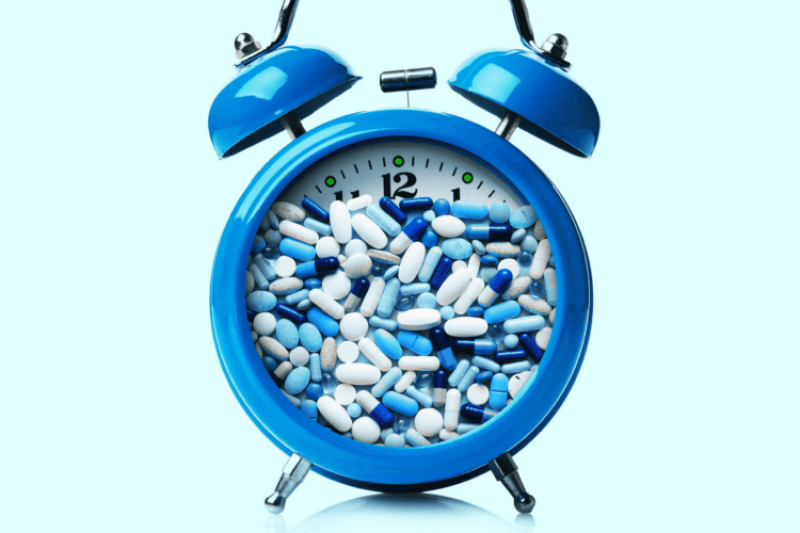
Drugs that biologically block insomnia may also reduce addictive behavior and reduce cravings

drugs that prevent insomnia may also help fight against drug addiction
Credit: The New York Times

A review in the journal Biological Psychiatry explains how ongoing research demonstrates that the brain’s orexin system—which regulates sleep/wake states, reward systems, and mood—motivates drug-seeking behavior.

The researchers report that many drugs of abuse increase orexin production in both animal and human brains and that blocking this system reverses addiction in animals. Another study has even demonstrated that one of the three orexin-blocking sleep aids approved for insomnia treatment reduces opioid cravings in human subjects.

Follow the latest news and policy debates on sustainable agriculture, biomedicine, and other ‘disruptive’ innovations. Subscribe to our newsletter.

The review, which draws on more than a decade of publications suggests that orexin spurs drug craving and, thus, motivation to procure a drug.

Under normal circumstances, many orexin-producing cells in the brain turn orexin production on and off in ways that raise and lower motivation. These cells turn on when, e.g., people face a tight deadline and need to get work done and turn off at night to enable sleep. However, when people become addicted to opioids, cocaine, alcohol, and other substances, these cells increase orexin production but no longer turn it off. They stay on constantly, producing high levels of orexin that motivates one behavior: getting another hit.


This is an excerpt. Read the full article here

{{ reviewsTotal }}{{ options.labels.singularReviewCountLabel }}
{{ reviewsTotal }}{{ options.labels.pluralReviewCountLabel }}
{{ options.labels.newReviewButton }}
{{ userData.canReview.message }}

Related Articles

Infographic: Global regulatory and health research agencies on whether glyphosate causes cancer

Infographic: Global regulatory and health research agencies on whether glyphosate causes cancer

Does glyphosate—the world's most heavily-used herbicide—pose serious harm to humans? Is it carcinogenic? Those issues are of both legal and ...

Most Popular

Screenshot-PM-24
Viewpoint: The herbicide glyphosate isn’t perfect. Banning it would be far worse.
d-b
Blocked arteries, kidney stones, nausea, constipation, fatigue: Long list of health problems caused by too much vitamin D 
Screenshot-2026-04-27-at-12.22.38-PM
Running ‘wild’: Last year, RFK, Jr. was given a green light to ‘reform’ chemical policies. Glyphosate illustrates how Trump now has him on a tight leash, and MAHA is furious
ChatGPT-Image-Apr-22-2026-11_06_18-AM
Wellness influencer nonsense: No, nicotine does not boost cognition and productivity, but it can damage your health 
bayer-supremecourt-lt
EPA concludes glyphosate is not carcinogenic. Missouri courts say Monsanto failed to warn it might be. SCOTUS weighs in.
ChatGPT-Image-Feb-16-2026-01_57_31-PM
Viewpoint: ‘Science-as-Satan’ unites the MAHA—MAGA movements. Is a breakup in the works?
Screenshot-2026-04-27-at-1.40.55-PM
With federal funding for scientific research already reeling, Trump fires the entire apolitical National Science Board
Screenshot-2026-04-12-135256
Bixonimania: The fake disease scam that AI swallowed whole
Screenshot-2026-04-13-at-3.54.04-PM
AI disinformation stress test: Challenges and response strategies
Screenshot-2026-04-27-at-12.41.50-PM
How pediatricians are navigating America’s surge of health misinformation
glp menu logo outlined

Get news on human & agricultural genetics and biotechnology delivered to your inbox.