


Daily Human Digest

Viewpoint: Acupuncture pseudoscience — Debunking Washington Post’s tiresome promotion of ‘legalized quackery’
Acupuncturists claim to treat many conditions, but they especially like to claim that they can treat chronic pain, for a ...

100,000 Americans are waiting for transplants. Could pig-grown organs close this gap?
The need for more transplant organs is immense and some scientists think animal organs might be a good way to ...

How did human ancestors go from walking on all fours to standing on two legs? Ancient eardrum fossils illuminate the likely evolutionary path
How did humans learn to walk? The inner ear of a 6-million-year-old fossil ape reveals clues about the evolution of ...

Who should take an obesity drug? A new genetic test class to identify patients most likely to benefit
Homing in on obesity's genetic underpinnings through precision medicine may represent a more cost-effective way of tackling weight loss ...

Losing track of thoughts? Forgetting is normal and healthy for your brain
Some evidence suggests that nonpathological forgetting is an adaptive and active part of learning and memory maintenance ...

Only 9% of plastic waste is recycled. Here’s how plastic-eating mealworms can munch on shopping bags, yogurt cups, and packing peanuts
Plastic-eating enzymes in the guts of mealworms are one of the ideas being studied, but it dodges the real solution: ...

Delusion and technology: How the internet exacerbates schizophrenia and other mental health problems
Evolving technology and its expanding influence in society are altering evaluation of schizophrenia patients who have delusional thoughts ...

God question: Did Neanderthals practice religion or have ‘rich symbolic lives’?
As Rebecca Sykes notes, ”Neanderthals neither ignored corpses nor treated them like rubbish.” ...
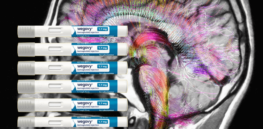
Obesity drugs could treat Parkinson’s and Alzheimer’s? It appears they lower inflammation in the brain, sparking hope of additional therapeutic uses
Evidence suggests that the drugs classified as GLP-1 receptor agonists — a category that includes brand names such as Mounjaro ...
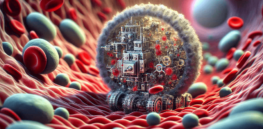
Engineering cell superpowers: Nanomachines can fix broken parts in our cells, helping break down food, clot blood and destroy germs
Engineer Kerstin Göpfrich leads a research group focused on the “engineering of life” at the Max Planck Institute for Medical Research ...

‘We could completely replace the human body with one that is ideal for space travel’ — Future space travel options come into focus
Perhaps the optimal way to most fully adapt humans to alien environments is to completely replace the human body with ...

Podcast: Wheat causes health issues? Do you have celiac disease, an allergy or…? Hysteria and misinformation about wheat-based products grows
Gluten has gained attention in pop culture because it is implicated in specific medical conditions, specifically celiac disease and gluten ...

We have the tools to develop genetics-based personalized medicine, but the data used is outdated and lacks diversity
Bias in medical studies towards men of European origin means genetic variants in understudied populations don’t get the focus they ...
Geroscience: Searching for compounds that could extend our lives
By addressing the root causes of aging, researchers hope to stave off the disability and diseases that can make old ...
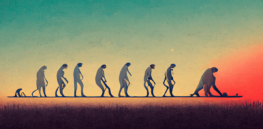
Viewpoint: Evolutionary trap — ‘Forces that encouraged our ancestors to compete for resources fueled early human success but now threaten to end it’
Evolution has led us into a dark corner, as the scale and impact of human groups has kept growing, and ...

Acne treatment of the future: Gene-editing the bacteria that lives on your skin
An experimental study has shown that a type of skin bacterium can efficiently be engineered to produce a protein to ...

We now know the mechanisms of aging, but how do you slow down the process?
The next frontier is to target the basic biology of aging and come up with new interventions to slow it ...

Viewpoint: Weight loss drug boom raises host of unaddressed ethical and scientific questions
The world has launched into an era of injectables not just to treat obesity but to manage weight. Is that ...

‘We will publish anything!’ — Here’s how predatory journal mills work
A predatory journal exists solely to make money. It’s like a parasite on the back of the scientific endeavour ...

Only 2% of the world’s population has green eyes. Why so few?
Green eyes are estimated at 2 percent of the population worldwide and prevalence is much higher in certain European countries ...

AI-discovered drug could help 1.6 million Americans with inflammatory bowel disease
IBD impacts 1.6 million people in the U.S. — and a new artificial intelligence-generated drug could help alleviate symptoms ...

Podcast: Why we ‘evolved not to lose weight’
The evolutionary reasons why it's hard to lose weight and keep it off: fat helped early humans stay alive ...

‘We need to stem the flow of bogus research’: Effort under way to challenge academic ‘paper mills’
Poor-quality studies are polluting the literature — a group will study the businesses that produce them to stem the flow ...

Are Chinese scientists going rogue on latest COVID research? Experimental strain found 100% lethal in ‘humanized’ mice
Chinese scientists created a mutant COVID-19 strain, GX_P2V, with a 100% lethality rate in "humanized" mice ...

Scans of 10,000 brains show dramatic memory benefits from just 4 minutes of daily exercise
Exercising for 25 minutes a week, or less than four minutes a day, could help to bulk up our brains ...

Humans, apes and monkeys: Parts of primate DNA have been stable over 65 million years of evolution
Scientists have found that 3% to 5% of the genes in the human genome, which descended from a common ancestor ...

We may soon be able to treat hearing loss from loud noises and aging with drugs
Researchers have found a gene that links deafness to cell death in the inner ear in humans – creating new ...
