


Science Literacy Project Daily Digest
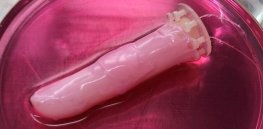
Robotic realism: For the first time, human skin engineered to grow on a robot’s finger
It's still a long way until human-like robots walk among us in our daily lives, but scientists from Japan are ...

New COVID Omicron variants become dominant strains in US, especially in South
The United States appears to be in the midst of another biological baton pass between Covid-19 variants. The Omicron lineage ...
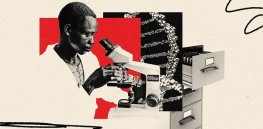
African scientists launch biodiversity genomics revolution
Though Africa is home to the second largest collection of biodiversity on earth, many of its unique plants, animals and ...
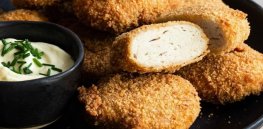
Eating poultry helps cut greenhouse gas impact of beef. Now a start-up is increasing production – by grinding up chicken bones
Fifty years ago, poultry made up about 15 percent of all the world’s meat. Now that fraction has ballooned to ...

Video: Are babies born with a moral compass?
Are people born with a sense of right and wrong? A new study finds young infants can already make moral ...

Book review: ‘The Rise and Reign of the Mammals’ is Steve Brusatte’s sweeping history of how mammals took over the world
[In] The Rise and Reign of the Mammals, paleontologist Steve Brusatte’s [recounts the] sweeping history of the animals that have, ...

Artificial sentience: How close are AI models to achieving consciousness?
LaMDA, short for Language Model for Dialogue Applications, is Google’s system for building chatbots based on its most advanced large ...

‘Neurological roots of politics’: Are Democrat and Republican brains wired differently?
Emerging research has begun investigating the neural underpinnings of the biological and psychological differences that drive political ideology, attitudes and ...

Video: ‘Weapon in our armory’ — Developer of Golden Rice says genetically modified crops are essential for food security as global warming makes crops more vulnerable
Nafees Meah, regional representative for South Asia for the Philippines-based International Rice Research Institute, calls genetically modified crops "a weapon ...

As Ukrainian conflict continues to disrupt global food imports, Kenya gives okay for farmers to import GMO cotton seed, a first for the country
At least 10 manufacturers including Bidco East Africa have been allowed to import 28 million kilogrammes of genetically modified organism ...

Could cultivated, lab-grown meat put a dent in global warming?
What if there was a way to eat meat without farming and killing billions of animals per year, contributing to the climate ...

Is short better: Can height predict your risk for certain diseases?
Over the years, scientists have examined a person’s height as a non-modifiable risk factor for certain diseases. Past research shows ...

COVID risk genes: 1370 gene variants predispose people to severe virus and even death
Researchers from the University of Sheffield and Stanford University in the US have discovered there are specific genetic signals in ...

Dinosaur takeover? How realistic is the science of cloning and gene editing in Jurassic World Dominion?
The Jurassic Park franchise has never exactly been praised for its scientific accuracy. Even its core concept - the idea dinosaur DNA ...

How politics can impact health: ‘Stark partisan divide’ in premature death rates among Democrat and Republican voters
In an ideal world, public health would be independent of politics. Yet recent events in the U.S., such as the ...

‘Milk without cows’? What consumers need to know about precision fermentation
“There is a real revolution going on here,” Jim Mellon, a biotech investor and the author of Moo’s Law: An ...
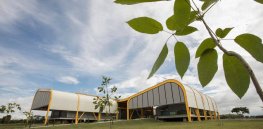
How seed gene banks are preserving biodiversity and providing a hedge against climate change
“It’s a tool against extinction — not just biological extinction but, also, the extinction of knowledge.” The facility at Palmira ...
Viewpoint: Food security crisis underscores why it’s time to get over wrong-headed fears over genetically modified wheat, says North Dakota state senator
Three decades ago, a good year meant 90 bushels of corn and 25 bushels of soybeans an acre. This season ...

Bayer awaits Supreme Court decision on whether to overturn Monsanto Roundup glyphosate cancer verdicts as it wins third defense case in a row
Bayer won a jury verdict over Roundup on [June 9], the third defense win in a row over Monsanto’s pesticide ...

Do dogs ponder the future? Here’s what we can learn from animal dreams
Other animals may not ponder deep, existential questions, but the fact that they dream proves that they possess formidable memories ...

Lab meat revolution? Promise and perils of cellular agriculture
If chicken nuggets are emblematic of contemporary capitalism, then they are ripe for disruption. Perhaps their most promising challenger is ...

The gene editing solution that could save one million African (cash) cows a year
All around the world millions of people feed their families and make their living from cows, whose meat and milk ...

Viewpoint: New Zealand’s case for genetically edited crops and foods
The world is struggling. The United Nations (UN) has calculated that the number of severely food insecure people had doubled ...
‘If tomorrow there were no transgenic crops, a third of humanity would starve to death’: Leading Cuban scientist outlines support for genetically modified crops
"If tomorrow there were no transgenic crops in the world, a third of humanity would die of hunger," advised Luis ...
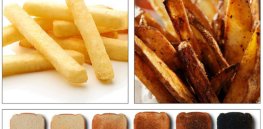
Frying foods like wheat and potatoes can produce a carcinogen, acrylamide. A CRISPR gene-edited wheat in development could prevent that
Asparagine is a naturally occurring amino acid, and while most is made into protein, plants such as wheat can accumulate ...

‘We can’t go back to precolonial food self-sufficiency’: Current UK food policy blocks sustainable genetically modified crops and other agricultural diversification strategies
The UK has not been self-sufficient in food and drink production for hundreds of years. The first foreign outposts, trading ...

Dairy without the cow? One company’s plan to create cell-based cultured milk
[Cell-based milk start-up] Opalia’s process involves harvesting mammary cells from the cow udder, then growing these cells in sterile cell ...
