


Science Literacy Project Daily Digest

When CRISPR gene editing debuted ten years ago, almost nobody noticed
CRISPR/Cas9 is a transformative breakthrough for which two of its authors, Jennifer Doudna and Emmanuelle Charpentier, were awarded the Nobel Prize ...

Viewpoint: ‘Win-win for food security’ — Why Uganda needs both biotechnology and agroecology to feed itself as climate change roils farming
Over the past decade or so, many ordinary farmers especially in developing countries including Uganda, have been thrown into a ...
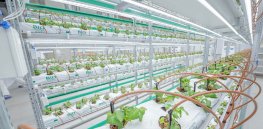
Farming of the future: Can precision indoor farming create an alternative food system?
A precision indoor farming system [PIFS] comprises numerous interrelated components, from the plants and animals to the enclosing structure(s), growing ...

Exercise pill of the future? This molecule reduces body fat and regulates appetite in mice — but can it work for humans?
Exercise alters more than 9,800 molecules in your blood, a process that scientists have called a cellular “symphony.” ... But ...

A map of the human genome shows the function of every gene we know so far
The Human Genome Project was an ambitious initiative to sequence every piece of human DNA.... Now, over two decades later, ...

Bones found in the ‘cradle of civilization’ in South Africa date to as long as 3.7 million years ago, a million years older than previously thought
The earth doesn’t give up its secrets easily – not even in the “Cradle of Humankind” in South Africa, where ...

Partnership on track to give Bangladeshi and Indonesian farmers disease-resistant GMO potatoes
Researchers will be testing genetically modified potatoes in Bangladesh and Indonesia this year in hopes of providing farmers with an ...

$87 million judgment holding Bayer liable for cancer allegedly caused by Roundup glyphosate weedkiller upheld by Supreme Court
The US Supreme Court let stand an $87 million award against Bayer AG, rejecting the company for the second time in a week ...

Single AI-informed brain scan can detect early Alzheimer’s
British scientists announced [June 20] that they have developed a machine-learning algorithm that can determine, with 98% accuracy, whether Alzheimer’s ...

Rethink your daily multivitamin: Most vitamin supplements likely useless at preventing cancer or strokes
There is not enough evidence to recommend for or against taking most vitamin and mineral supplements to prevent heart disease, ...

What’s the most effective way to convince unvaccinated people to get a shot? Funny memes
Pro-vaccination messaging may be surprisingly effective when delivered through humorous internet memes, according to new findings published in the journal ...
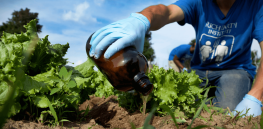
With fertilizer shortage threatening to cripple agriculture, farmers in Niger turn to nutrient-rich human urine
In a bid to revive dying crops in Niger Republic, scientists are using a mineral-rich, low-cost and easily accessible fertilizer ...

Viewpoint: What are the keys to full consumer acceptance of food grown from genetically modified seeds?
“Bioengineered and gene-edited foods might be more successful in the marketplace if they have visual disclosure on the package (the ...
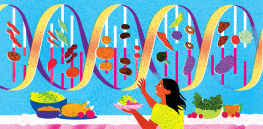
Viewpoint: DNA diets—Can knowing your genes help you nutritionally optimize your meal choices?
Recently several companies have been offering to examine your genome and figure out what you should eat based on your ...

Viewpoint: Regenerative agriculture has become a popular buzzword. Here’s what needs to be done for it to become a transformative, sustainable movement
There isn’t a standard definition for regenerative agriculture, but it represents a holistic framework to understand and respond to global ...

Medicine of the future: From high-tech health sensors to advanced gene therapy, here are the innovations we can expect in the decades ahead
What will the future of medicine look like? Will we manage to cure cancer? Will lab-grown organs render human donation ...

What is a species? New DNA analytic tools upend outdated neat categories
It’s clear to anyone that an African elephant and a garden snail are different species, but the lines blur around ...

Digital biology: What is it, and what is its role in advancing sustainable farming?
Preparing for a future of resilient and sustainable agriculture that produces nutritious calories for the globe’s growing population requires a ...
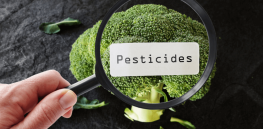
Viewpoint: No, trace pesticides do not make fruits and vegetables unhealthy
A recent article in the French daily Le Monde speaks of a study with “impressive” conclusions. Reading it, there is reason to ...
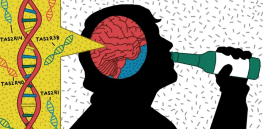
Hate brussels sprouts but love potato chips? Your genes shape what your taste buds like
Scientists have been studying the way genetics influence perception of taste for years, but they are getting closer to understanding ...

Why are you less hungry after vigorous exercise? Credit the ‘anti-hunger molecule’
Scientists are calling it the “anti-hunger” molecule. New research shows that a compound induced by intense exercise travels to the ...

How genetics made dogs man’s best friend
You love your dog. Your dog loves you. Your love is the upshot of thousands of years – perhaps tens ...

Viewpoint: ‘Misuse, theft and discrimination’ — Here’s why it’s essential to keep your DNA data safe and private
Incredibly, by 2025, 60 million people in the United States alone will have had their DNA sequenced and analysed for ...

Where did the Black Death begin? DNA in ancient teeth provide clues
Researchers believe they have discovered the origins of the Black Death, more than 600 years after it killed tens of ...
CRISPR crops: Can carbon-sucking gene edited crops help address climate change? Jennifer Doudna thinks so
The Innovative Genomics Institute (IGI), a research group in Berkeley, California, founded by CRISPR co-inventor Jennifer Doudna, has announced a new program to ...

How mushroom waste can be turned into eco-friendly styrofoam packaging replacements
Styrofoam has become ubiquitous in the modern age of consumerism, and even synonymous with packaging. But containing toxic chemicals such ...

Viewpoint: ‘Double advantage’ — Why organic farmers should be allowed to grow GMO seeds to pursue sustainability objectives
In recent years, with the expectation of quality life, human beings have turned to organic foods with 30-40% less product ...
