Viewpoint: No, trace pesticides do not make fruits and vegetables unhealthy

Credit: Food Business News

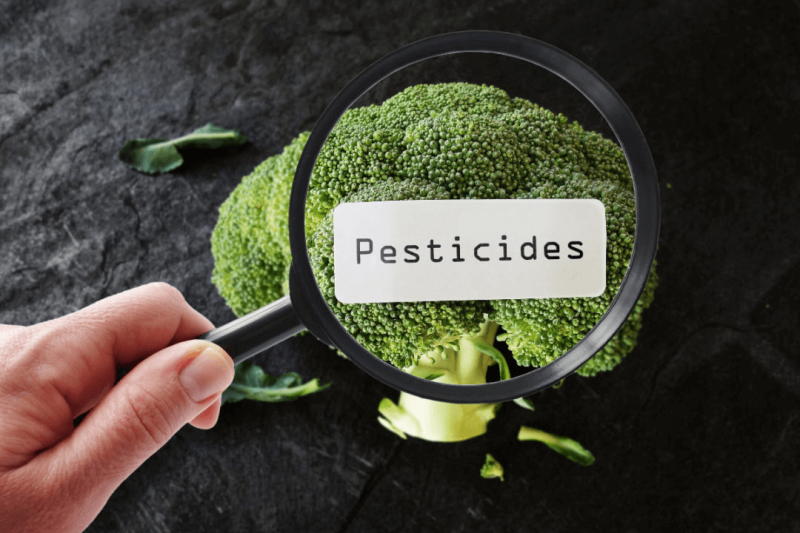
A recent article in the French daily Le Monde speaks of a study with “impressive” conclusions. Reading it, there is reason to be worried since it does indeed seem very serious. Signed by researchers attached to the School of Public Health of a prestigious university, Harvard, this study is based on a large number of data: 146,000 people were followed for 20 years. It was published last January in a fairly highly rated scholarly journal. And it questions one of the generally accepted nutritional principles: you have to eat a lot of fruits and vegetables to be healthy.

After analyzing their data, the researchers claim to have found that consuming four servings of fruits and vegetables every day known to be rarely contaminated with pesticides, such as oranges or broccoli, lowered the risk of death by 36% compared to only eating one serving.

Conversely, consuming the same amount of fruit and vegetables containing pesticide residues more often, such as spinach or lettuce, did not reduce the risk of mortality compared to eating only a single portion. They deduce that pesticide residues could negate the benefit of fruit and vegetable consumption.

Follow the latest news and policy debates on sustainable agriculture, biomedicine, and other ‘disruptive’ innovations. Subscribe to our newsletter.

However, when we look at the methodology of the cited study, its results and the interpretations that the researchers make of them, it is clear that their conclusions are much more like a plea against pesticides than a rigorous and objective analysis.

[Y]ou should continue to eat your 5 to 10 servings of fruits and vegetables a day, whether they’re organic or not.

[Editor’s note: This article was originally published in French and has been translated and edited for clarity.]


This is an excerpt. Read the original post here

{{ reviewsTotal }}{{ options.labels.singularReviewCountLabel }}
{{ reviewsTotal }}{{ options.labels.pluralReviewCountLabel }}
{{ options.labels.newReviewButton }}
{{ userData.canReview.message }}

Related Articles

Infographic: Global regulatory and health research agencies on whether glyphosate causes cancer

Infographic: Global regulatory and health research agencies on whether glyphosate causes cancer

Does glyphosate—the world's most heavily-used herbicide—pose serious harm to humans? Is it carcinogenic? Those issues are of both legal and ...

Most Popular

Screenshot 2026-05-26 at 10.15
Viewpoint: Double standard—Why does the wellness industry get a free pass while Big Healthcare is treated as morally suspect?
ChatGPT-Image-Jun-4-2026-11_49_36-AM-2
‘You don’t understand Tolkien’: Skeptic Pope trolls tech giants about the exaggerated, risk-less benefits of AI
ChatGPT-Image-Jun-4-2026-01_27_58-PM
Viewpoint—N.A.D.+: Why Gwenyth Paltrow’s heralded anti-aging supplement doesn’t work
Screenshot-2026-06-04-at-12.05.08-PM
Cases of brain inflammation surge as U.S. measles pandemic approaches 2000
Screenshot-2026-06-03-at-1.24.46-PM
Challenging anti-GMO disinformation: Why genetically-tweaked crops offer bushels of benefits
Screenshot 2025-07-30 at 10.48
Can gene editing eliminate Down syndrome? Scientists have done it in lab-grown cells
ChatGPT Image May 26, 2026, 08_42_17 AM (1)
Viewpoint: Greenpeace and poison: How environmental advocacy groups rely on compliant (and often ignorant) journalists to spread disinformation and spark litigation
ChatGPT-Image-Mar-10-2026-01_39_01-PM
Viewpoint—“Miracle molecule” debunked: Why acemannan supplements don’t work
downsyndrome_compilation_MID_1
CRISPR breakthrough that can remove the chromosome responsible for Down syndrome raises ethical questions
tick-DNA
GLP podcast: Spread meat allergy with gene-edited ticks? Bioethicists pose vile ‘thought experiment’
ChatGPT Image May 26, 2026, 08_21_36 AM
Limiting gender affirming interventions: Trump administration targets Texas even though it already bans youth access

Sorry. No data so far.

glp menu logo outlined

Get news on human & agricultural genetics and biotechnology delivered to your inbox.