How mushroom waste can be turned into eco-friendly styrofoam packaging replacements

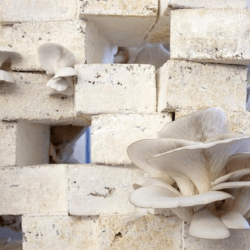
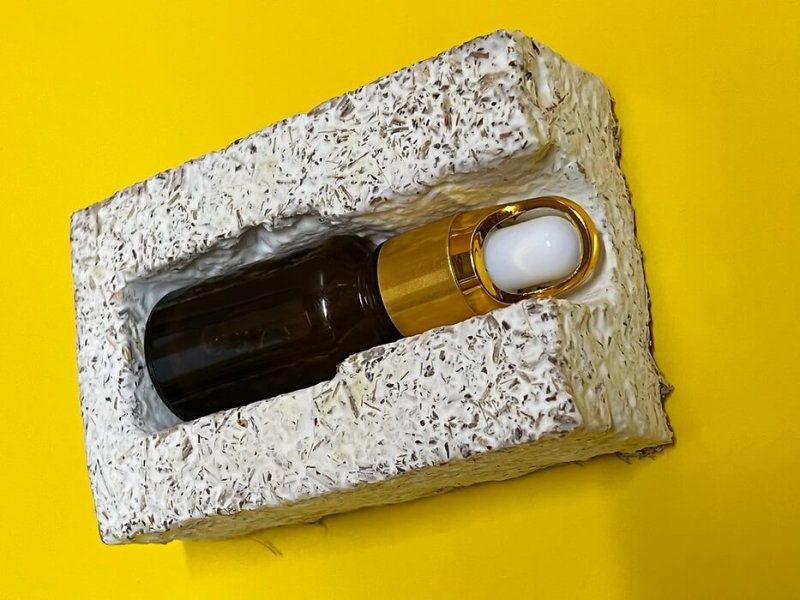
Mushroom and sawdust based packaging. Credit: EkoAgroBiotech

Styrofoam has become ubiquitous in the modern age of consumerism, and even synonymous with packaging. But containing toxic chemicals such as benzene and styrene, which aren’t biodegradable and can linger for up to 500 years, it’s not just bad for the environment, it’s also long been known as a hazardous substance and has many ties to cancer.

This is why Boey Tze Zhou, the founder of Eko Agro Biotech, saw an opportunity to use his mushroom farming waste as an alternative to styrofoam.

Follow the latest news and policy debates on sustainable agriculture, biomedicine, and other ‘disruptive’ innovations. Subscribe to our newsletter.

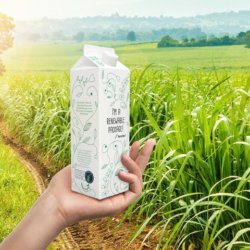
Unlike styrofoam, mushroom packaging consists of 100% biodegradable and renewable material that can be disposed of in garden beds and flower pots.

It grows in a lab in only eight days, and absorbs into the soil in under two months.

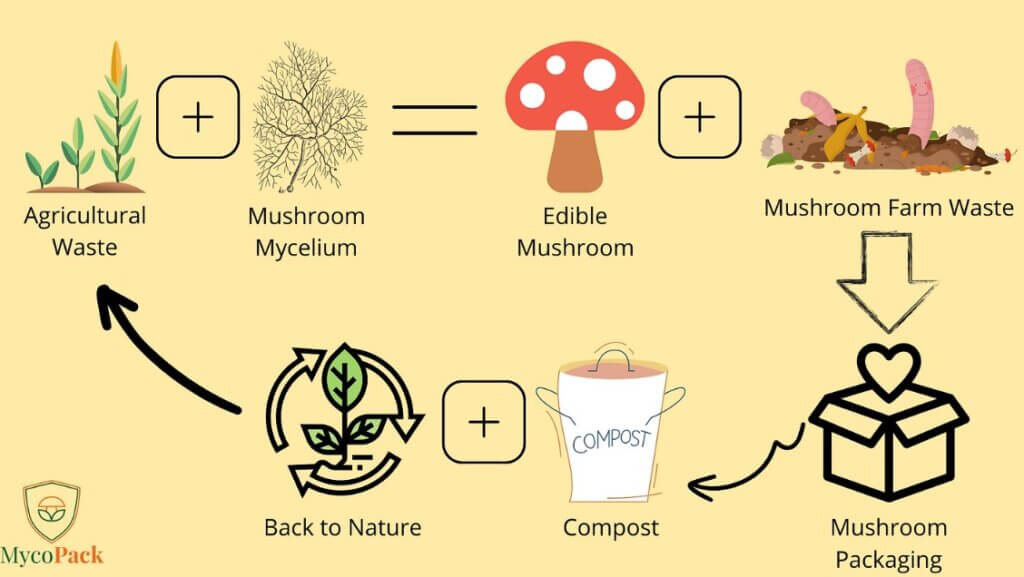
Mycelium, the scientific term for mushroom roots, is infused into recycled sawdust during the procedure. It acts as a natural superglue that binds and holds together organic materials.
Credit: EcoAgroBiotech

Within five days of combining the byproducts (including the secret ingredient), the mycelium will have completely colonised the entire container, which can be shaped to accommodate various packaging needs. Three additional days are required for the substance to dry and solidify further.


This is an excerpt. Read the original post here

{{ reviewsTotal }}{{ options.labels.singularReviewCountLabel }}
{{ reviewsTotal }}{{ options.labels.pluralReviewCountLabel }}
{{ options.labels.newReviewButton }}
{{ userData.canReview.message }}

Related Articles

Infographic: Global regulatory and health research agencies on whether glyphosate causes cancer

Infographic: Global regulatory and health research agencies on whether glyphosate causes cancer

Does glyphosate—the world's most heavily-used herbicide—pose serious harm to humans? Is it carcinogenic? Those issues are of both legal and ...

Most Popular

Screenshot-2026-04-23-at-11.00.36-AM
Regulators' dilemma: Thalidomide, Metformin, and the cost of getting drug approvals wrong
Picture1-5
Science Disinformation Gap: The transatlantic battle over social media and censorship
ChatGPT-Image-May-13-2026-11_56_08-AM
After slashing global health aid by $19 Billion, Trump moves to tap $2.1 billion more—to cover shutdown costs
ChatGPT-Image-May-12-2026-08_39_41-PM
GLP podcast: Big Pharma, Big Ag, Big Food—health harming industries or life-saving innovators?
Screenshot-2026-02-20-at-10.48.04-AM
Deepfakes raise profound ethical questions in science
Picture1-1
Cooling the planet with balloons: Could a geoengineering gamble slow global warming?
ChatGPT Image May 10, 2026, 08_16_59 PM 2
Overmedicalization? RFK Jr.’s antidepressant crackdown raises conflict questions over his fee stake in Wisner Baum, the tort firm built on suing drug makers
Screenshot-2026-05-01-at-1.29.41-PM
Viewpoint: What happens when whole grains meet modern food manufacturing? Labels don’t tell the whole story.
ChatGPT-Image-Apr-13-2026-02_20_22-PM
Viewpoint: Misinformation infodemic? Why assessing evidence is so challenging 
S
As vaccine rejectionism spreads, measles may be taking a more dangerous turn
Screenshot-2026-05-12-at-9.58.31-PM
'He seems fine': Marty Makary out as FDA commissioner
ChatGPT Image May 12, 2026, 10_19_00 AM 2
Viewpoint— 'Muscular governance': How authoritarianism is surging corporate-linked energy misinformation
glp menu logo outlined

Get news on human & agricultural genetics and biotechnology delivered to your inbox.