Viewpoint— ‘Muscular governance’: How authoritarianism is surging corporate-linked energy misinformation

ChatGPT Image May 12, 2026, 10_19_00 AM 2

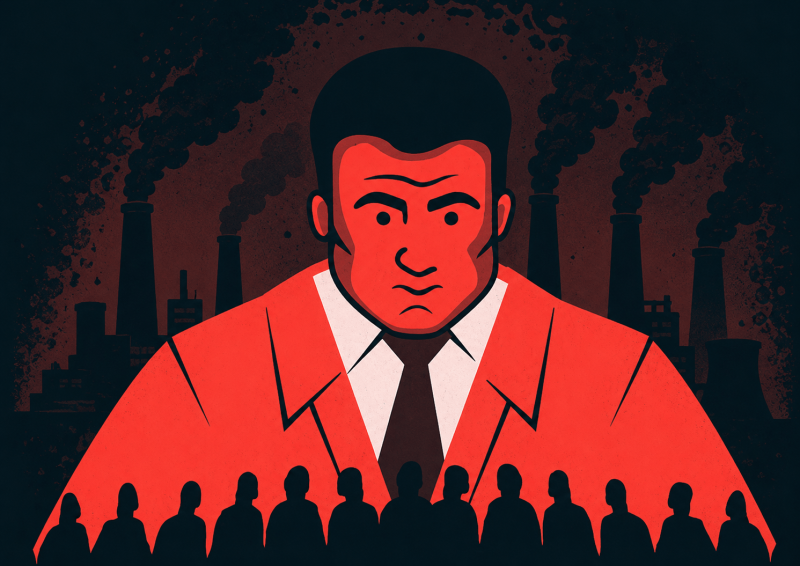
The world’s slide into authoritarian practices is accelerating the climate crisis. At its core, the authoritarian goal is typically to enable resource consolidation for a few. Such projects pursue muscular governance that puts the concerns of these few people ahead of the planet, while weaponising disinformation and dissatisfaction.

The increasing adoption of authoritarian tactics by leaders, including in democracies, and their corporate allies are further entrenching fossil fuels. The United States, an economic behemoth and number one cumulative emitter of greenhouse gas, is one such example.

Follow the latest news and policy debates on sustainable agriculture, biomedicine, and other ‘disruptive’ innovations. Subscribe to our newsletter.

First, they not only trash climate science but discredit the very idea of expertise and manipulate the information ecosystem to breed cynicism. A report compiled by a group of “independent experts”, convened by the US Department of Energy, says projections of future global warming are exaggerated and climate action could do more harm than good. …

Second, many authoritarians lock in fossil dependence at home and abroad by exploiting economic interdependence and asymmetries of power. …

Third, as the American philosopher Jason Stanley has documented in his book How Fascism Works, authoritarian projects intentionally stoke social divisions, sabotage community relationships and divert attention to the wrong ‘bad guys’ to cement power and hobble collective action.


This is an excerpt. Read the original post here

{{ reviewsTotal }}{{ options.labels.singularReviewCountLabel }}
{{ reviewsTotal }}{{ options.labels.pluralReviewCountLabel }}
{{ options.labels.newReviewButton }}
{{ userData.canReview.message }}

Related Articles

Infographic: Global regulatory and health research agencies on whether glyphosate causes cancer

Infographic: Global regulatory and health research agencies on whether glyphosate causes cancer

Does glyphosate—the world's most heavily-used herbicide—pose serious harm to humans? Is it carcinogenic? Those issues are of both legal and ...

Most Popular

Picture1-5
Science Disinformation Gap: The transatlantic battle over social media and censorship
ChatGPT Image May 10, 2026, 08_16_59 PM 2
Overmedicalization? RFK Jr.’s antidepressant crackdown raises conflict questions over his fee stake in Wisner Baum, the tort firm built on suing drug makers
Picture1-1
Cooling the planet with balloons: Could a geoengineering gamble slow global warming?
Screenshot-2026-05-11-104424
Hantavirus outbreak research: Trump administration shut down study last year on rodent-to-human transmission
Picture1-14
When superbugs threaten vulnerable children: Can AI help solve antibiotic resistance?
Screenshot 2026-05-11 at 11.30
Despite politicized disinformation, Midwest AI data centers are fueling a solar energy boom
ChatGPT-Image-Apr-13-2026-02_20_22-PM
Viewpoint: Misinformation infodemic? Why assessing evidence is so challenging 
Screenshot-2026-05-08-at-11.55.47-AM
Anti-vax activists falsely blame COVID vaccines for the rising U.S. cancer rate among younger people.
S
As vaccine rejectionism spreads, measles may be taking a more dangerous turn
Screenshot-2026-04-20-at-2.26.27-PM
Viewpoint — Food-fear world: The latest activist scientists campaign: Cancer-causing additives
Screenshot-2026-05-08-at-3.40.33-PM
Seeds of power: China turns to genetic engineering to become global superpower
Screenshot-2026-05-01-at-1.29.41-PM
Viewpoint: What happens when whole grains meet modern food manufacturing? Labels don’t tell the whole story.
glp menu logo outlined

Get news on human & agricultural genetics and biotechnology delivered to your inbox.